How to Choose Safe Accommodations When Traveling
Finding a place to stay is one of the most important parts of trip planning. It’s not just about comfort and cost; it’s about your personal safety. A secure and well-chosen accommodation can provide a peaceful home base, while a bad one can expose you to unnecessary risks and ruin your trip. Whether you're booking a luxury hotel, a budget-friendly hostel, or a vacation rental, a little bit of research can go a long way. This guide will walk you through **how to choose safe accommodations when traveling**, sharing essential advice from experienced travelers and security experts to help you sleep soundly on your next adventure.
The Research Phase: Before You Book 🧐
Your safety starts with a thorough vetting process. Don’t rely on photos alone; dig into the details.
1. Vet the Location and Neighborhood 📍
A great-looking hotel can be in a less-than-safe neighborhood. Use online mapping tools like **Google Maps** to virtually walk around the area. Look for things like street lighting, a lively atmosphere, and proximity to public transport. Read reviews from past guests that mention the neighborhood’s safety, both during the day and at night. A quick search on travel forums like Reddit for “[city name] neighborhoods to avoid” can also give you valuable, unfiltered insights.
2. Scrutinize Reviews for Security and Cleanliness 📝
Reviews are your most powerful tool. Look beyond the overall star rating. Filter reviews by keywords like **”safe,” “secure,” “lock,” “cleanliness,”** and **”staff.”** Pay special attention to negative reviews. Are people complaining about broken locks, unhelpful staff, or a lack of security? This is a huge red flag. A great review might mention the staff’s professionalism or the presence of security guards and cameras.
Seasoned Traveler’s Insight: John, from a Backpacker’s Forum
“I never book a place that doesn’t have a 24-hour front desk. I’ve been in too many situations where I needed help in the middle of the night, and there was no one around. That one feature alone makes me feel so much safer.”
Checking for Key Security Features 🛡️
Once you’ve narrowed down your options, look for specific features that indicate a secure property.
1. Look for Multiple Levels of Access Control 🔑
A secure property will have more than one barrier to entry. Look for a hotel with keycard access to the main building, the elevator, and your room. This prevents unauthorized people from accessing the guest floors. For hostels and vacation rentals, look for keycode access or a strong lock on the main door in addition to the lock on your individual room.
2. Confirm the Presence of Staff and Surveillance 🚨
A hotel or hostel with a 24/7 front desk is always a better choice. The presence of staff is a major deterrent to crime. Look for mentions of CCTV cameras in common areas, hallways, and entrances. These details are often mentioned in reviews or on the property’s website. They are a sign that the management takes security seriously.
3. Check the Room Itself 🚪
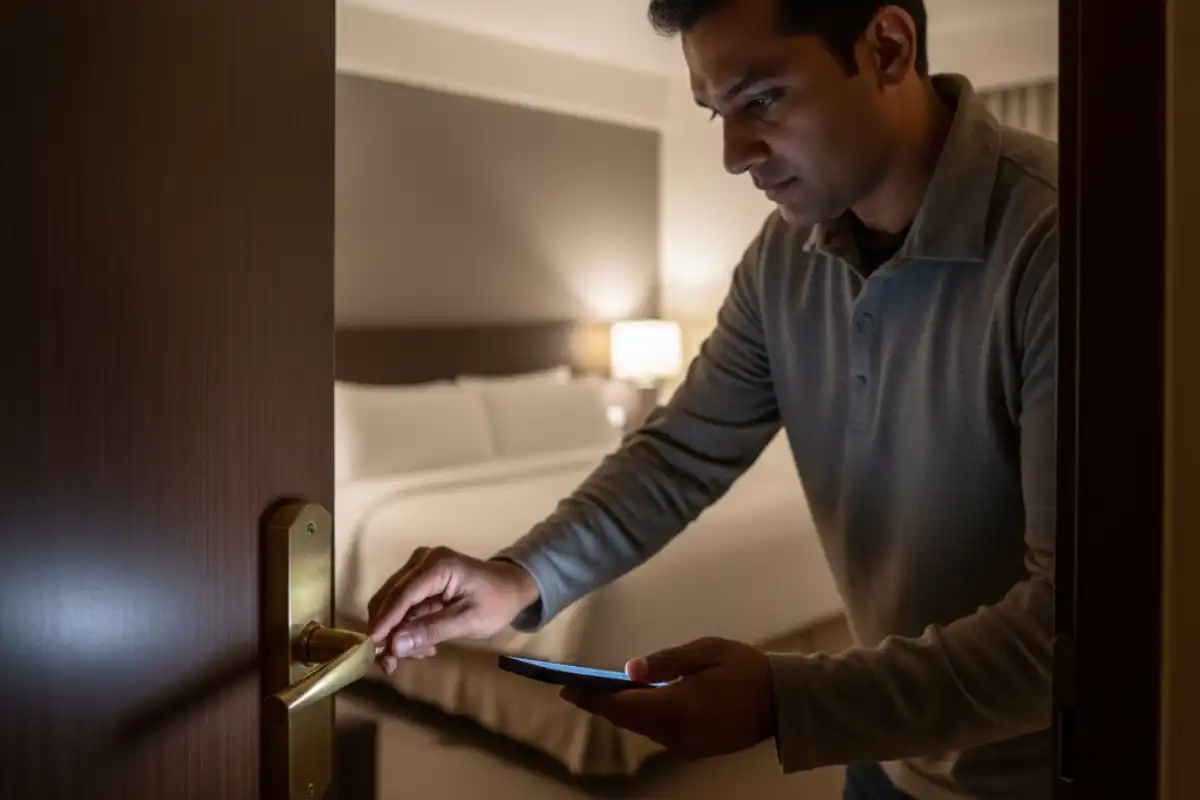
When you get to your room, do a quick safety check. Is the door lock working properly? Does it have a deadbolt and a security chain? Are the windows and balcony doors secure? If anything feels unsafe, don’t hesitate to ask for a new room or, if you’re seriously concerned, find another place to stay. Trust your instincts.
Security Expert’s Advice: Jane, a Solo Travel Safety Blogger
“My biggest tip is to carry a portable door lock. It’s a small, lightweight device that adds an extra layer of security to any door. It’s a cheap and effective way to feel safer, especially in a hostel or a vacation rental with a less-than-perfect lock.”
Frequently Asked Questions About Accommodation Safety
Are Airbnb rentals less safe than hotels?
Not necessarily. While hotels have standardized security protocols, many Airbnb hosts take safety very seriously. The key is to check the reviews. Look for comments that specifically mention the host’s communication and the security of the property. Always choose a host with a good rating and a history of positive reviews.
What should I do if a guest or staff member makes me uncomfortable?
If you feel uncomfortable, go to a public area immediately and alert a staff member. If you feel you are in danger, contact local law enforcement. It’s better to be overly cautious than to ignore your instincts. Your safety is the priority.
What about safety in a hostel dorm room?
Hostels are generally safe, but you should always use a locker to store your valuables. Most hostels provide lockers, but you should bring your own lock. Never leave your passport, wallet, or electronics unattended, even for a moment.
How can I protect my personal information during check-in?
When you check in, make sure your credit card and passport are out of sight of other guests. If the front desk staff makes a photocopy of your passport, ask them why they need it. Most reputable hotels have secure systems for storing your information.
Should I be concerned about hidden cameras?
While extremely rare, it is a concern for some travelers. You can do a quick check of the room for any unusual objects or lights. You can also use a flashlight on your phone to look for a reflection in objects like smoke detectors, alarm clocks, and air vents. If you find something, report it to the platform and the police immediately.
Conclusion: Your Safe Haven Away from Home
Choosing a safe place to stay is a cornerstone of a successful trip. By doing a little homework, checking for key security features, and trusting your instincts, you can find a place that is not just a bed but a safe haven. A little vigilance goes a long way in ensuring your adventure is filled with great memories and free from worry. So, do your research, book smart, and enjoy your journey with peace of mind.