Winter wildlife watching hotspots
Winter, far from being a barren season, offers some of the **clearest and most dramatic opportunities** for wildlife watching. The landscape's sparse cover and the stark contrast of animals against white snow make spotting them significantly easier than in the dense foliage of summer. Furthermore, animals often gather in accessible valleys seeking warmer temperatures or better food sources, increasing the density of potential sightings.
Premier Destinations for Cold-Weather Sightings
1. Yellowstone National Park (USA): Wolves and Bison
The winter months are the prime time to visit **Yellowstone**, specifically the **Lamar Valley**. In summer, the park’s famous gray wolf packs are difficult to locate, but in winter, they are more active and visible hunting elk and bison on the snow-covered plains.
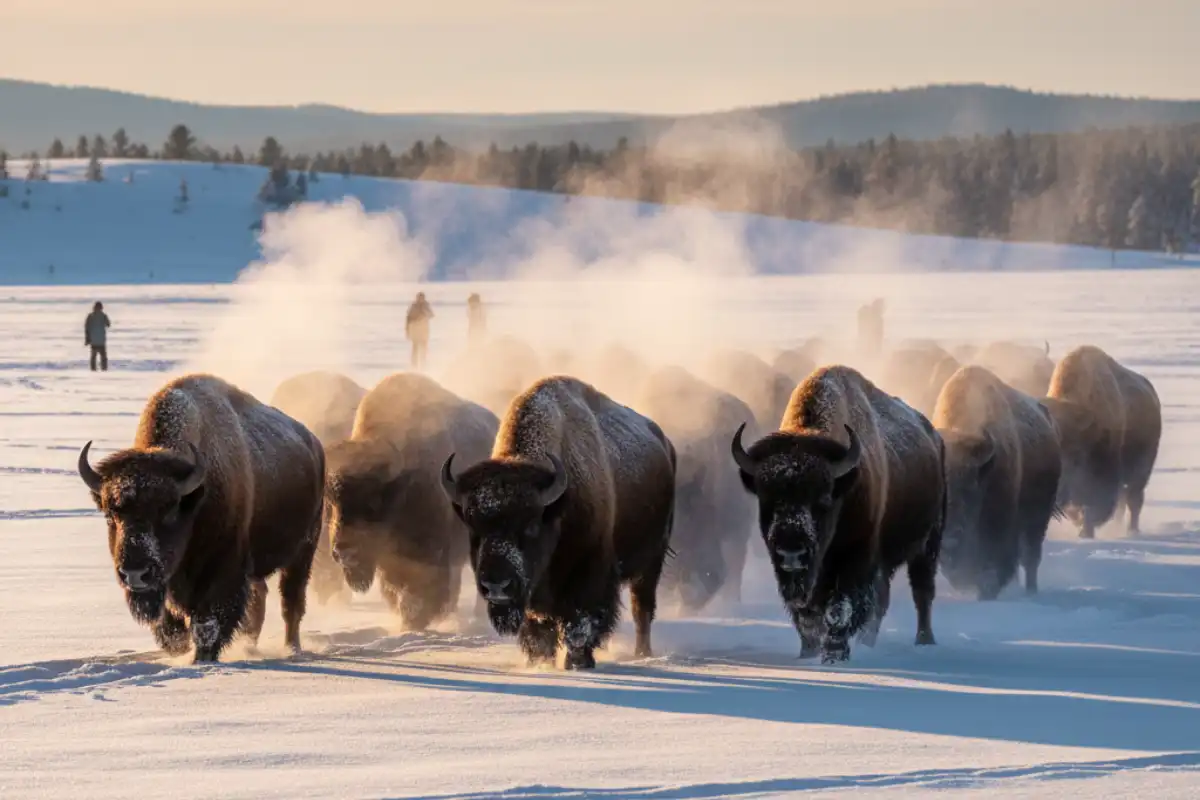
- **The Draw:** Bison herds congregate around thermal areas and roadsides, creating spectacular photo opportunities against the steaming landscape.
- **Expert Advice:** “Don’t rush in Yellowstone. The best sightings happen when you park and wait patiently with binoculars and a scope. Look for clusters of parked vehicles that usually means someone has spotted a wolf pack or a rare coyote hunt.” (Source: National Geographic Traveler)
2. Hokkaido, Japan: Red-Crowned Cranes and Sea Eagles
Japan’s northernmost island transforms into a wildlife photographer’s dream in winter. The island is known for the majestic **Red-Crowned Cranes** (Tancho), which perform elegant mating dances on the snow.
- **Unique Fauna:** Look for **Steller’s Sea Eagles**, one of the largest and most powerful raptors in the world, which migrate south to feed on Hokkaido’s frozen coastlines.
3. Baja California Sur, Mexico: Gray Whales (Warm Water Migration)
While the Arctic is the focus for snow, winter is the best time for warm-weather wildlife spectacle. The remote lagoons of Baja are the breeding and calving grounds for **Pacific Gray Whales** (January to March).
- **The Experience:** These are some of the only places where Gray Whales are known to actively seek out and interact with human visitors, often nudging boats and allowing tourists to touch them.
Mastering the Art of Winter Tracking 🐾
Snow is nature’s perfect record keeper, leaving clear evidence of animal movements.
1. Reading the Tracks
Fresh snow allows you to identify not just the species (size and shape of the print), but also the **gait** (how the animal moves) and its **destination**.
- **Look for:** Tracks that follow a straight line (predators like foxes or wolves conserving energy) versus erratic tracks (small prey like mice or snowshoe hares).
2. Binoculars and Scopes
Wildlife is often observed from a distance, especially predators.
- **Essential Gear:** High-quality **binoculars** (10 times 42$ or 10 times 50$ are standard) and a **spotting scope** mounted on a tripod are essential for observing wolves or distant birds without disturbing them.
Wildlife Guide’s Safety Note: Distance and Feeding
“Never feed wildlife, and always maintain a safe, respectful distance (usually 100 yards/91 meters from bears and wolves; 25 yards/23 meters from others). Winter is when animals are most stressed and need to conserve energy. Disturbing them can literally be the difference between life and death for them.” (Source: Conservation Journal Report)
Frequently Asked Questions About Winter Wildlife Watching
Why is winter better for viewing certain animals?
There are three main reasons: **Concentration** (animals gather in lower, warmer areas), **Contrast** (dark coats stand out against the snow), and **Visibility** (deciduous trees lose leaves, making the landscape more open).
What is the essential clothing for winter wildlife watching?
Layers are crucial. Focus on **silence and warmth**. Choose quiet fabrics (avoid noisy nylon shells), wear thermal boots, and bring insulated mittens (warmer than gloves) for long periods of stationary viewing.
Is it possible to track animals alone or do I need a guide?
You can track common species alone, but for highly mobile or rare animals (like wolves, cougars, or elusive birds), a **local, experienced guide** is highly recommended. Guides know territories, recent activity, and can interpret subtle tracks far more accurately.
What time of day is best for winter sightings?
The best viewing times are usually **dawn and dusk**. This is when most animals are most active, feeding before seeking shelter for the night or after emerging from their night rest. The low, soft winter light also offers excellent photographic conditions.
Are there special rules for driving in national parks in winter?
Yes. Many park roads are closed or restricted to over-snow vehicles (snowmobiles, snow coaches). When driving, **slow down dramatically** and be vigilant for animals moving onto the road, as they often use the plowed, clear routes for easier travel.
Conclusion: A Dramatic Season for Nature 📸
Winter wildlife watching transforms the often-perceived “dormant” season into a period of dramatic beauty and heightened animal visibility. By choosing prime locations like Yellowstone or Hokkaido, prioritizing patience over speed, and equipping yourself with good optics and warm layers, you can enjoy a profound connection with nature witnessing the resilience and intricate survival strategies of the animal kingdom against a stunning, snowy backdrop.