Winter wildlife conservation tours
Winter is a critical and often challenging time for wildlife. Food is scarce, energy reserves are low, and extreme weather poses a constant threat. This vulnerability is precisely why **winter wildlife conservation tours** offer a unique and profound travel experience. These trips go beyond mere observation; they transform travelers into citizen scientists, directly funding and participating in efforts to protect animals when they need it most.
Why Winter is Crucial for Conservation
The colder months shift animal behavior in ways that are beneficial for research and protection efforts:
- **Concentration:** Animals often descend from high elevations to valleys and lower terrain in search of food and shelter, making them easier to track and count.
- **Tracking:** Snow cover acts as a perfect recording medium, clearly showing tracks, scat, and hunting patterns for researchers to analyze.
- **Vulnerability:** This is the most challenging period for survival. Tour funds and activities can be focused on providing supplemental feeding, monitoring population health, and preventing poaching.
Examples of High-Impact Winter Tours
- **Wolf Tracking in Yellowstone (USA):** Travelers join biologists to monitor the famous gray wolf packs, using radio telemetry and spotting scopes to document location and health. Your participation helps fund equipment and researcher salaries.
- **Tiger Census in Siberia/Far East Russia:** Though highly specialized, certain tours focus on tracking the highly endangered Siberian (Amur) Tiger, specifically using the fresh snow to map territories and estimate population sizes.
- **Caribou Migration Monitoring (Arctic):** Tours focused on observing caribou herds often support data collection on migration routes and the impact of climate change on their winter feeding grounds.
Selecting an Ethical Tour Operator 🤝
In conservation travel, choosing the right operator is the single most important decision. Avoid operators that prioritize close-up interactions or guarantee sightings.
1. Prioritize Science-Led Expeditions
Look for trips run in partnership with universities, established NGOs (e.g., WWF, WCS), or governmental park services. These operators prioritize the well-being of the animal over the tourist experience.
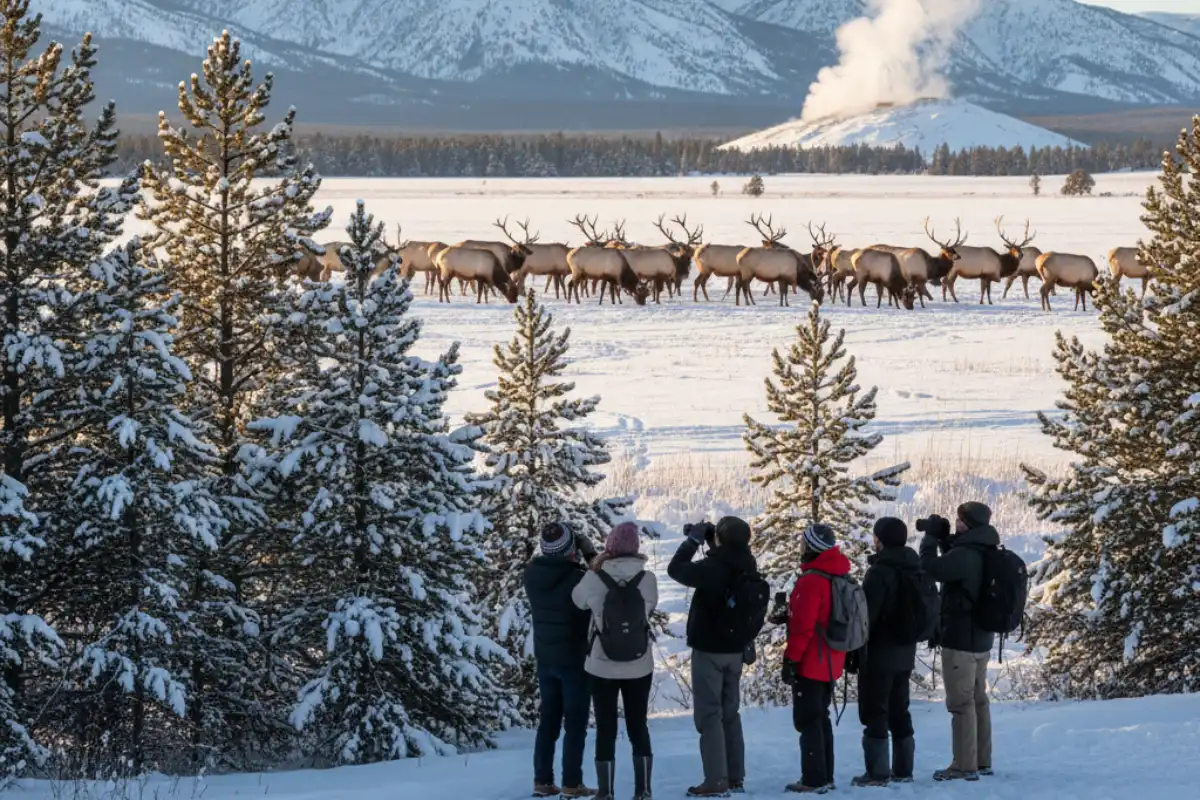
- **Reviewer Insight:** “The biggest difference between a regular wildlife tour and a conservation tour is the distance. Our guide in the Canadian Rockies insisted on observing the elk and moose from hundreds of meters away with scopes. He said, ‘Every time we make them move, we take energy they need to survive the cold.’ That respect defined the trip.” (Source: Ecotourism Magazine)
2. Verify Financial Contributions
A reputable conservation tour should clearly articulate how your fee is used. The majority of the cost should go toward local employment, research equipment, and **habitat protection initiatives**.
- **Ethical Checklist:** The tour should employ **local guides**, use **minimal-impact transportation** (like snowshoes or cross-country skis instead of noisy snowmobiles), and operate under a strict code of conduct regarding distance and noise.
Citizen Science Contribution: Data Collection
“Even as a tourist, your eyes are valuable. Many winter conservation tours involve citizen science, such as counting specific bird species, documenting unique animal tracks for track identification databases, or recording GPS locations of carcasses, which helps researchers understand predator-prey dynamics in the winter months.” (Source: Wildlife Research Institute Newsletter)
Frequently Asked Questions About Winter Conservation Tours
What physical fitness level is required for these tours?
It varies widely. Some tracking tours involve challenging snowshoeing or cross-country skiing over rough terrain, requiring good fitness. Others, like Yellowstone wolf watching, are often based on roadside viewing with minimal walking, suitable for most fitness levels. Always check the itinerary’s physical demands.
Are guaranteed sightings an ethical sign?
No. Ethical wildlife tours **never guarantee sightings**. Guaranteed sightings often involve cornering animals, using bait, or visiting enclosed areas. The unpredictability of wild nature is part of the ethical experience; the focus is on the research process, not the snapshot.
How does my tour fee directly help conservation?
Your fee typically covers researcher costs, fuel for monitoring vehicles, anti-poaching patrol costs, specialized equipment (like radio telemetry collars), and education programs for local communities on living sustainably with wildlife.
What gear is essential for a winter conservation trip?
High-quality, warm layering systems are vital. Crucially, bring your own **professional-grade binoculars** or a **spotting scope** (or ensure the tour provides them). You will be observing animals from a distance, and cheap optics won’t provide the necessary clarity for research or enjoyment.
Can I take photos on a conservation tour?
Yes, but quietly and respectfully. Use high-powered zoom lenses to maintain distance. Avoid using flash, as it can confuse or stress nocturnal or sensitive animals. Photos can often serve as valuable data points for identification and tracking purposes.
Conclusion: Travelers as Stewards 🌲
Winter wildlife conservation tours offer the rewarding opportunity to travel with a purpose. By meticulously vetting operators and committing to minimal-impact behavior, you move beyond being a passive spectator. You become an active steward, directly supporting the survival of vulnerable species and contributing vital data that ensures the beauty of the wild, cold landscapes endures for future generations.