Winter Wellness: Spas and Hot Springs in Ski Towns
The exhilarating challenge of a day spent skiing or snowboarding places significant strain on the body’s muscles and joints. While Après-Ski is often associated with lively bars, the true secret to enduring multiple days on the slopes lies in strategic recovery. Thermal relaxation be it through natural hot springs or luxurious resort spas is an indispensable component of the winter holiday. The combination of intense cold exposure and physical exertion creates the perfect environment for hot water therapy to deliver maximum physiological benefits.
The Therapeutic Benefits of Thermal Recovery
1. Muscle Soreness and Lactic Acid Reduction
Immersing your body in hot water increases blood circulation to the muscles. This improved flow helps flush out metabolic waste, such as lactic acid, which accumulates during intense downhill activity.
- **Ski Instructor’s Advice:** “After a big powder day, my first stop is always the hot tub or sauna. The heat relaxes the quads and calves, preventing that crippling stiffness the next morning. It’s better than any painkiller for delayed onset muscle soreness (DOMS).” (Source: Professional Ski Instructor Association Journal)
2. Joint Relief and Altitude Acclimation
The buoyancy of the water relieves pressure on stressed joints (especially knees and ankles) that absorb impact during skiing. Furthermore, the heat encourages vasodilation, which can aid in mild altitude acclimation by boosting circulation.
Hot Springs vs. Resort Spas: What to Choose
Ski towns often offer both natural and engineered relaxation options, each providing a unique experience:
1. Natural Hot Springs (The Rustic Choice)
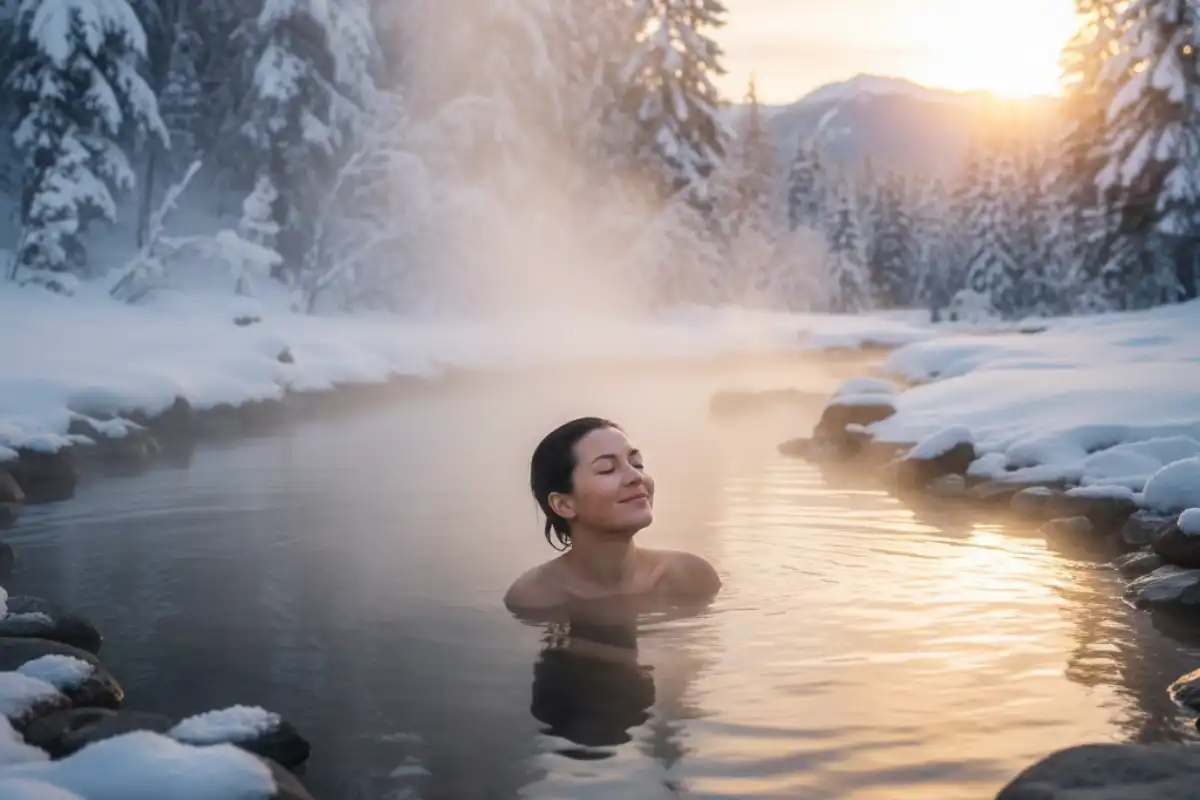
Found where geothermal activity is present, these offer mineral-rich water and often a stunning, secluded setting.
- **Pros:** High mineral content (sulfur, magnesium) that can aid skin and circulation; incredible natural ambiance (especially after dark).
- **Cons:** Often require a short drive from the resort; facilities can be rustic; natural water temperature is fixed.
- **Top Destination Example:** **Strawberry Park Hot Springs** near Steamboat Springs, USA.
2. Resort Spas and Wellness Centers (The Luxury Choice)
These are integrated into high-end hotels and feature saunas, steam rooms, cold plunges, and specialized treatments.
- **Pros:** Convenient, often ski-in/ski-out; professional deep-tissue massages targeted at ski-specific strain; controlled, hygienic environment.
- **Top Destination Example:** **The Thermal Baths (Bains de Lavey)** near Verbier, Switzerland.
Travel Wellness Guru’s Tip: The Contrast Therapy Hack
“To maximize recovery, incorporate a short burst of cold exposure. After 15 minutes in a hot tub or sauna, stand in the cold air or take a 30-second cold shower before returning to the heat. This contrast significantly boosts circulation and reduces inflammation, a technique relied upon by professional winter athletes.” (Source: Winter Athlete Training Manual)
Booking and Etiquette Tips
- **Book Massages Early:** Sports-focused massages are highly sought after during peak ski season. Book your treatment the moment you book your lodging, not when you arrive.
- **Hydrate Aggressively:** Heat therapy (hot tubs, saunas) can lead to significant dehydration. Drink copious amounts of water before, during, and after your soak.
- **Hot Springs Etiquette:** Check local rules. Some natural hot springs maintain clothing-optional hours, which might surprise an unprepared traveler.
Frequently Asked Questions About Winter Wellness
Should I use a hot tub immediately after skiing?
Yes. The sooner you expose your muscles to heat, the better for flushing lactic acid. It’s often best to head straight to the thermal area rather than resting for hours, which allows stiffness to set in.
How often should I use the sauna or hot spring on a week-long trip?
For optimal results, aim for a 15- to 20-minute soak every evening you ski. If your goal is deep muscle recovery, use the facility on your rest day and supplement with a massage.
Are hot springs safe for children?
Most commercial hot springs and pools are safe, but toddlers and infants must be carefully monitored. The high mineral content and high heat can be overwhelming for small children, and they should only spend short periods in the water.
Is it advisable to drink alcohol while soaking in a hot tub?
No. Combining alcohol with extreme heat and high altitude dramatically increases the risk of dehydration, dizziness, and fainting. It is strongly advised to stick to water or electrolyte drinks while soaking.
What kind of massage is best for ski soreness?
A **deep tissue massage** or a **sports massage** that focuses specifically on the quadriceps, hamstrings, and lower back is best. Tell your therapist you have been skiing so they can target the specific muscle groups used most frequently.
Conclusion: Recovery is Part of the Fun 🧖♀️
Thermal wellness should not be viewed as an indulgent extra, but as a core component of your ski holiday success. By strategically utilizing the muscle-soothing heat of hot springs and the targeted relief of resort spas, you transform your evening routine into an essential recovery period. This commitment to self-care ensures you remain energized, flexible, and ready to tackle the slopes day after day.