Winter travel with kids: Survival guide
Winter travel with children whether it’s a ski trip, a visit to a cozy cabin, or a city break presents a unique set of challenges. Dealing with bulky gear, unpredictable weather, and the risk of cold-weather illness means preparation must be tactical. The goal is to minimize friction points (like cold hands or wet feet) and maximize the unique magic of the winter season.
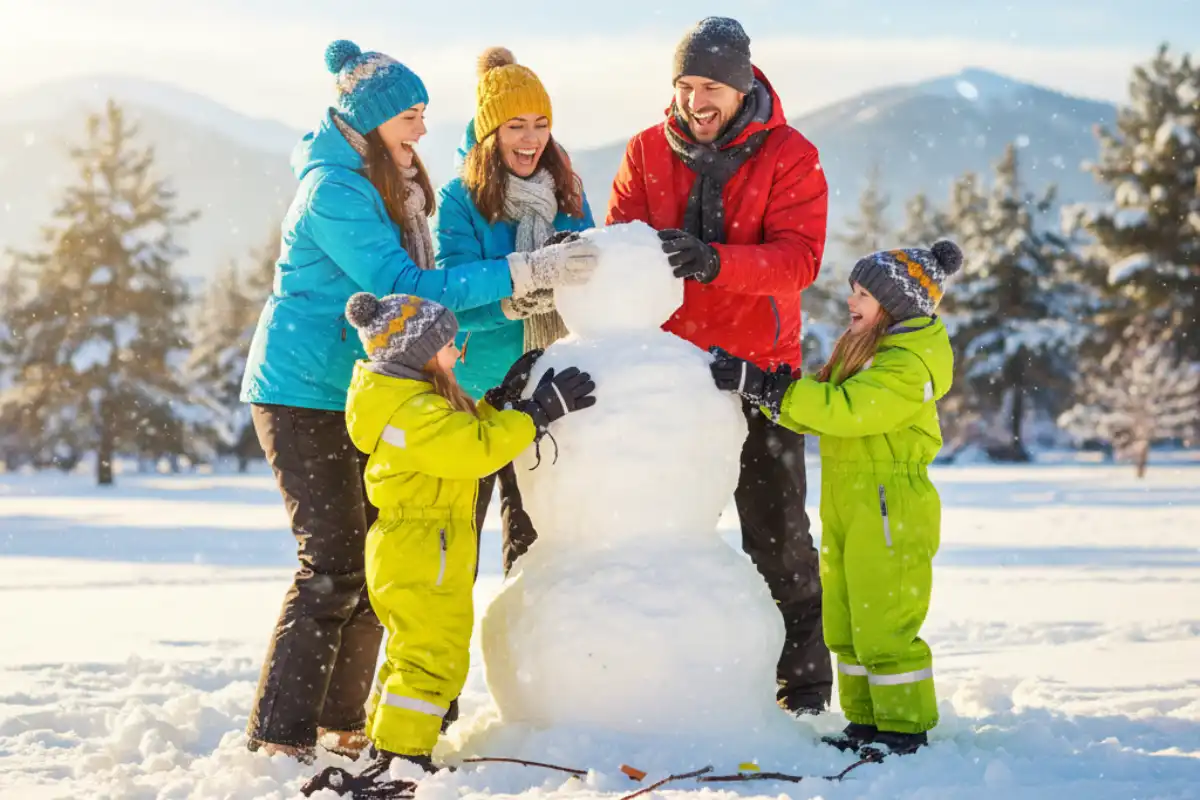
Layering and Gear Strategy: The Battle Against the Cold 🧤
The biggest challenge in winter is keeping kids warm and dry without making them overheat or forcing them into gear they hate.
1. Mastering the Three-Layer System
This is the foundation of cold-weather comfort for all ages:
- **Base Layer (Wicking):** Needs to be close-fitting and wicks moisture away from the skin. **Wool** or **synthetic** fabrics are best. *Avoid cotton* at all costs, as it retains moisture and rapidly causes chilling.
- **Mid-Layer (Insulation):** Traps heat. **Fleece** or light down jackets work well. This layer should be easy to remove if entering a building.
- **Outer Layer (Protection):** A waterproof/windproof shell coat and snow pants to block external elements.
2. The Glove and Sock Conundrum
Cold hands and feet are the quickest way to end an outdoor activity early.
- **Traveler Tip:** “Always, always, *always* pack **two pairs of gloves per child, per day**. Gloves get soaked almost instantly in the snow, and trying to dry them in a hotel room overnight is impossible. Having a dry backup pair ready to go is the key to morning success.” (Source: Family Travel Blog)
- **Socks:** Use non-cotton wool or synthetic ski socks. Pack only one pair per day.
Managing Travel and Down Time 🚗🏠
The journey and the indoor time often require more planning than the outdoor fun.
1. Car Travel and Boredom
Long winter drives can be tedious. Use the element of surprise to your advantage.
- **”Activity Swapping”:** Introduce a new, small, novel toy or activity kit (e.g., a new coloring book, a special card game) at every major stop or after a long chunk of driving time. Don’t give them everything at once.
- **Snacks and Hydration:** Pack high-protein, low-mess snacks to maintain energy. Dry air and heavy exertion mean kids need more water than usual, even if they don’t feel thirsty.
2. Hotel/Cabin Survival Kit
Downtime in a small space can breed chaos. Be prepared for indoor fun.
- **Compact Games:** Pack compact games or small building toys that encourage focused play (e.g., Uno, magnetic tiles).
- **Essential Meds:** Carry a basic first aid kit with pain relievers, fever reducers, band-aids, and essential cold/flu medication, as finding an open pharmacy in a remote ski town on a Sunday can be difficult.
Pediatrician and Parent Advice: The Sunscreen Rule
“Many parents forget that the risk of sunburn is **higher** in the snow, not lower. Snow reflects up to 80% of UV radiation, hitting the skin twice. Apply broad-spectrum sunscreen (SPF 30+) to exposed skin, especially the nose, lips, and under the chin, every two hours while outside.” (Source: Pediatric Travel Health Journal)
Frequently Asked Questions About Winter Travel with Kids
What is the safest way for a baby to sleep in cold weather?
Do not overdress the baby for sleep. Use a well-fitting sleep sack over the base layer. Keep the room temperature comfortable (around 68-72°F) and check the baby’s temperature on their chest or neck, not their hands or feet, which are naturally cooler.
How do I prevent my child’s goggles from fogging up?
The main cause of fogging is moisture from sweat or body heat. Tell children not to put their goggles on their forehead when they stop, as this traps warm air. Keep the vents clear and only wipe the inside lens if specifically designed to be anti-fog.
What’s the best way to handle wet gear in a small hotel room?
Use a **gear drying system**. Pack a small, portable boot/glove dryer that plugs into an outlet. If you don’t have one, lay gear near the room’s forced-air heating vent, but never directly on it, and use a luggage rack for ventilation.
Is it necessary to buy expensive winter brands for kids who will grow quickly?
Focus on **functionality and material,** not just brand. Look for quality synthetic base layers (thrift stores often have great wool) and ensure the outer layer is genuinely waterproof (with taped seams). Buying one size up with adjustable cuffs can help stretch the life of snow pants and jackets.
How can I protect my toddler from ear pain on a flight during winter?
Ear pain is caused by pressure changes. During ascent and descent, encourage the toddler to swallow to equalize pressure. For babies, this means **breastfeeding or bottle-feeding** during those times. For older children, a chewy snack or gum works well.
Conclusion: Prioritize Comfort for Happy Memories 🥳
Winter travel with kids demands detailed logistics, but the effort is worth the reward of building snowmen and making lifelong memories. By prioritizing warmth through the three-layer system, being prepared for travel boredom, and carrying a minimal but essential medical kit, you minimize stress and maximize the joy of watching your children discover the magic of a snowy world.