Winter camping: Tips for staying warm
Winter camping offers unparalleled solitude, stunning snow-covered landscapes, and the chance to witness crisp, clear night skies. However, it demands meticulous preparation, as the consequences of being cold are far more severe than in summer. Staying warm in a sub-zero environment requires a shift in focus: it's not just about what you wear, but how you manage moisture and utilize insulation especially from the ground up. Mastering the cold starts with intelligent gear choices and strict adherence to proven backcountry techniques.
The Sleeping System: Your Lifeline
The biggest challenge in winter camping is staying warm overnight. Your sleeping setup is more critical than your tent itself.
1. Double Up on Insulation Below
Heat loss to the ground (conduction) is far greater than heat loss to the air. You must use a high-R-value sleeping pad, as the R-value measures thermal resistance.
- **The Double Pad Rule:** Use two sleeping pads layered together for maximum R-value. A closed-cell foam pad (R-value approx 2) on the bottom acts as a shield against the cold ground, topped by an inflatable air pad (R-value approx 3-5) for comfort. Aim for a total combined R-value of 5 or higher for true cold.
- **Expert Advice:** “Do not skimp on your sleeping pad R-value. You can have the best sleeping bag in the world, but if the ground sucks the heat from beneath you, you will freeze. The double-pad system is non-negotiable for serious winter camping.” (Source: Backpacker Magazine)
2. Sleeping Bag Strategy
Select a bag rated 10°F to 20°F lower than the coldest expected temperature. Down is lighter, but synthetic performs better if it gets wet. Always use a bag liner (fleece or silk) to add a few degrees of warmth and protect the bag from body oils.
Mastering the Layering Technique
The cold-weather system is about managing moisture (sweat) to keep insulation dry. Never wear cotton.
1. Base Layer (Wicking)
High-quality Merino wool or synthetic thermals worn directly against the skin. Change into a **dry set** right before bed.
2. Mid-Layers (Insulating)
Fleece jackets, trousers, and a lightweight puffy vest/jacket. These trap the heat generated by your body.
3. Outer Shell (Protection)
A waterproof, windproof, and breathable jacket and pants. This keeps external moisture (snow, rain) and wind out.
Hiker’s Secret: The Emergency Warmth Bottle
“Before crawling into your sleeping bag, boil water and pour it into a sturdy Nalgene or metal water bottle. Ensure the lid is tight, wrap it in a sock or fleece, and place it inside your bag, near your core or between your legs. It acts like a personal hot water bottle and gives off heat for several hours, making the difference between a cold night and a comfortable one.” (Source: Wilderness Survival Forum)
Campsite and Gear Management
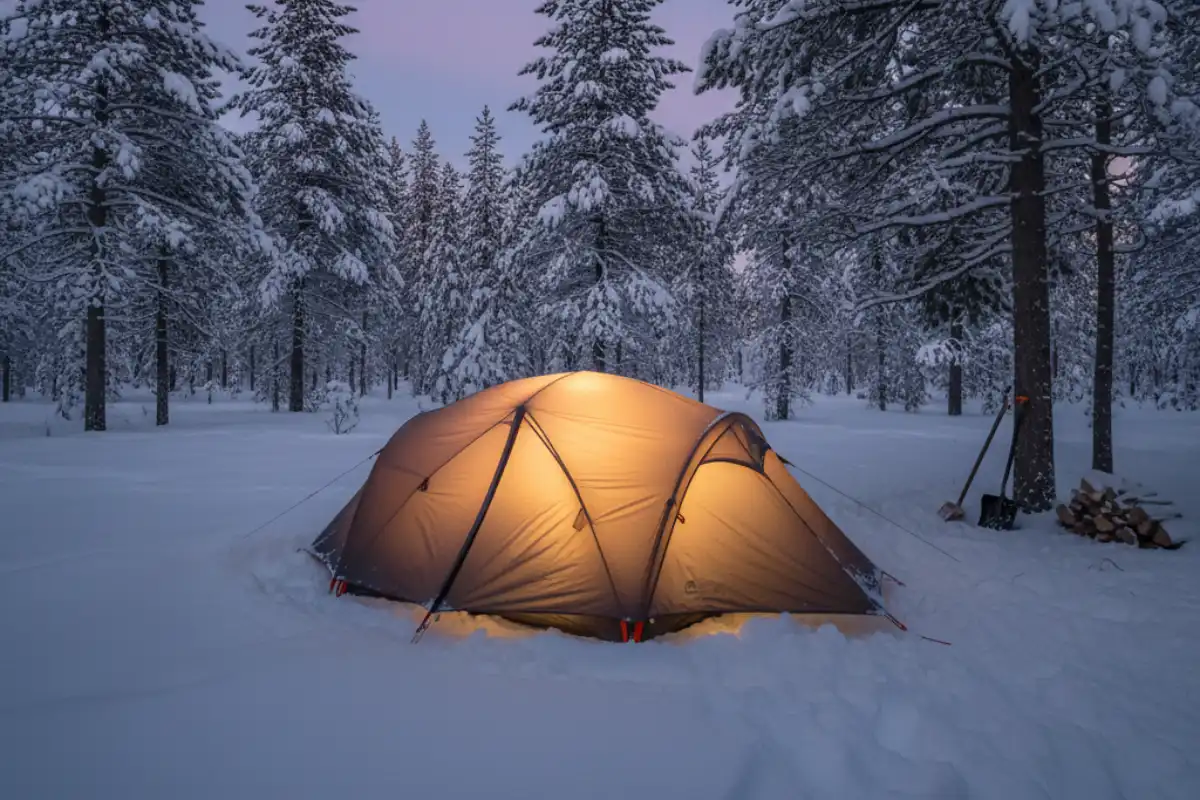
- **Choosing the Tent:** Use a **four-season tent**. These are designed with stronger poles, more anchor points, and fewer mesh panels than three-season tents, making them better equipped to handle high winds and heavy snow loads.
- **Vapor Management:** Condensation is the enemy. Crack open a tent vent to allow moisture (from breathing) to escape, preventing frost buildup inside the tent, which can later melt and wet your gear.
- **Boot Care:** Place your outer boots in a plastic bag inside your tent (or even inside your sleeping bag sack). This prevents them from freezing solid overnight, making them far easier to put on in the morning.
- **Calorie Intake:** Eat a high-fat, high-calorie snack right before bed. Your body will burn these calories during the night to generate necessary internal heat.
Frequently Asked Questions About Winter Camping
Is it safe to use a portable heater inside a tent?
No, it is extremely dangerous and should be avoided. Any fuel-burning heater (propane or catalytic) produces **carbon monoxide**, which is odorless and deadly, especially in a confined, unventilated space like a tent. Stick to non-flame methods like hot water bottles or body heat.
Should I wear all my clothes inside my sleeping bag?
Wear your dry base layers, warm socks, and possibly a hat. However, wearing too many bulky clothes can compress the sleeping bag’s insulation (loft), reducing its effectiveness. It’s better to keep clothing slightly loose to maximize trapped air.
What is a good R-value for a sleeping pad for temperatures around 0°F?
For temperatures near or below freezing (32°F and down to 0°F), an R-value of **5 or higher** is strongly recommended. For extreme cold (well below 0°F), a combined R-value approaching 8 or more is necessary.
How do I prevent my water bottle from freezing?
Use wide-mouth bottles (easier to access if they freeze). Store bottles upside down, as water freezes from the top down. Keep them insulated in a thick sock or bag, and place them inside your sleeping bag or jacket overnight.
Should I melt snow for drinking water during the day or at night?
Melt snow during the warmer parts of the day when you are active and have excess heat (e.g., from a cooking stove). Melting snow is time-consuming and fuel-intensive, so doing it during the day prevents you from having to use precious fuel or be exposed to extreme cold after sundown.
Conclusion: Preparation Equals Comfort 🏔️
Winter camping is a demanding yet highly rewarding pursuit. Success is not measured by toughness, but by preparation. By prioritizing high R-value ground insulation, strictly adhering to the layering principle, and utilizing simple heat management hacks like hot water bottles, you can ensure your body retains its core temperature. Embrace the planning process, and the quiet beauty of the winter wilderness will be yours to enjoy safely and warmly.