Train travel safety tips in Europe
Europe’s rail network is arguably the finest in the world, offering a seamless blend of high-speed efficiency and scenic slow travel. In 2026, as travelers increasingly choose "flight-free" journeys for environmental reasons, train security has become a top priority. While rail travel is statistically much safer than driving, the open nature of stations makes travelers targets for petty theft and sophisticated scams. To provide the most relevant advice, we've cross-referenced safety protocols from Deutsche Bahn and SNCF with real-world experiences shared on Reddit’s Eurail and TripAdvisor forums. Here is how to navigate the European rails like a pro.
1. Station Awareness: The “Distraction” Danger Zone
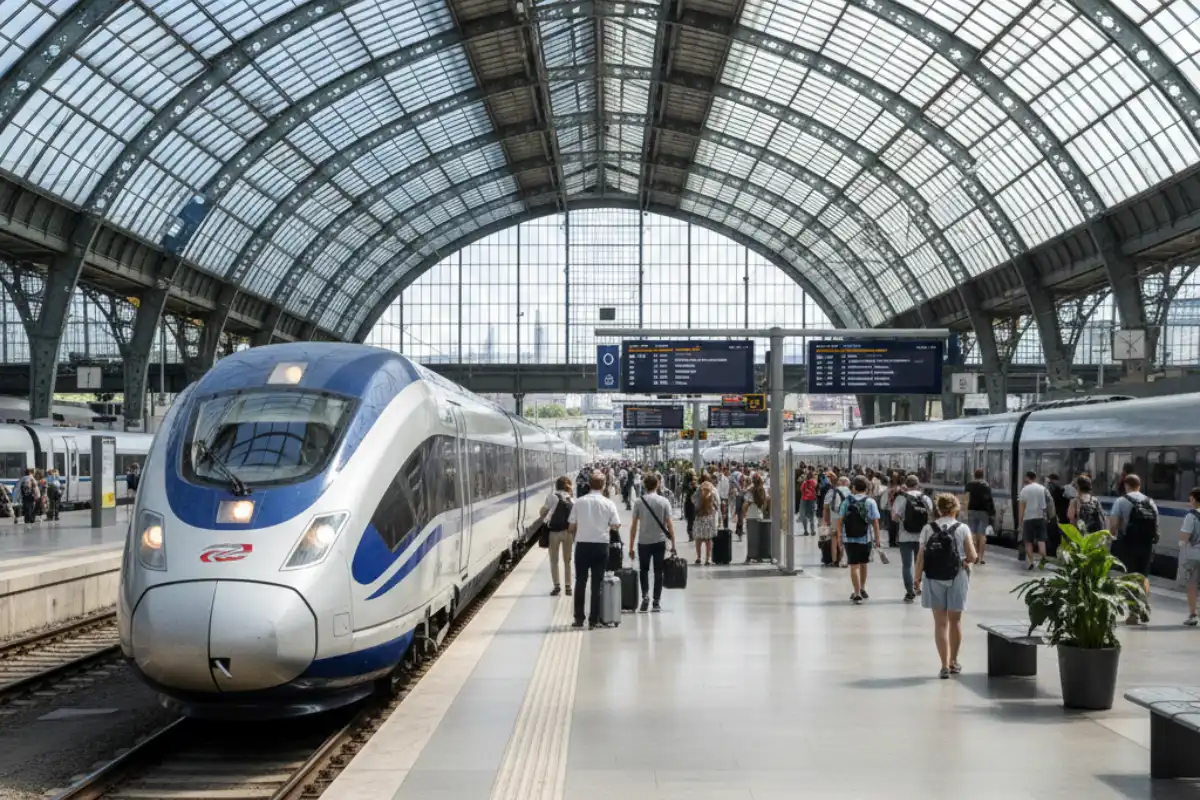
Most train-related thefts don’t happen on the train itself, but on the platform or near ticket machines. Professional pickpockets often work in teams.
- The “Helpful Stranger” Scam: Beware of anyone who approaches you at a ticket machine offering to help you bypass a “broken” screen or avoid a “fine.” They are often looking to see your PIN or swap your genuine ticket for a fake.
- The “Spilled Liquid” Tactic: A common trick reported in Paris and Rome involves someone “accidentally” spilling a drink on you. While they apologize and “help” you clean up, an accomplice swiped your bag.
- Keep Your Back to the Wall: When waiting for your platform to be announced, stand with your back to a pillar or wall to prevent anyone from approaching your backpack from behind.
“I always use a small retractable cable lock to secure my suitcase to the luggage rack on Italian trains. It takes five seconds to click, and it prevents the ‘grab and dash’ at intermediate stops where someone can snatch a bag just as the doors are closing.” — Advice from a frequent solo traveler on a European rail forum.
2. On-Board Security: Protecting Your Valuables
Once you are on board, the risk shifts from pickpockets to “luggage lifting,” especially on long-distance routes with many stops.
Pro Luggage Protocols:
- The “Line of Sight” Rule: If your bag is too large for the overhead rack, try to use the luggage stacks located in the middle of the carriage rather than the ones near the doors.
- Heavy Items on Top: If you must use the rack by the door, place your most valuable (and heaviest) bag at the bottom and loop a strap around the rack frame.
- Daypack Ownership: Never put your “daypack” (containing your passport, laptop, and wallet) in the luggage rack. Keep it between your feet or use it as a footrest.
3. Night Train Safety: Sleeping with Peace of Mind
Night trains like the ÖBB Nightjet are seeing a massive resurgence in 2026. Sharing a cabin with strangers requires a specific safety mindset.
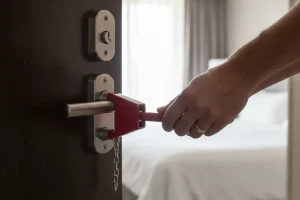
- Lock the Door: Almost all modern sleeper compartments have a deadbolt or security chain. Use it. If you are in a couchette (shared cabin), ensure the last person in for the night locks the door from the inside.
- The Pillow Safe: Put your most vital documents in a flat money belt or small pouch and keep it *inside* your pillowcase or under your mattress, not in a bag on the floor.
- The Top Bunk: If you are a solo traveler, the top bunk is often considered the most secure as it is the hardest for someone to reach into without waking you.
Frequently Asked Questions: Rail Safety
Are European trains safe for solo female travelers?
Absolutely. Most trains are well-lit and have CCTV. For added comfort on night trains, many operators like ÖBB and Trenitalia offer “Ladies-Only” compartments which can be selected during the booking process.
What should I do if my ticket or passport is stolen on a train?
Immediately find the “Conductor” (train manager). They can help you file an internal report. You will also need to visit the local “Transport Police” (Polfer in Italy, Bundespolizei in Germany) at the next major station to get a formal police report for insurance and embassy purposes.
Is it safe to use the public Wi-Fi on European trains?
Train Wi-Fi is rarely encrypted. In 2026, it’s safer to use your own roaming data or a VPN (Virtual Private Network) if you must access sensitive information like banking apps while on board.
How do I verify if a person is a real ticket inspector?
Official inspectors will always be in uniform and carry a digital scanning device. They will never ask you to pay a fine in cash on the spot without providing an official printed receipt. If in doubt, ask to see their staff ID badge.
Are there specific stations I should be more careful in?
Major hubs like Paris Nord, Rome Termini, Brussels Midi, and Barcelona Sants have higher rates of petty theft. Be extra vigilant in these locations, especially late at night or in crowded metro transfer tunnels.
Conclusion: Enjoy the Journey, Stay Alert 🛤️
European train travel is a joy that offers a unique perspective on the continent’s diverse landscapes. By implementing a few common-sense security habits like locking your luggage and staying aware of your surroundings you can ensure your memories are of the Alps and the Mediterranean, not of the local police station. Safe travels!