Stargazing in winter: Best locations
Winter is arguably the best season for astronomy enthusiasts. While the cold demands serious preparation, the resulting benefits are unparalleled: **longer nights, lower humidity, and a uniquely clear atmosphere** that dramatically reduces light scattering. Furthermore, the winter sky features some of the brightest constellations, including the magnificent **Orion**. To maximize your celestial viewing, you need to target locations with minimal light pollution and ideal atmospheric conditions.
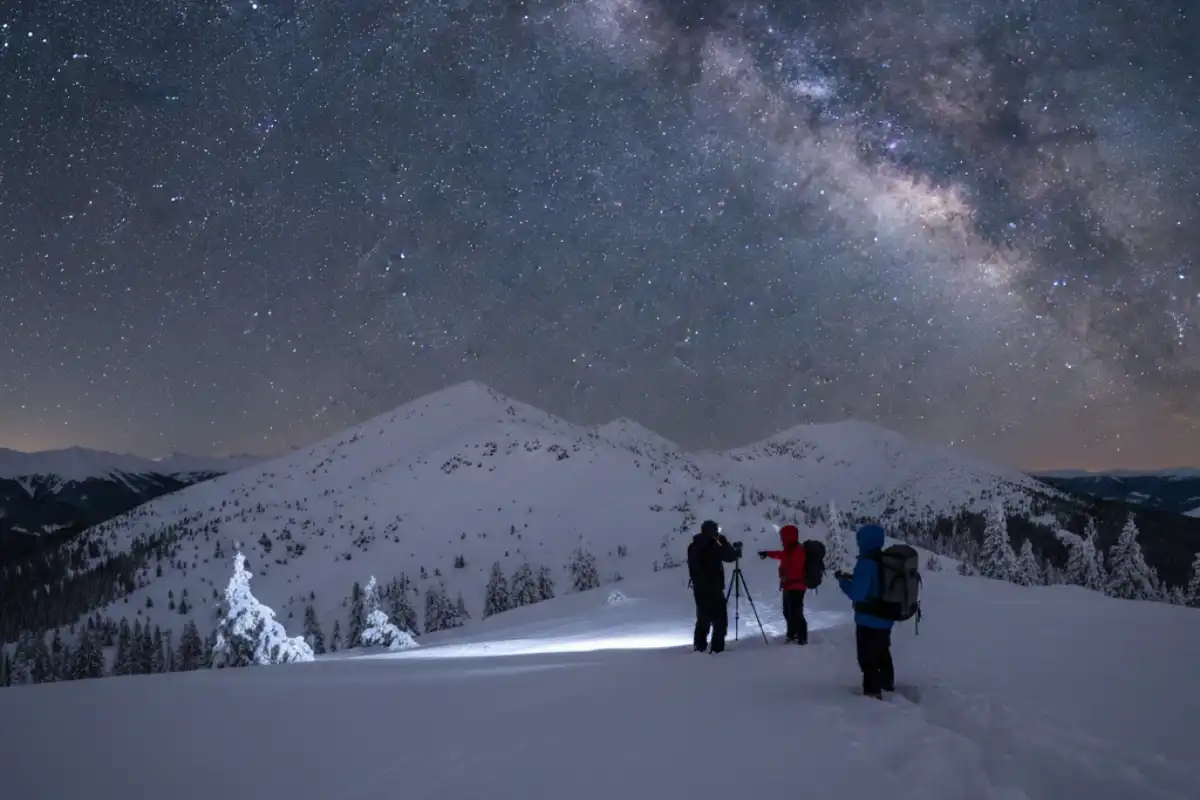
Why Winter Skies Are Superior for Viewing
The cold weather is an ally to stargazers:
- **Atmospheric Clarity:** Colder air holds less moisture (lower humidity). Less moisture means less atmospheric turbulence and fewer microscopic particles to scatter starlight, resulting in a crisp, sharp view.
- **Longer Nights:** In Northern Latitudes, the nights are significantly longer, providing more viewing windows, even in the early evening.
- **Celestial Highlights:** The Northern Hemisphere is treated to the **Winter Hexagon** (featuring Rigel, Aldebaran, Capella, Pollux, Procyon, and Sirius) and the stunning Orion Nebula.
Best Locations: International Dark Sky Reserves
The International Dark-Sky Association (IDA) designates areas with exceptional quality of starry nights and commitment to protecting them from light pollution.
1. Aoraki Mackenzie International Dark Sky Reserve (New Zealand) 🇳🇿
Recognized as one of the darkest places on Earth, this reserve in the Southern Hemisphere offers unrivaled views of celestial objects invisible to northern observers, including the **Magellanic Clouds** and the **Southern Cross**.
- **Astrophotographer Review:** “The clarity here is breathtaking. We captured detail in the Small Magellanic Cloud that we could only dream of seeing in the Northern Hemisphere. The low light pollution makes it worth the long journey.” (Source: Global Astronomy Photography Forum)
2. Jasper National Park (Alberta, Canada) 🇨🇦
As the second-largest Dark Sky Preserve in the world, Jasper combines easy accessibility with mountainous terrain, creating perfect viewing conditions. Winter here means clear, frigid nights that often yield stunning visibility.
3. NamibRand Nature Reserve (Namibia) 🇳🇦
Though not a traditional “winter” location in the Northern Hemisphere sense, its high altitude and extremely arid climate (minimal moisture) make it ideal year-round, including during Southern Hemisphere winter (Northern summer). It’s rated Gold Tier by the IDA.
Best Locations: For the Northern Lights 💚
Winter is the peak season for viewing the **Aurora Borealis** (Northern Lights) due to the long hours of darkness. The best spots are located within the **Auroral Oval** (between 65°C and 72°C North latitude).
- **Yellowknife, Northwest Territories, Canada:** Often cited as the best location due to its location directly under the Auroral Oval and its clear, dry winter climate. Yellowknife offers specialized heated viewing facilities.
- **Tromsø, Norway:** Accessible and located well within the Arctic Circle. The coastal location means weather can be variable, but clear nights deliver spectacular views over the fjords.
Safety Tip from Experienced Cold-Weather Observers
“Never skimp on preparation. If the temperature is -10°C, plan for -20°C with wind chill. Bring chemical hand warmers for your pockets and, crucially, for your equipment. A frozen camera battery or a fogged telescope mirror can ruin your night. **Insulate your tripod legs**; bare metal will freeze your fingers instantly.” (Source: Amateur Astronomer’s Gazette)
Frequently Asked Questions About Winter Stargazing
Why is Orion often easier to see in winter?
The constellation Orion is positioned high above the horizon during the Northern Hemisphere winter nights. When celestial objects are high up, you are looking through less of the Earth’s turbulent atmosphere, resulting in a clearer, sharper view of the constellation and its brightest star, Rigel.
Does cold weather affect telescopes or binoculars?
Yes. Rapid changes in temperature cause **dew or frost** to form on mirrors and lenses (fogging). To prevent this, bring your optics outside to cool down slowly before use, and consider using a battery-powered **dew heater strip** wrapped around the objective lens or corrector plate.
What is ‘light pollution’ and why is it so damaging to stargazing?
Light pollution is excessive, misdirected, or unnecessary artificial outdoor light. It scatters in the atmosphere, creating a bright skyglow that washes out all but the brightest stars, making deep-sky objects (nebulae and galaxies) completely invisible to the naked eye.
How can I view the Northern Lights without specialized equipment?
The Aurora is a naked-eye phenomenon. You need three things: **location** (within the Auroral Oval), **timing** (a high KP-index forecast), and **darkness** (a clear night, far from city lights). While cameras capture more color, a strong display is easily visible to the naked eye.
Is high altitude always better for stargazing?
Generally, yes. At high altitudes, there is less air above you, meaning less atmospheric absorption and turbulence. This provides greater clarity and better “seeing” conditions, which is why most professional observatories, like those in Chile or Hawaii, are built on mountain tops.
Conclusion: Embracing the Cold for Cosmic Wonders ✨
Winter offers the dedicated observer a cosmic feast unmatched by any other season. By choosing designated Dark Sky Reserves or high-latitude locations, and by rigorously adhering to cold-weather safety protocols for both yourself and your gear, you unlock the stunning clarity of the cold night sky. Prepare thoroughly, and you will be rewarded with views of celestial phenomena that will truly take your breath away.