Paris on a Budget: Your Essential Guide to Affordable & Safe Travel in the City of Lights
Paris, often synonymous with luxury, can indeed be explored on a budget without compromising on its charm and beauty. As of July 2025, while prices have seen a slight increase across Europe, careful planning and smart choices will enable you to experience the best of Paris without overspending. This guide focuses on practical tips for accommodation, dining, transportation, and crucial safety advice to ensure your trip is both economical and worry-free.

1. Cost of Accommodation in Paris: Budget Options
Finding affordable accommodation in Paris requires strategy. Hostels remain your best bet for significant savings, especially if you’re comfortable with dorm-style living. Prices can vary widely by arrondissement (district) and time of year (e.g., Olympic Games 2024 aftermath might still influence prices in July 2025, keeping them slightly elevated).
Hostel Prices by Arrondissement (Average per night for a dorm bed, July 2025)
| Arrondissement (District) | Description | Average Hostel Price (EUR/night) | Pros for Budget Travelers |
|---|---|---|---|
| **10th Arrondissement (Gare du Nord/Est)** | Lively, well-connected, many transport hubs. | €35 – €55 | Excellent transport links, diverse food options, many hostels. |
| **11th Arrondissement (Bastille/Oberkampf)** | Trendy, vibrant nightlife, bars, restaurants. | €30 – €50 | Great atmosphere, slightly less touristy than central, good food. |
| **18th Arrondissement (Montmartre – Lower areas)** | Historic, artistic, near Sacré-Cœur. Some areas are grittier. | €30 – €50 | Charming, unique vibe, lower prices closer to Gare du Nord. |
| **19th Arrondissement (Canal de l’Ourcq)** | Emerging, local feel, parks, canals. | €25 – €45 | Very budget-friendly, authentic Parisian experience, good parks. |
| **20th Arrondissement (Belleville/Ménilmontant)** | Multicultural, artistic, hilltop views, local markets. | €25 – €45 | Authentic, great street art, good local food. |
| **Latin Quarter (5th Arrondissement)** | Historic, student-friendly, vibrant, close to major sights. | €40 – €60 | Central, lively, easy access to attractions, slightly higher price. |
| **Le Marais (3rd/4th Arrondissement)** | Chic, historic, beautiful architecture, boutiques. | €45 – €70+ | Very central, fashionable, but higher prices even for hostels. |
Note: Prices are estimates and can fluctuate based on booking in advance, specific hostel reputation, and seasonal demand. Always check recent reviews.
Tips for Saving on Accommodation:
- **Book in Advance:** Especially for peak season (Summer, major events like Fashion Week, Olympic legacy periods), secure your spot months ahead.
- **Consider Private Rooms in Hostels:** Sometimes, a private twin room in a good hostel can be cheaper than a budget hotel, offering more privacy.
- **Look for Hostels with Kitchen Facilities:** This allows you to cook some of your meals, saving significantly on food costs.
- **Check Guesthouses/B&Bs:** Sometimes small, family-run guesthouses outside the most central areas can offer good value.
- **Stay Outside the Peripherique:** If you’re really on a tight budget, consider staying just outside the city ring road (Périphérique) in areas like Saint-Ouen, Montreuil, or Pantin. Ensure they have good Metro connections.
2. Cost of Food in Paris: Eating on a Budget
Parisian cuisine is a highlight, but it doesn’t have to break the bank. You can enjoy delicious food without always dining at Michelin-starred restaurants.

Enjoying local delights like fresh baguettes can be incredibly budget-friendly.
Estimated Budget Food Costs (July 2025):
- **Breakfast:** €3 – €8 (Croissant + coffee at a bakery: €3-5; simple breakfast at a café: €6-8)
- **Lunch:** €8 – €15 (Sandwich from a boulangerie: €5-7; “Formule midi” (lunch set menu) at a casual bistro: €12-15)
- **Dinner:** €15 – €30 (Casual bistro meal: €15-25; kebab/falafel: €7-10; supermarket meal: €5-10)
- **Daily Budget for Food:** €30 – €50 if you mix and match, cook some meals, and avoid tourist traps.
Budget Eating Tips:
- **Boulangeries (Bakeries):** Your best friend for cheap and delicious food. Grab a fresh baguette sandwich, quiche, or a pastry.
- **Supermarkets (Monoprix, Carrefour City, Franprix):** Stock up on cheese, charcuterie, fruit, bread, and wine for picnic lunches by the Seine or simple dinners at your accommodation.
- **Markets:** Visit local markets (like Marché des Enfants Rouges or street markets in different arrondissements) for fresh produce, cheeses, and often prepared foods at reasonable prices.
- **Falafel in Le Marais:** Rue des Rosiers is famous for its delicious and cheap falafel. A must-try for budget-conscious foodies.
- **”Formule midi” / “Menu du jour”:** Many restaurants offer a cheaper set lunch menu (often 2-3 courses) on weekdays. This is a great way to experience good Parisian cuisine without the dinner price tag.
- **Picnics:** Pack a picnic and enjoy it in one of Paris’s beautiful parks (Luxembourg Gardens, Tuileries Garden, Champ de Mars).
- **Avoid Tourist Traps:** Restaurants right next to major attractions often have inflated prices and lower quality. Wander a few blocks away for better value.
3. Cost of Public Transportation in Paris
Paris boasts an excellent, efficient, and extensive public transport system, primarily the Metro, RER (suburban trains), buses, and trams. Using it is crucial for budget travel.
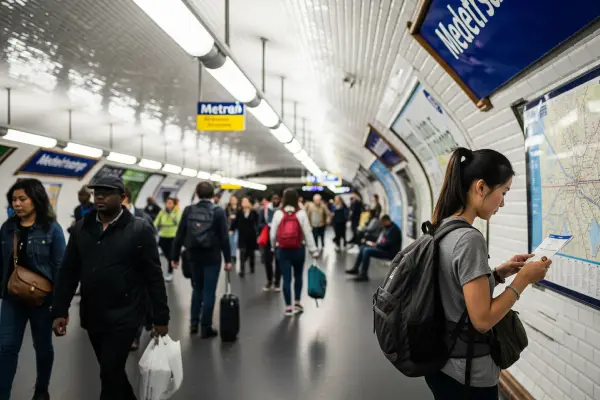
The Paris Metro is efficient and essential for budget travelers.
Fares (As of July 2025, subject to minor changes):
- **Single T+ Ticket:** Approximately €2.15. This ticket is valid for one journey on Metro, RER (within Zone 1), bus, or tram.
- **Carnet of 10 T+ Tickets:** Approximately €17.35 (saves money compared to buying singles).
- **Navigo Découverte Pass:** This is the best option for stays of **a full calendar week** (Monday to Sunday) or a full month.
- **Weekly Pass:** Around €30 for Zones 1-5 (covers central Paris, Versailles, Disneyland, both airports). Purchase requires a €5 Navigo card and a passport-sized photo. It’s valid from Monday to Sunday, so if you arrive on a Thursday, it might not be worth it unless you stay for the next full week.
- **Monthly Pass:** Around €85 for Zones 1-5.
- **Navigo Liberté +:** A pay-as-you-go system for Parisian residents, but also useful for frequent visitors for short trips. Charges your card based on usage at the end of the month. Not ideal for very short visits if you don’t plan to return soon.
- **Paris Visite Pass:** Generally **NOT recommended** for budget travelers. It’s often more expensive than a Navigo Découverte or individual tickets, even with its minor discounts to attractions.
Tips for Transportation:
- **Prioritize Navigo Découverte:** If your trip aligns with a Monday-Sunday week, this pass offers incredible value. Get it at any Metro station counter.
- **Walk When Possible:** Paris is a highly walkable city. Many major attractions are relatively close, allowing you to save on fares and discover hidden gems.
- **Google Maps/Citymapper:** Use these apps for real-time public transport navigation and to estimate journey times.
- **Validate Tickets:** Always validate your T+ ticket or Navigo pass when entering the Metro/RER or boarding a bus/tram to avoid fines.
4. Safety in Paris: Dangers, Scams, and Areas to Be Cautious
Paris is generally a safe city for tourists, but like any major European capital, it has its share of petty crime, especially targeting unsuspecting visitors. Awareness is your best defense.
Common Dangers & Scams:
- **Pickpockets:** This is the #1 danger. They operate in crowded tourist areas (Eiffel Tower, Louvre, Notre Dame area, Sacré-Cœur, major Metro lines like 1, 4, 13, 14, and RER B, C), and at transport hubs (Gare du Nord, Châtelet-Les Halles). They are often highly skilled and work in groups.
- **Scenarios:** Distraction tactics (someone “accidentally” bumps into you, asks for directions while another picks your pocket, “found” ring trick, fake petition signers).
- **Bracelet Scammers:** Near Sacré-Cœur, individuals might try to tie a “friendship bracelet” on your wrist and then demand money. Be firm, say “Non!” and keep walking.
- **”Gold Ring” Scam:** Someone “finds” a gold ring and tries to convince you it’s expensive, then tries to sell it to you.
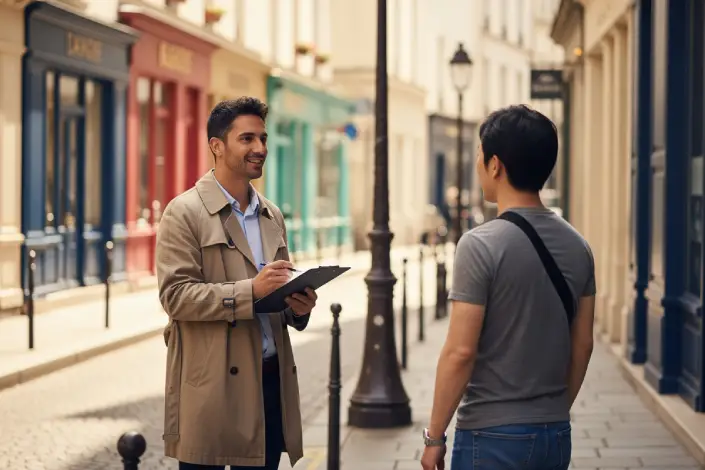
- **Fake Petitions:** Often by young women, they’ll approach you with a clipboard, asking you to sign a petition (often for a fake charity for the deaf or disabled). While you’re distracted, an accomplice picks your pocket.
- **ATM Skimming:** Be cautious at ATMs, especially those in isolated areas. Check the card slot for anything unusual.
- **Overpriced Taxis/Fake Taxis:** At airports or train stations, only use official taxi stands. Agree on a price or ensure the meter is running.
- **Restaurant Bill Scams:** Always check your bill carefully, especially if you feel pressured or there’s a language barrier.
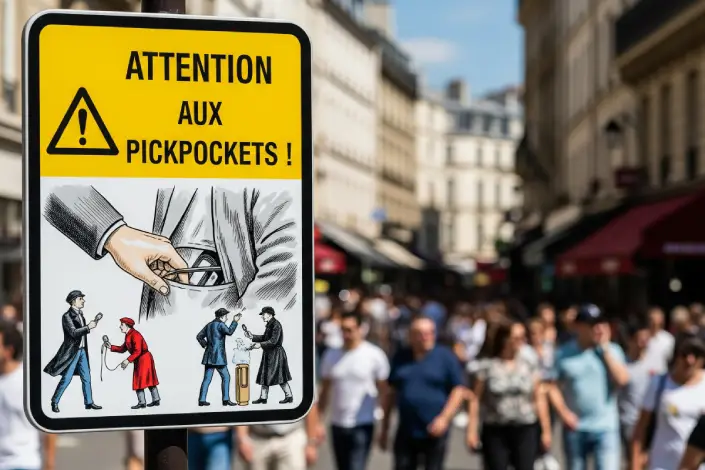
Areas Where Caution is Advised:
- **Major Tourist Attractions:** Eiffel Tower, Louvre, Notre Dame (even under construction), Sacré-Cœur, Champs-Élysées. Always be extra vigilant.
- **Châtelet-Les Halles Metro Station:** A huge, complex, and notoriously busy station – a pickpocket’s paradise. Keep belongings very secure.
- **Gare du Nord & Gare de l’Est:** Major train stations, especially at night. Be alert, keep valuables out of sight.
- **Barbès-Rochechouart (18th Arrondissement):** Known for higher petty crime rates. Be very aware of your surroundings.
- **Stalingrad/Jaurès (19th Arrondissement):** Can feel rough, especially at night. Not typically a tourist area, so avoid unnecessary visits, especially after dark.
- **Areas just outside the Périphérique, especially to the north (e.g., Seine-Saint-Denis suburbs like Saint-Denis):** While some have attractions (like the Basilica of Saint-Denis), research specific areas. Some can be less safe, particularly at night.
General Safety Advice:
- **Situational Awareness:** Always be aware of who is around you. Avoid walking with headphones in.
- **Secure Your Belongings:**
- Use a cross-body bag worn in front of you, or an anti-theft backpack.
- Do NOT put wallets in back pockets.
- Keep phones out of sight unless actively using them.
- Avoid flashy jewelry or overt displays of wealth.
- **Copies of Documents:** Keep digital and physical copies of your passport, visa, and important numbers separate from the originals.
- **Emergency Numbers:** Know 112 (European emergency number) or 17 (Police).
- **Trust Your Gut:** If a situation feels off, leave.
- **Night Safety:** Stick to well-lit, busy streets. Use official taxis or rideshares like Bolt/Uber (check driver/car details).
5. Tips for a Positive Parisian Experience
Beyond budgeting and safety, these tips will help you immerse yourself in the true Parisian spirit and make your trip memorable.
- **Learn Basic French Phrases:** “Bonjour,” “Merci,” “S’il vous plaît,” “Pardon,” “Au revoir” go a long way. Parisians appreciate the effort.
- **Slow Down and Observe:** Don’t rush from one landmark to another. Sit at a café, watch the world go by, enjoy a long meal.
- **Embrace Public Transport:** The Metro is efficient. Don’t be afraid to use it to explore different arrondissements.
- **Visit Markets:** Experience local life at food markets (e.g., Marché d’Aligre, Marché des Enfants Rouges) or flea markets (e.g., Les Puces de Saint-Ouen).
- **Enjoy Free Attractions:** Many museums offer free entry on the first Sunday of the month (check specific museum websites). Stroll through parks, walk along the Seine, admire street art in Belleville or Montmartre.
- **Don’t Be Afraid to Get Lost:** Some of the best discoveries are made when you wander off the main tourist paths.
- **Dress Smart-Casual:** Parisians generally dress well. While no need to be formal, avoiding overly touristy attire (e.g., fanny packs, sports jerseys) can help you blend in more.
- **Be Aware of Restaurant Etiquette:** Don’t expect speedy service. Meals are meant to be savored. Tipping is appreciated but not mandatory (service is included), rounding up or a few euros for good service is common.
- **Validate Your Expectations:** Paris is a living city, not just a postcard. There will be crowds, some grime, and occasional aloofness. Embrace it all as part of the authentic experience.
6. Paris Travel FAQs (July 2025)
Is Paris safe for solo female travelers in 2025?
Generally, yes. Paris is safe for solo female travelers, but vigilance is key. Stick to well-lit areas at night, use trusted transportation, and be aware of your surroundings, especially in crowded tourist spots and on public transport, where pickpocketing is common.
What’s the best time to visit Paris on a budget?
Off-peak seasons are best: **November to March** (excluding Christmas/New Year’s) or **April/May and September/October** (shoulder seasons). You’ll find lower accommodation and flight prices, fewer crowds, and pleasant weather. Avoid major holidays and special events if budget is your priority.
Can I use credit cards everywhere in Paris?
Mostly yes. Major credit cards (Visa, Mastercard) are widely accepted in restaurants, shops, and hotels. However, it’s always good to carry some cash for smaller purchases, local markets, or very small cafes/bakeries.
Is English widely spoken in Paris?
In major tourist areas, hotels, and larger shops, you’ll find many English speakers. However, knowing basic French phrases like “Bonjour” (hello), “Merci” (thank you), “S’il vous plaît” (please), and “Au revoir” (goodbye) is highly appreciated and can significantly improve your interactions with locals.
Are there free attractions in Paris?
Absolutely! Many of Paris’s best experiences are free: strolling along the Seine, picnicking in Luxembourg Gardens or Champ de Mars, exploring street art in Belleville, admiring the Eiffel Tower, wandering through charming neighborhoods, and visiting cemeteries like Père Lachaise. Many national museums (e.g., Louvre, Musée d’Orsay) offer free entry on the first Sunday of the month for all, or free entry year-round for EU residents under 26.
What is the best way to get from Charles de Gaulle Airport (CDG) to central Paris on a budget?
The RER B train is the most budget-friendly and efficient option. It connects CDG directly to central Paris (Gare du Nord, Châtelet-Les Halles, Saint-Michel Notre-Dame). A single ticket costs around €11.80. Taxis or private transfers are significantly more expensive.
Should I tip in Paris?
Service (service compris) is included in restaurant bills by law in France. Tipping is not mandatory but appreciated for excellent service. For cafes and casual meals, rounding up to the nearest euro or leaving a euro or two is common. For fine dining, 5-10% for exceptional service is a good gesture, but never feel pressured.
Your Parisian Adventure Awaits!
With these tips, you’re well-equipped to experience the magic of Paris without the stress. Embrace its culture, savor its flavors, and make unforgettable memories, all while staying within your budget.
Start Planning Your Paris Trip