Nozawa Onsen: Ski and Soak in a Traditional Village
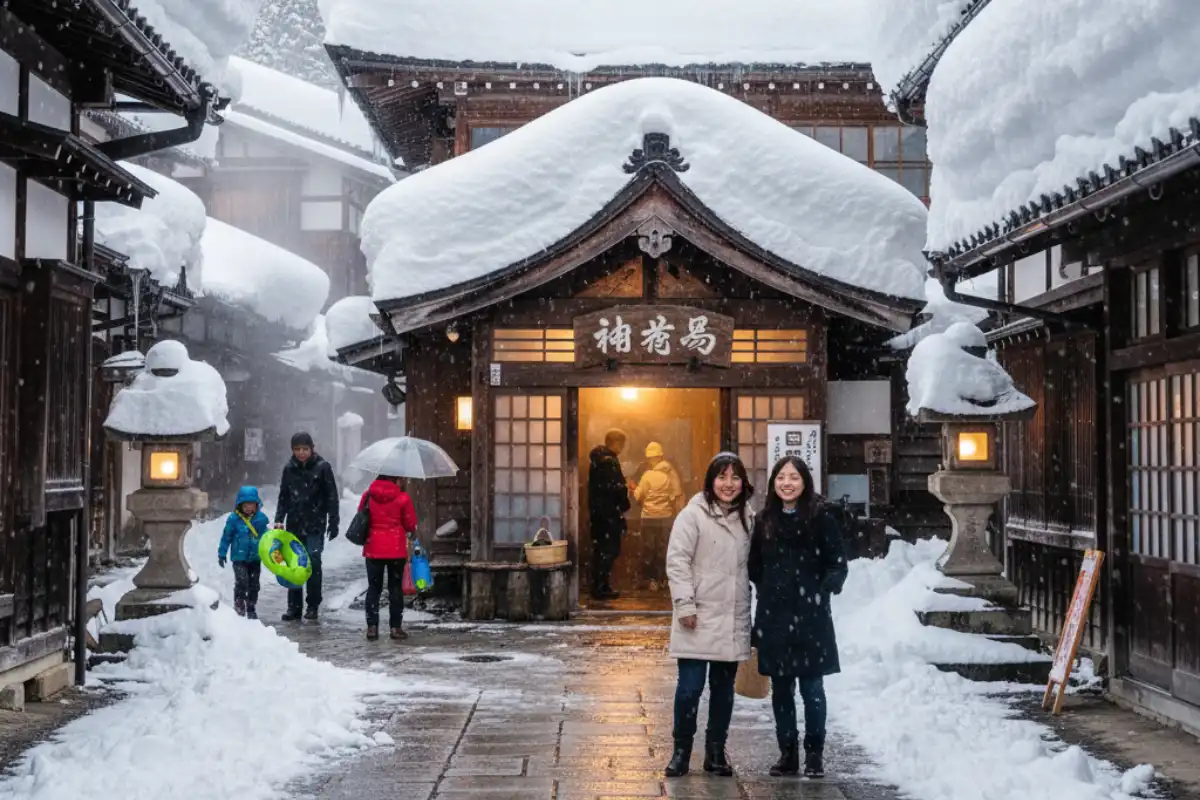
Nozawa Onsen, located in the snowy heart of Japan's Nagano Prefecture, is a unique destination where world-class powder skiing meets a 1,200-year-old onsen (hot spring) tradition. Famous for its heavy snowfall, charming village, and the free public hot springs dotted throughout, Nozawa Onsen offers a deeply cultural and exhilarating winter experience. This 2025 guide provides essential strategies for budget travelers, focusing on securing affordable *ryokan* or guesthouse lodging, enjoying incredibly cheap Japanese food, and utilizing the free local transport to make the most of that legendary *japow* without the premium resort price tag.
1. Japan Savings: Budget Accommodation & Hostel Costs (2025)
Accommodation in Nozawa Onsen is primarily found in traditional *ryokans* (inns) and family-run *minshukus* (guesthouses). The best budget options are usually found further away from the main Nagasaka gondola base.
Hostel & Budget Accommodation Prices by Area (Average per night, December 2025) – All Prices in Japanese Yen (JPY)
| Area/Neighbourhood | Description | Average Price (JPY/night) | Budget Focus |
|---|---|---|---|
| **Village Core / Nagasaka Gondola Base** | Closest to the slopes, main restaurants, and key free *sotoyu* (baths). | **¥6,000 – ¥12,000** (Minshuku/Ryokan basic room) | Convenient, but highest cost; look for shared *minshuku* rooms. |
| **Outskirts / Lower Village** | Quieter residential areas, slightly further from the main lifts. | ¥4,000 – ¥8,000 (Hostel Dorm Bed / Budget Guesthouse) | **Ultimate Budget Hack:** Best hostel/guesthouse density; rely on walking or the small local shuttle. |
| **Iiyama City (Shinkansen)** | Main transport hub (Shinkansen bullet train station), connected by bus. | ¥3,500 – ¥7,000 (Business Hotel / Hostel) | Cheapest lodging; requires a 25-minute bus ride to Nozawa daily. |
2. Sustenance: Affordable Japanese Street Food and Dining
Japanese cuisine outside of major tourist traps is often inexpensive and high quality. Nozawa Onsen, in particular, has great local food stalls and small restaurants that are perfect for budget travelers.
Estimated Budget Food Costs (December 2025)
- **Supermarket/Convenience Store (1-day self-catering):** ¥1,500 – ¥3,000 (Shop at the village market or 7-Eleven for *onigiri* and cheap essentials).
- **Budget Lunch (*Ramen/Udon/Curry*):** ¥800 – ¥1,500 (A hot bowl of ramen or curry rice is a filling, cheap lunch at the ski base or in the village).
- **Cheap Dinner Option (*Izakaya* Pub or Local Diner):** ¥2,500 – ¥4,500 (Small local diners offer great *teishoku* (set meals). *Izakayas* are affordable if you avoid over-ordering drinks).
- **Local Street Food:** Try the local *Onsen Tamago* (hot spring eggs) or *oyaki* (steamed dumplings) for cheap, filling snacks (around ¥200–¥500).
- **Estimated Daily Budget for Food (Street Food/Diner Mix):** ¥4,000 – ¥7,000.
3. Activities and Entertainment Costs (Skiing & Onsen)
Nozawa Onsen offers 50 km of varied terrain, known for its long cruisers and deep powder, plus the unique activity of soaking in the village’s hot springs.
- **Nozawa Onsen Day Lift Pass (Peak Season):** Approx. **¥6,200 – ¥7,500**.
- **Lift Pass Hack: Multi-Day Pass:** Buying a 2 or 3-day pass generally offers a marginal discount, but lift tickets in Japan are already quite reasonable compared to North America or Europe.
- **Ski/Snowboard Rental (Standard Kit, 1 Day):** Approx. **¥4,500 – ¥6,500** (Rent in the village; rates are competitive).
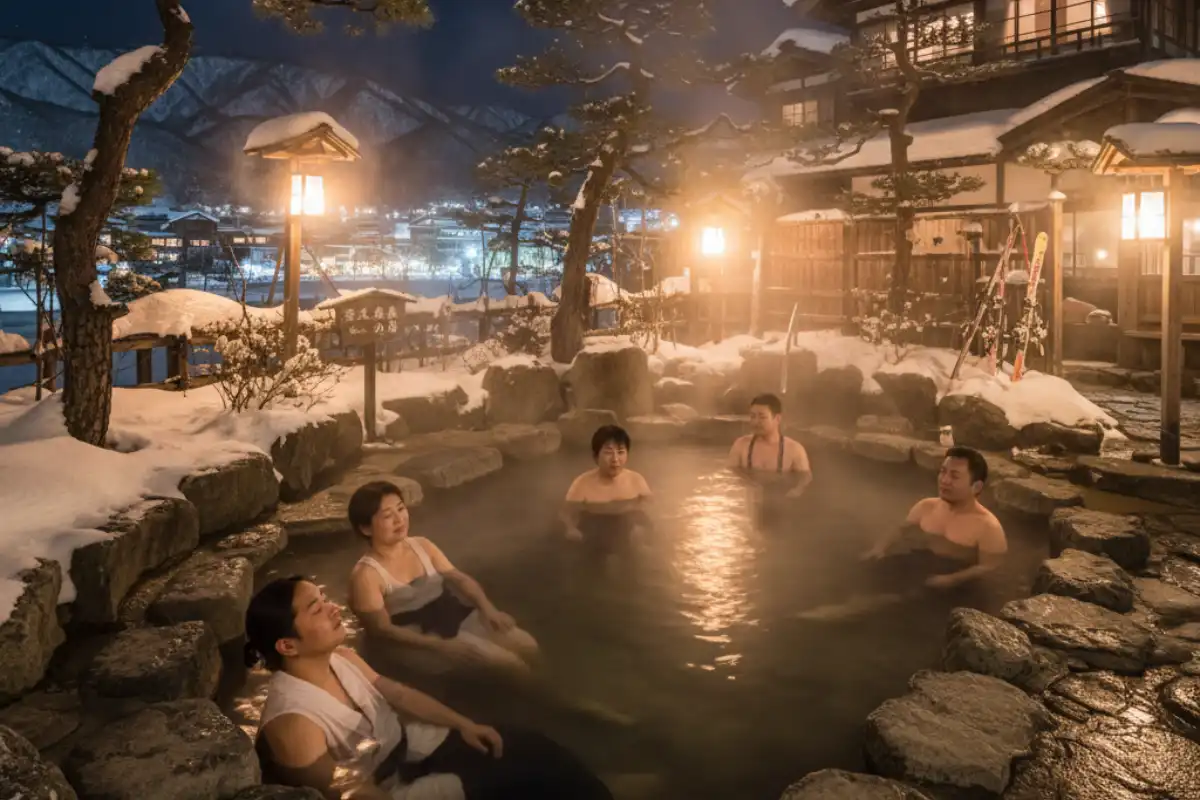
- **Public Onsen (Sotoyu):** The 13 public bathhouses scattered throughout the village are **FREE** (donations are encouraged and expected). This is your ultimate, daily, free après-ski activity.
- **Snow Monkey Park:** A popular day trip (paid entry and transport costs apply).
4. Getting Around: Local Bus and Walking
The main resort village is compact and best explored on foot. The local transport helps connect the village to the ski slopes and the outside world.
Essential Transport for Tourists:
- **Local Village Shuttle:** A small shuttle bus runs through the village, connecting the main areas and lift bases (like Nagasaka, Karasawa, and Hikage). This service is generally **FREE** or very low cost (included with the lift pass).
- **Dosojin Bus (Paid):** The main connection between the village and **Iiyama Station** (Shinkansen/Bullet Train). This is the key way to arrive and depart (approx. ¥1,000 per trip).
- **Walking:** The village itself is small. Walking (carefully, as streets are often icy and busy) is the best way to move between the *sotoyu* and restaurants.
5. Safety in Nozawa Onsen: Dangers and Scams (2025)
Japan is one of the safest countries globally, and crime is exceptionally low in Nozawa Onsen. The main dangers are related to the severe winter conditions and local customs.
Key Dangers for Tourists:
- **Deep Powder (*Japow*) Safety:** Nozawa receives huge amounts of light, dry snow. If skiing off-piste, be aware of **tree wells** and heavy snowfall, which can quickly disorient skiers. Never ski alone, especially off-trail.
- **Icy/Slippery Streets:** The village streets are often covered in ice and packed snow. Wear appropriate footwear with excellent grip to prevent falls and injuries while walking between the *onsen*.
There are no ‘no-go’ areas. The community is welcoming and safe.
- **Onsen Etiquette:** Improper use of the *sotoyu* (public baths) is the primary risk of causing offense. You **must** wash thoroughly before entering the bath. Tattoos are sometimes banned in private baths; check rules carefully. **No swimwear** is allowed in the traditional public baths.
- **ATM Availability:** While more ATMs accept foreign cards now, ensure you withdraw enough cash (Yen) at the airport or Iiyama Station, as some smaller village shops only accept cash.
Respect local customs and the deep snow for a positive, immersive experience.
6. Insider Tips for an Epic, Positive Nozawa Onsen Trip
- **The Sotoyu Circuit:** Dedicate time each day to visit several of the 13 free public *sotoyu* (outer baths). Each bath has slightly different mineral content and water temperature (which is often very hot!). It’s the perfect, authentic après-ski ritual.
- **Experience the Japow:** For powder hounds, use the long Nagasaka Gondola to access the highest and steepest areas. Look for the gladed runs off the Yamabiko area for the best deep powder when it’s fresh.
- **Visit the Breakfast Market:** Check out the small, temporary stalls that often pop up near the main village square in the mornings, offering cheap, fresh local snacks and sweets.
- **Try Local Sake:** Nagano Prefecture is famous for its sake. Visit one of the small local bars or sake shops to sample the regional brews at better prices than in large cities.
7. Essential Nozawa Onsen Travel FAQs (December 2025)
Is Nozawa Onsen suitable for beginners?
Yes. While famous for powder, the resort has a large, dedicated beginner area (Hikage Slope) and many wide, long, gentle cruising runs, particularly on the lower mountain.
What is the closest Shinkansen station?
The closest station on the Hokuriku Shinkansen line is **Iiyama Station**. From there, you must take the paid Dosojin bus (about 25 minutes) directly to Nozawa Onsen village.
Are the onsen baths free to use?
The 13 public bathhouses (*sotoyu*) operated by the village association are technically free for villagers and visitors. A small donation (often a few hundred yen) is greatly appreciated and expected to cover maintenance.
Do they accept credit cards in the village?
Major hotels and the lift ticket office accept cards, but many smaller restaurants, *minshukus*, and street vendors only accept **cash (Yen)**. Always carry enough cash for daily expenses.
What are the rules for tattoos in the onsen?
Tattoos are often forbidden in private commercial baths, but the public *sotoyu* in Nozawa Onsen are typically more tolerant. However, discretion is always advised; cover small tattoos or check the specific rules posted at each bathhouse.
Ready to experience the best of Japanese powder and traditional culture? Start planning your affordable Nozawa Onsen adventure today!
Find Affordable Nozawa Onsen Guesthouses Now