New Zealand’s Spring Awakening: The Southern Alps Come Alive
As of May 2026, travel enthusiasts across the globe are setting their sights on the southern hemisphere's upcoming transformation. While the North Island offers charm, it is the **Southern Alps (Kā Tiritiri o te Moana)** that truly "awaken" during the spring months of September through November. This is a season of dramatic duality: you can spend your morning carving through the last of the winter corn snow and your afternoon hiking through valleys where newborn lambs frolic in emerald pastures. According to the 2026 "Adventure Pulse" report by New Zealand Geographic and seasoned hikers on Reddit’s NZTravel, spring is the "sweet spot" for those who want to avoid the high-summer crowds while witnessing the raw power of nature. From the thunderous glacial melts to the silent, starry nights of the Mackenzie Basin, the Southern Alps are a masterpiece of regeneration. Here is how to navigate this legendary awakening.
1. The Glacial Melt: Milford Sound and Mount Cook
Spring is the season of “The Great Melt.” As the winter snowpack retreats, it fuels thousands of temporary waterfalls that cascade down the granite faces of Fiordland. For many travelers, this is the only time to see the Southern Alps in their most hydrated and powerful state.
- **Milford Sound (Piopiotahi):** Reviewers on TripAdvisor consistently note that spring rain which is frequent is actually a blessing. It activates the “thousand-waterfall” effect, making the cruise through the fiord feel like a journey into a prehistoric world.
- **Hooker Valley Track:** In Aoraki/Mount Cook National Park, the spring thaw often brings the sound of “white thunder” the distant roar of avalanches high on the peaks. The track itself is manageable and offers views of icebergs floating in the glacial lakes.
- **The Alpine Air:** The air quality in October 2026 is expected to be at its peak clarity, providing perfect conditions for “flightseeing” tours over the glaciers.
2. The Great Bloom: Lupins and New Life
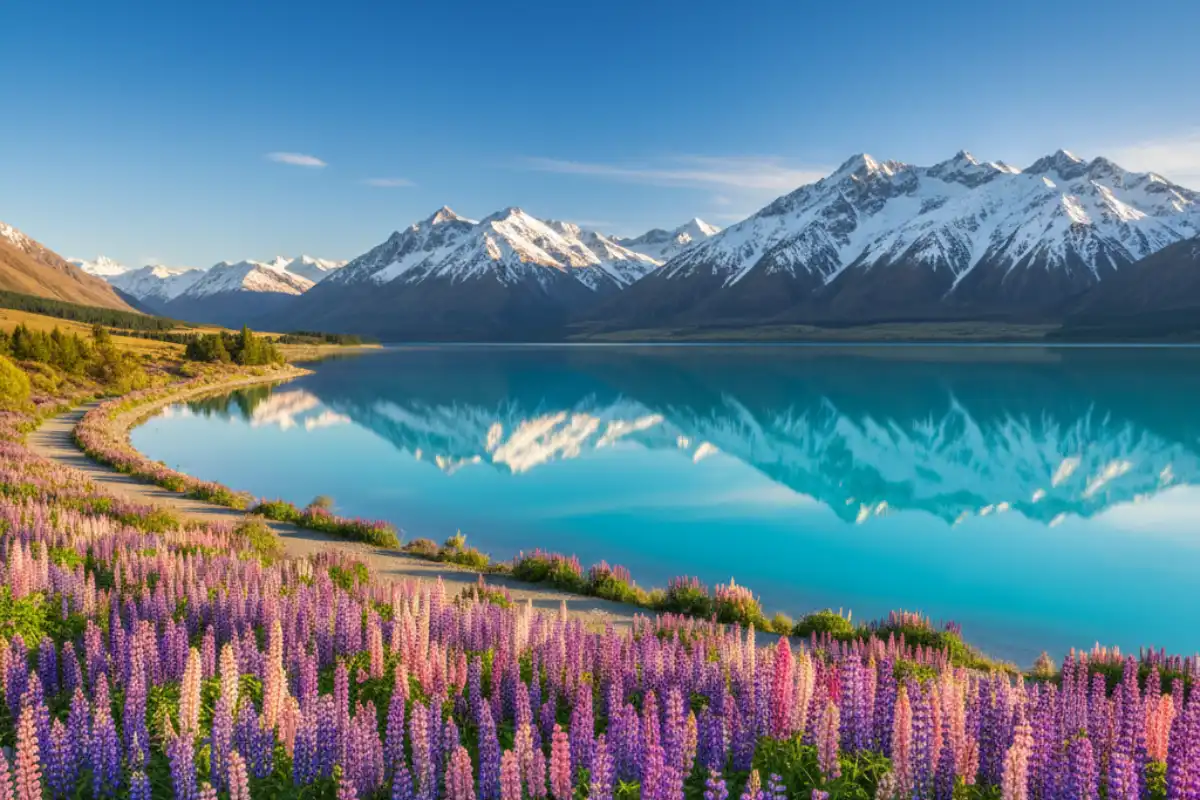
While the lupins of the South Island are an invasive species, their visual impact in late spring is undeniable. The shores of Lake Tekapo and Lake Pukaki become a sea of pink, purple, and blue, set against the backdrop of limestone-blue water.
Pro-Tip: The “Golden Window” for Lupins
“Timing is everything for the Tekapo bloom,” suggests a travel photographer on Lonely Planet’s forums. “For 2026, the peak is projected for mid-November. If you arrive too early in September, you’ll see the green shoots but no color. If you arrive in December, the heat starts to wither them. October to November is your ‘Golden Window’ for that iconic contrast between the purple flowers and the snowy peaks.”
The Mackenzie Basin Stargazing
Spring nights in the Mackenzie Dark Sky Reserve are crisp and clear. With the Milky Way core becoming more visible in the early hours, spring 2026 is touted as a prime year for astrophotography before the summer haze sets in.
3. Spring Adventure: Slush Skiing and Great Walks
For the active traveler, May 2026 forecasts suggest that the 2026 ski season will linger well into October. **Cardrona** and **The Remarkables** often offer “Spring Passes,” where the vibe is less about technical performance and more about sun-drenched “slush” skiing and mountain-top après-ski.
This is also the opening of the **Great Walks** season. While some higher passes (like the MacKinnon Pass on the Milford Track) may still have snow, the lower-altitude trails are at their most vibrant, with the native Kaka and Kea birds being particularly active during the spring nesting season.
Frequently Asked Questions: New Zealand Spring 2026
What is the weather like in the Southern Alps in spring?
Spring weather is highly unpredictable. You can experience “four seasons in one day.” Temperatures in Queenstown usually range from 8°C to 16°C (46°F–61°F), but it can drop below freezing at night. Layers are absolutely essential.
Is it still possible to ski in October?
Yes! Most major ski fields in the South Island aim to stay open until mid-October. It is known as “Spring Skiing,” characterized by softer snow, warmer temperatures, and a very festive, relaxed atmosphere.
Are the lupins blooming in September?
Usually, no. September is still a bit too cold for the lupins. You will start to see the first blooms in late October, with the full “carpet” effect reaching its peak in mid-to-late November.
Do I need to book the Great Walks in advance for 2026?
Absolutely. The booking system for the 2026/2027 season typically opens in mid-2026. Popular tracks like the Milford and Routeburn sell out within minutes. If you miss out, consider “Great Hikes” which don’t require pre-booked huts.
Are there many sandflies in spring?
Sandflies are present, especially in Fiordland, but they are generally less aggressive in the cooler spring months than in the heat of summer. Still, a good repellent is a must-pack item for any West Coast visit.
Conclusion: Witnessing the Rebirth
New Zealand’s Southern Alps in the spring of 2026 offer a rare glimpse into a landscape in flux. It is a time of incredible energy where the silence of the winter snow is broken by the rush of waterfalls and the chirping of alpine birds. By embracing the unpredictability of the season, you are rewarded with the most vivid colors and the freshest air the island has to offer. Whether you are standing at the foot of Aoraki or cruising the deep blues of the fiords, the spring awakening is an experience that resonates long after you’ve returned home.
Would you like me to help you draft a 10-day “Alpine Awakening” itinerary that focuses on the best photography spots between Christchurch and Queenstown for November 2026?