Kayaking for Beginners: What You Need to Know
Kayaking is one of the most accessible and rewarding ways to explore nature, offering a unique perspective on coastlines, lakes, and rivers. For beginners, the sport can seem intimidating, with specialized gear and complex terminology. However, starting out is simpler than you think. The keys to an enjoyable first experience are choosing the right boat, prioritizing safety, and mastering a few basic movements.
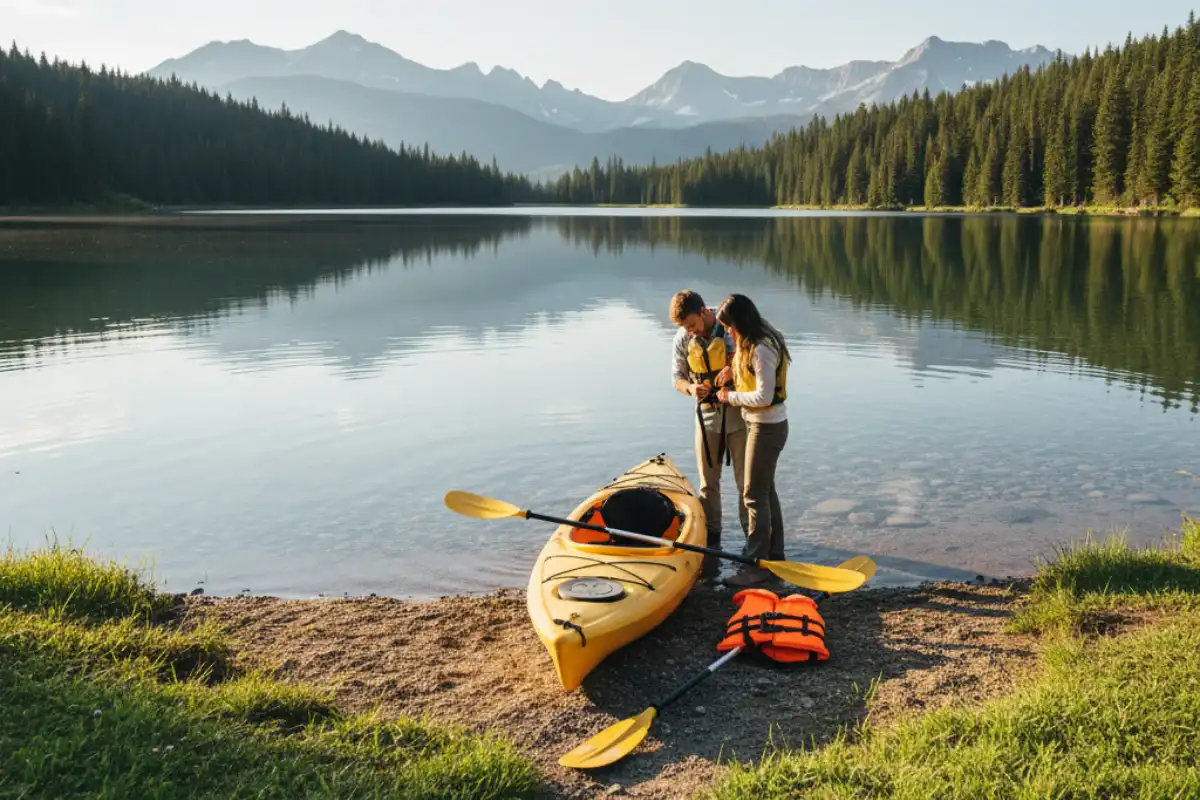
Choosing Your First Kayak: Sit-On-Top vs. Sit-Inside 🛶
The first step is selecting the right boat for your needs. For beginners, the choice usually comes down to two main types:
1. Sit-On-Top (SOT) Kayaks
SOT kayaks are molded with an open deck, making the paddler sit on a comfortable seat molded into the surface.
- **Pros for Beginners:** Extremely stable, easy to get on and off, and self-bailing (any water that splashes in drains out the scupper holes). They are virtually unsinkable and perfect for warm climates and casual recreation.
- **Cons:** You will get wet! They are slower and less efficient for long distances than sit-inside models.
- **Best For:** Lakes, slow rivers, ocean bays, fishing, and families.
2. Sit-Inside (SINK) Kayaks
SINK kayaks feature a closed deck and a cockpit where the paddler sits.
- **Pros for Beginners:** Offers better protection from the elements, keeps you drier, and is generally more efficient for longer paddling trips. They also offer enclosed storage space.
- **Cons:** More challenging to re-enter if you flip over (capsize), and they require practice with an “eskimo roll” or a wet-exit procedure.
- **Best For:** Cooler climates, calm to moderate rivers, and touring/distance paddling.
Paddling Instructor’s Advice: Captain Alex W., Kayaking School Owner
“If you are just starting out and plan to paddle exclusively on calm lakes or bays in the summer, **rent a sit-on-top first**. It eliminates the fear of capsizing and lets you focus purely on paddling technique. Never invest in a serious touring kayak until you’ve taken a basic safety course that covers wet exits and assisted rescue.”
Essential Gear and Safety Rules ⛑️
Never venture onto the water without these non-negotiable items and protocols.
1. Personal Flotation Device (PFD)
This is your life jacket. It must be **worn, not stored**. Your PFD should be comfortable, properly sized, and coast-guard approved. It is the single most important piece of safety gear.
2. The Paddle
Choosing the right size paddle is crucial for efficiency and comfort. Paddles are measured based on your height and the width of your kayak.
- **Beginner Tip:** When holding the paddle vertically on the ground, your nose or chin should be roughly aligned with where the paddle blade meets the shaft.
- **Feathering:** Pay attention to the angle of the paddle blades. Most are set at a slight offset (feathered) to reduce wind resistance on the non-submerged blade.
3. What to Wear (Dress for the Water, Not the Air)
This is a critical rule from experienced paddlers: Dress for the temperature of the water, not the air.
- **Cold Water:** Wear neoprene or synthetic insulating layers, often called a wetsuit or drysuit, to prevent hypothermia if you capsize.
- **Warm Water:** Wear quick-drying synthetic clothing (not cotton) and always use sunscreen, a hat, and sunglasses.
Sea Kayaker’s Mandatory Item: Jenni H., Long-Distance Kayak Forum
“Every time I launch, I carry a small, brightly colored **dry bag** with three things: my phone (in a waterproof case), my car keys, and a basic first-aid kit. I clip this bag to a fixed point in the boat. If I capsize, everything else might float away, but I can always call for help and drive home.”
Basic Paddling Technique: Power and Control 💪
Kayaking shouldn’t rely on arm strength. Effective paddling uses your core and torso.
1. The Power Stroke (Forward Motion)
The goal is to move the boat with your body’s large muscle groups (torso and legs), not your arms.
- **The Catch:** Rotate your torso and place the paddle blade fully into the water near your feet.
- **The Power Phase:** Push with your top hand and pull with your lower arm while rotating your torso. Imagine you are rowing a boat using your core, not just pulling with your biceps.
- **The Release:** Lift the blade cleanly out of the water near your hip. The motion should resemble a gentle, controlled twist of the body.
2. Steering and Turning
- **Sweeping Stroke:** To turn sharply, use a wide, sweeping stroke. Put the paddle in the water near your feet and sweep it in a wide arc back toward the stern (rear of the boat). Repeat on the opposite side to continue turning.
- **Ruddering (The Draw Stroke):** For small course corrections, place the paddle vertically into the water beside your hip and pull it toward the boat. This acts like a rudder to quickly adjust direction.
Frequently Asked Questions About Kayaking
Do I need to own a kayak to start kayaking?
No. **Renting is the best way to start.** Most coastal and lake towns have rental shops or tour operators that provide the kayak, paddle, and PFD for an hourly or daily fee. This allows you to try different types of kayaks and build skills before committing to a costly purchase.
What should I do if my kayak flips over (capsizes)?
Don’t panic! **Stay with the boat.** Your kayak will float. If you are in a sit-on-top, simply flip it upright, empty the water through the scupper holes, and climb back on. If you are in a sit-inside, perform a **wet exit** (push yourself out of the cockpit), stabilize the boat, and signal for assistance to re-enter safely.
How far can a beginner kayak safely in one day?
A physically fit beginner can comfortably paddle **3 to 5 miles (5 to 8 km)** in a calm setting without undue strain. Always plan your route with wind and current in mind. If you are traveling against a headwind on the way out, you will be exhausted on the way back.
Is it better to paddle alone or with a group as a beginner?
Always start by paddling **with a partner or in a guided group.** Having another person present is crucial for performing assisted rescues if you capsize or become fatigued. Never kayak alone until you are fully confident in your self-rescue and navigation abilities.
What should I pack inside my kayak?
Essentials include plenty of water, high-energy snacks, a small first-aid kit, and a whistle (required in many jurisdictions for signaling distress). Keep these items secured in a waterproof dry bag that is clipped into the kayak.
Conclusion: Paddle with Confidence
Kayaking offers tremendous freedom and tranquility, but it demands respect for the water. By starting with a stable kayak, making your PFD mandatory, and practicing the core technique of torso rotation, you quickly move past the beginner stage. Remember: safety is your launch checklist. Once you have the fundamentals down, you’ll find that kayaking is a low-impact, high-reward activity that opens up a whole new world of adventure on the water.