How to Verify the Safety of Your Accommodation
Finding the perfect place to stay is a cornerstone of any great trip, but a beautiful view means nothing without peace of mind. Your accommodation is your home base, the place where you relax and keep your belongings. Unfortunately, not all hotels, hostels, or rental properties are created equal when it comes to safety and security. Whether you're a solo traveler, a family on vacation, or a digital nomad, knowing how to vet your lodging is a non-negotiable skill. This guide will walk you through **how to verify the safety of your accommodation**, sharing essential tips and a practical checklist from seasoned travelers who have learned through experience how to secure their home away from home.
Pre-Booking Verification: Your Digital Detective Work 🕵️♀️
Your safety check starts long before you arrive. The internet is your most powerful tool.
1. Read the Reviews, with a Critical Eye 👀
Reviews are gold, but don’t just look at the star rating. Scroll down and **read the one and two-star reviews**, as well as any that mention “safety,” “security,” or “location.” Look for common themes. Do multiple people mention a loud neighborhood, a broken lock, or a lack of staff presence at night? Be wary of listings with only a handful of reviews, as they may not provide an accurate picture.
2. Use Google Street View and Satellite Maps 🗺️
Before you book, copy the address and paste it into **Google Maps**. Switch to Street View to get a feel for the neighborhood. Is it well-lit? Are there people around? Do the businesses look reputable? This is especially important for Airbnb and other private rentals, as it can give you a clear sense of the area you’ll be staying in. You can also see if there’s a police station or a fire station nearby, which can be a good sign.
Experienced Traveler’s Insight: Jen, from a Family Travel Blog
“I never book a place without first checking Google Street View. I once saw a listing that looked great online, but when I saw it on the map, I realized it was on a street with no streetlights and looked deserted at night. I immediately booked something else. It’s an easy step that can save you a lot of trouble.”
On-Site Security Measures: Your Arrival Checklist ✅
Once you arrive at your accommodation, take a few minutes to conduct a quick safety check.
1. Check the Locks and Doors 🔒
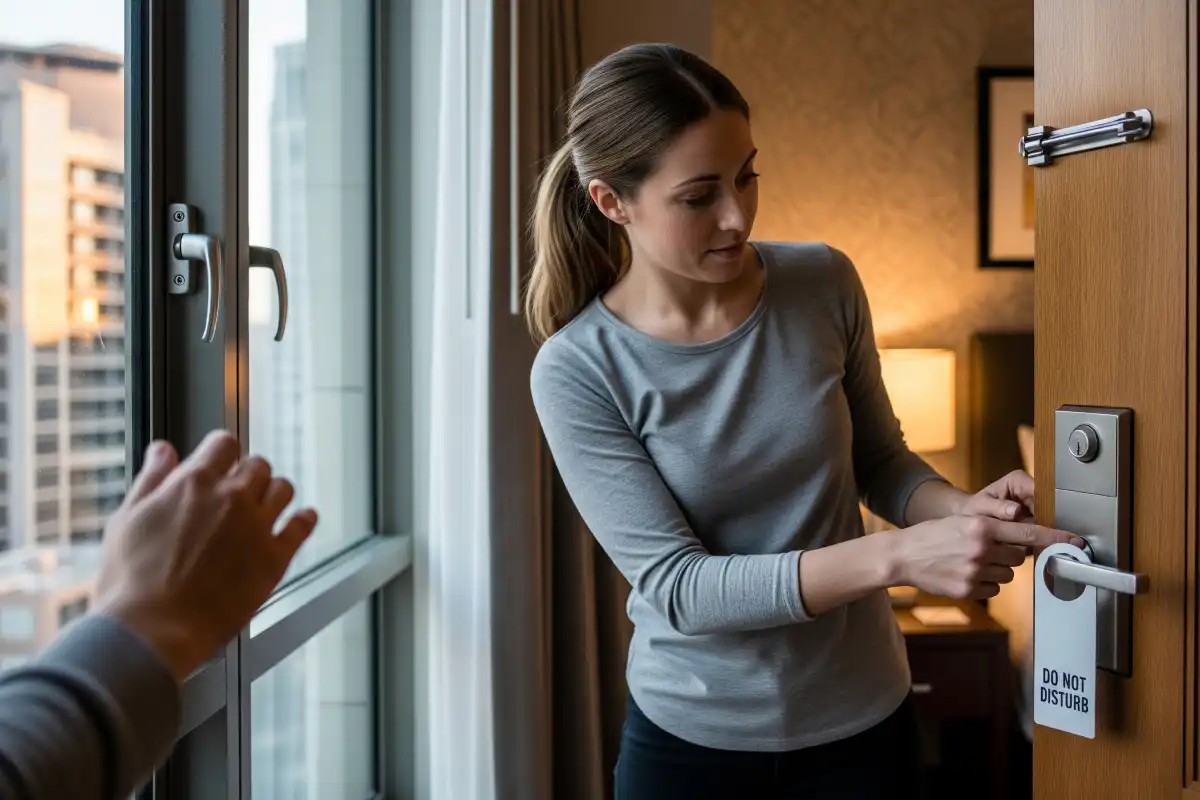
The first thing you should do is check all the locks on your door and windows. Does the main door lock securely? Is there a deadbolt or a chain lock? Do the windows have working locks? If anything seems broken, contact the front desk or your host immediately. Don’t be shy about asking for a room change if you feel something isn’t secure.
2. Use Portable Security Tools 🔑
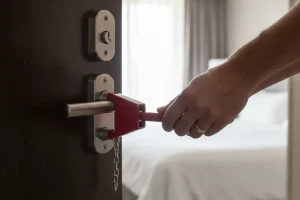
For added peace of mind, consider bringing your own security tools. A **portable door lock** (like a door jammer or a door stop alarm) is a fantastic tool for hotel rooms and private rentals. They are small, lightweight, and can provide a crucial extra layer of security. A **door alarm** can also be used to alert you if someone tries to enter your room.
3. Secure Your Valuables 💼
Never leave your valuables out in the open. Use the safe in your hotel room to store your passport, extra cash, and credit cards. If there is no safe, use a **TSA-approved padlock** to secure your valuables in your luggage. In a hostel, always use a padlock to secure your belongings in a locker. Out of sight, out of mind is the best policy.
Solo Traveler’s Advice: Chris, from a Backpacking Forum
“I never leave home without my portable door lock. It’s a tiny little thing, but it gives me so much peace of mind, especially when I’m staying in an older hotel or an Airbnb. It’s one of the best investments I’ve ever made for my safety.”
Frequently Asked Questions About Accommodation Safety
Are hostels safe for solo travelers?
Yes, most hostels are very safe. They are designed for solo travelers and often have strict security protocols. Look for hostels with 24-hour reception, keycard access to rooms, and individual lockers for your valuables. Reading reviews from other solo travelers is the best way to determine if a hostel is a good fit for you.
What about safety in an Airbnb?
Airbnb can be very safe, but it requires more due diligence. Read the host’s reviews carefully and check their response rate. Use Google Maps to verify the location and neighborhood. Once you arrive, check the locks and make sure the place feels secure. A portable door lock is a great idea for added security in a private rental.
Should I use the safe in my hotel room?
Yes, a hotel safe is a good place to store your most valuable items, like your passport and extra cash. However, keep in mind that many hotel safes can be opened with a master key or a simple code. For absolute security, it’s best to keep your most important documents on your person, in a money belt, when you are out and about.
Is it better to stay in a hotel or a private rental for safety?
Both can be safe, but they have different pros and cons. Hotels often have a 24-hour reception and security staff, while a private rental can give you a more authentic, local experience. The key is to do your research for both. A well-vetted Airbnb is often just as safe as a good hotel.
What if I feel unsafe after I’ve checked in?
If you feel unsafe for any reason, do not hesitate to leave. Your safety is your top priority. If you are in a hotel, ask for a room change or check out and find another place to stay. If you are in an Airbnb, contact the host and Airbnb’s support team to explain the situation. In an emergency, always call the local police.
Conclusion: A Secure Stay is a Happy Stay
The safety of your accommodation is a critical factor in the success of your trip. By doing a little bit of research before you book and taking a few proactive steps when you arrive, you can ensure a secure and peaceful stay. Remember, a secure stay is a happy stay. So, do your due diligence, pack your portable security tools, and get ready to enjoy your adventure with confidence and peace of mind.