How to Sleep in Airports Safely and Comfortably
Sleeping safely and comfortably in an airport requires **strategy, the right gear, and strong security awareness**. This comprehensive guide draws on the collective wisdom of seasoned travelers to give you the ultimate checklist. We cover how to find the elusive "sleep-friendly" zones, which minimal gear makes the biggest difference, and essential tips for ensuring your possessions remain secure while you rest. Master these techniques, and you'll turn a stressful layover into a restful transition.
Finding the Ideal Sleep Spot: Location, Location, Location 📍
Your ability to rest hinges entirely on where you set up camp. Not all airport areas are created equal.
1. Utilize Specialized Resources
Before you even arrive, check resources like **SleepingInAirports.net**. This site features crowdsourced reviews detailing the best (and worst) places to sleep in specific terminals, including photos of benches without armrests.
2. Target the “Four Corners of Comfort”
Look for these spots that are typically quieter and more secure:
- **Unused Gates:** Gates for flights that have already departed or gates near the very end of a terminal pier often have long, empty rows of seating.
- **Upper/Lower Levels:** Seek out observation decks, quiet chapels/prayer rooms, or baggage claim areas (before the official exit) these zones often have better seating and less foot traffic during off-hours.
- **Lounges (Day Passes):** If all else fails, purchasing a day pass to an airline or independent lounge (like Priority Pass) is a worthwhile investment. They guarantee quiet, comfort, and enhanced security for a few hours.
3. Look for Lie-Flat Seating
The most sought-after spots are chairs without armrests or padded, sunken areas designed for relaxation. If you can’t find a proper spot, move two or three seats together to create a flat surface. Avoid laying directly on the floor in highly visible, central areas, as security may move you.
Budget Backpacker’s Hack: Chloe, from a Solo Travel Forum
“If you’re stuck, check the **arrival halls of long-haul flights**. These halls are often equipped with much comfier, larger benches designed for family waiting. Also, I always pack a **lightweight yoga mat** it gives me a padded, insulated layer if I have to sleep on a hard floor or metal bench, making a huge difference in comfort.”
Comfort and Security Essentials: Gear and Protocols 🎒
A few key items and safety practices will elevate your experience from miserable to manageable.
1. The Minimalist Comfort Kit
Your carry-on should always include these items if overnight stays are possible:
- **Noise Canceling:** High-quality earplugs (or noise-canceling headphones) and an eye mask are non-negotiable for blocking out announcements and bright overhead lights.
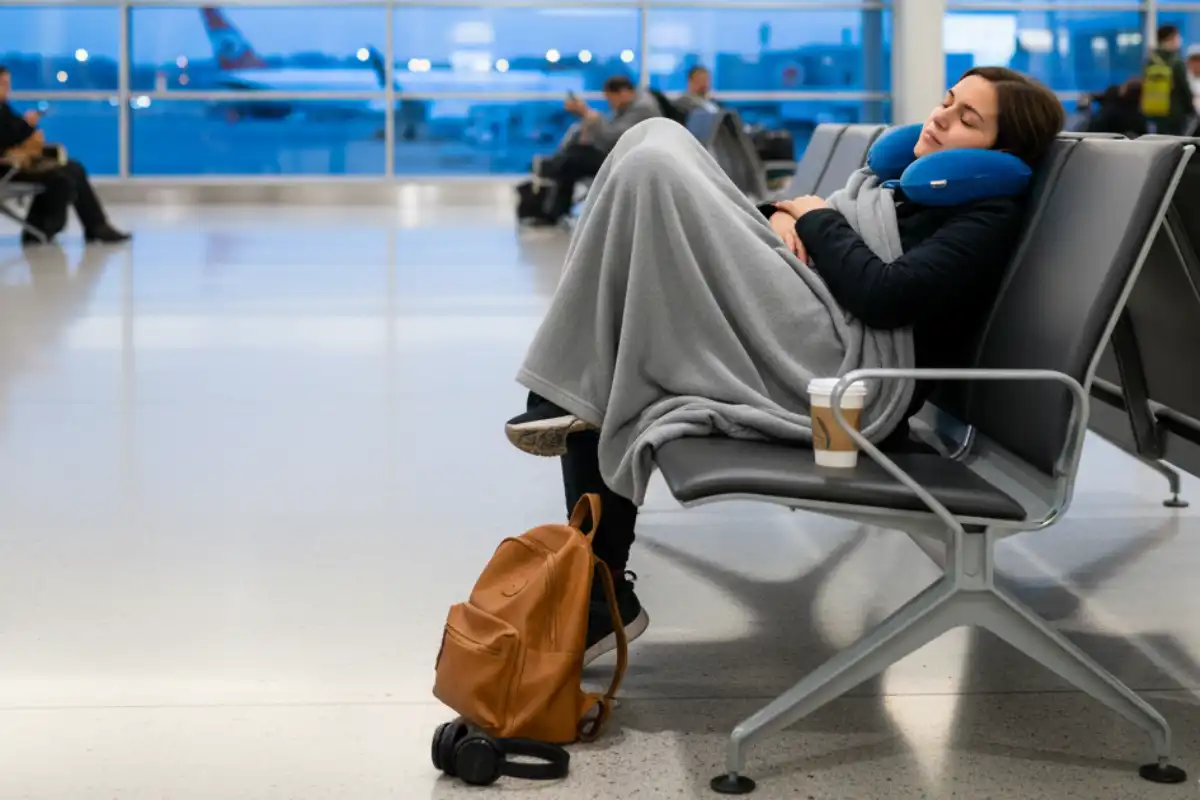
- **Warmth:** Airports are often kept cold. A large scarf, blanket-sized shawl, or a travel blanket is essential. Warmth is crucial for deep sleep.
- **The Neck Pillow:** The U-shaped travel pillow is a lifesaver, providing support for sitting upright or lying down.
2. Securing Your Valuables 🔒
The biggest risk when sleeping in public is theft. Never separate your valuables from your body.
- **Body Proximity:** Use your main backpack as a pillow or wedge it between your body and the wall/bench. Place essential items (phone, wallet, passport) in a small **daypack and secure the strap around your arm or leg** before you drift off.
- **Cable Locks:** Carry a small cable lock (like a bicycle helmet lock). Use it to secure the zipper pulls of your main bag together and then secure the bag itself to a fixed object, like a chair leg or a luggage cart.
- **Set an Alarm:** Set a subtle, vibrating alarm on your phone to go off every hour or so. A quick, subconscious check will confirm that your bags and surroundings are still secure.
Security Expert’s Advice: Captain John M., Aviation Security Consultant
“When traveling, avoid looking completely vulnerable. Don’t hide your face entirely under a blanket. Keep one earplug out, or use headphones that still allow you to hear announcements. **The most effective security protocol is awareness.** Before you close your eyes, note the nearest security camera, the nearest security officer, and the escape route.”
Frequently Asked Questions About Airport Sleeping
Is it legal to sleep in all airports?
Most major international airports allow sleeping in public areas, especially if you have a connecting flight or an early morning departure. However, some smaller, regional, or budget airports may close completely overnight, requiring travelers to leave the premises. Always check the airport’s official policy or an online resource like SleepingInAirports.net beforehand.
Where is the safest place to store my passport and money?
Never put these items in an outer pocket. Place them in a secure **money belt or neck wallet** worn under your clothing. When you sleep, these items should be resting directly against your body preferably in an area covered by the strap of your small daypack making it impossible for anyone to access them without waking you.
What should I do if a security guard asks me to move?
Be polite, cooperative, and pack up immediately. Ask the guard if they can suggest an alternative, quiet area where sleeping is permitted, such as a different terminal or a designated resting zone. Arguing or being confrontational will only lead to further problems.
Are the dedicated airport sleeping pods or capsules worth the price?
Yes, if you have a layover exceeding 6 hours and genuinely need deep, undisturbed sleep. These services (often rented by the hour) offer privacy, security, charging ports, and a real bed. Calculate the hourly rate versus the cost of a cheap nearby hotel; the pod is often the more convenient and sometimes cheaper option for short periods.
How can I keep my phone charged overnight while I sleep?
If you find a power outlet, secure your phone. Use a cable lock to secure the charger’s head to the outlet cover or nearby furniture. Alternatively, charge your phone fully before sleeping and rely on a **fully charged, high-capacity portable power bank** (at least 10,000 mAh) and keep the power bank secured in your zipped bag near your body.
Conclusion: Rested and Ready to Go
Sleeping in an airport is a quintessential experience for the seasoned traveler, transforming an inconvenient layover into an opportunity to save time and money. By employing proactive research to find the best spots, bringing the right gear for comfort, and adhering to strict personal security protocols, you can ensure your rest is restorative, not stressful. A successful airport slumber means you arrive at your final destination feeling energized and ready to embrace the next phase of your journey.