How to avoid flight delays in winter
Winter travel often brings the unwelcome certainty of flight delays and cancellations. While you can't control the weather or the air traffic control system, proactive planning can significantly reduce your exposure to chaos. Winter flight disruptions are often domino effects: one delay due to de-icing at a major hub can strand planes and crews hundreds of miles away, causing cancellations throughout the day.
Booking Strategies for Delay Minimization 📅
Your choice of time and route is the first line of defense against winter delays.
1. Fly Early in the Day
The single most effective strategy is to book the **first flight of the morning** (before 8:00 AM).
- **The Logic:** The aircraft and crew are likely already at the airport from the previous night, minimizing the risk of delays caused by a late-arriving inbound flight. If weather causes issues, you are first in line for de-icing and takeoff slots.
- **Traveler Tip:** “I never book anything later than 10 AM during the holiday season. Once the delays start around midday, they stack up. My early flights almost always leave on time, even if it’s snowing heavily.” (Source: Airline Crew Forum advice)
2. Choose Your Connection Wisely
Avoid connecting through airports known for severe winter weather and heavy traffic. If a connection is necessary, build in a generous buffer.
- **Avoid High-Risk Hubs:** If possible, bypass hubs like Chicago (ORD), Frankfurt (FRA), or Denver (DEN) during peak winter storms, as their high traffic volume makes recovery from weather difficult.
- **Build a Long Layover:** Book at least **90 minutes to two hours** for connections in winter. If your inbound flight is delayed, this buffer significantly reduces the risk of missing your second leg.
Airport and In-Flight Preparation 🎒
Minimize your personal impact from a delay by preparing for the worst-case scenario.
1. Pack Smart: Carry-On Essentials
Always assume your checked luggage will be delayed or lost. Carry crucial items with you:
- **Warm Layers:** The temperature inside a terminal or aircraft can drop quickly during a delay. Pack a warm jumper, scarf, or jacket in your carry-on.
- **Medication and Valuables:** Keep medication, prescription glasses, and important electronics with you at all times.
2. Monitor the Situation Proactively
Don’t rely solely on airport screens. Stay informed using your smartphone.
- **Track Your Plane:** Use flight tracking apps (like FlightAware) to track the status of your **inbound aircraft**. If the plane you are scheduled to take is already delayed elsewhere, you know your flight is next.
- **Know the Policy:** If a flight is canceled, quickly check the airline’s rebooking policy via their app. Having this information ready allows you to be one of the first in line (or on the phone) to rebook.
Aviation Journalist Insight: The De-Icing Factor
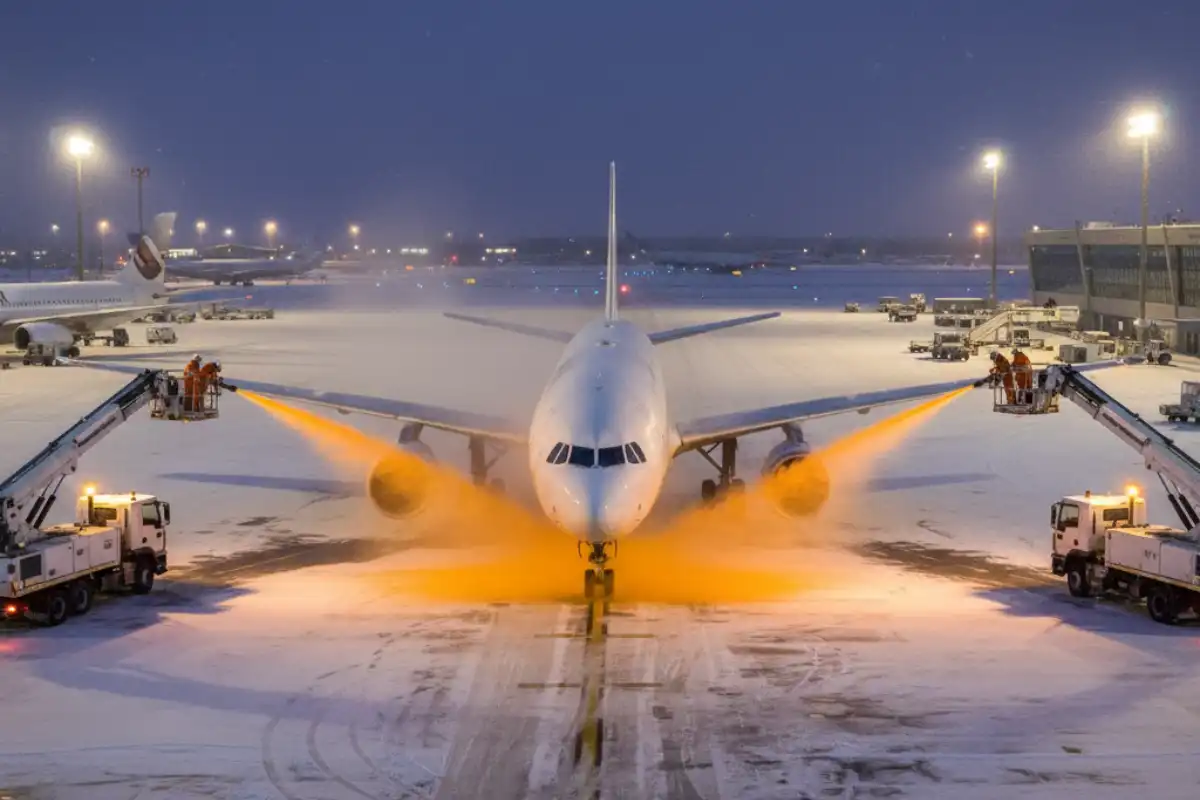
“The biggest non-weather-related delay factor in winter is de-icing congestion. Airlines must budget time for the process, which can take 15-45 minutes per plane. If you see a line for the de-icing pad, you can anticipate an immediate delay. The best airports have multiple de-icing stations or de-ice planes at the gate to keep traffic moving.” (Source: Specialized Aviation News Report)
Frequently Asked Questions About Winter Delays
Are long-haul international flights less likely to be delayed than domestic ones?
Not necessarily, but international flights generally have **longer scheduled turnaround times**, which gives the ground crew a bigger buffer to handle issues like de-icing or light delays. However, international routes are often flown by large wide-body aircraft, which take longer to de-ice.
What are my rights if my flight is canceled due to snow?
If the cancellation is due to weather (an “act of God”), the airline is generally not required to offer cash compensation. However, they are still obligated to get you to your final destination, usually by rebooking you on their next available flight or transferring you to another airline. Always confirm hotel and meal voucher eligibility.
Is it better to book a direct flight or a connecting flight in winter?
**Direct flights are always safer in winter.** Every connection is another opportunity for a delay to occur. If you are forced to connect, choose an intermediate airport in a region known for milder weather.
Does flying on major holidays increase the risk of delays?
Yes. During periods like Christmas and New Year’s, airports and skies are operating at maximum capacity. A small weather event during this time quickly causes massive delays because there is no slack in the system (fewer available aircraft and gates) to recover.
What should I do if the weather looks bad on my travel day?
Check in online as soon as possible. Download the airline’s app. If your flight is canceled, immediately call the airline while simultaneously trying to rebook via the app or website. Often, the phone line is slower than the technology.
Conclusion: Control the Controllables 🛡️
While you cannot control a blizzard, you can absolutely control how you prepare for it. By committing to an early morning departure, selecting low-risk routes, and packing strategically to weather any delay comfortably, you minimize your exposure to winter travel disruptions. A planned traveler is a smooth traveler, even when the forecast calls for snow.