Balkan Spring: Hidden Natural Treasure
As we navigate May 2026, a new frontier has emerged for travelers seeking the intersection of raw nature and deep history: the Balkans. While the Alps and the Mediterranean coastlines face increasing environmental pressure, the Balkan Peninsula remains a rugged, soulful sanctuary. Spring here is a dramatic affair — a time when the "Cursed Mountains" (Prokletije) begin to shed their icy armor and the emerald rivers of Bosnia and Herzegovina roar with the vigor of the alpine melt. According to 2026 dispatches from National Geographic Balkan and seasoned hikers on the Via Dinarica trail forums, this season is the ultimate window for those who value solitude. This guide explores the "hidden treasure" of Southeast Europe, where the blooming meadows meet limestone peaks that rival the world's most famous ranges.
1. The High Fells: Prokletije and Durmitor
In spring, the dramatic karst landscapes of **Montenegro** and **Albania** are undergoing a transformation. The snow-capped peaks provide a jagged white crown to valleys that are suddenly filled with endemic flora.
- **Durmitor National Park (Montenegro):** In May, the “Black Lake” (Crno Jezero) is surrounded by a dense forest of black pine, where the floor is carpeted with purple crocuses and rare alpine lilies.
- **Theth to Valbona (Albania):** The famous pass usually opens fully by early May. Hikers on AllTrails 2026 suggest that the spring melt creates dozens of temporary “ghost waterfalls” along the cliff faces that vanish by mid-June.
- **Biogradska Gora:** One of the last three primeval forests in Europe. Walking here in spring feels like entering a prehistoric world, where the greenery is so intense it feels electric.
2. The Roar of the Emerald Rivers
The Balkans hold some of the last free-flowing rivers in Europe. In spring, these “Blue Hearts” are at their most powerful and photogenic.
Pro-Tip: The Una River Magic
“If you want to see the power of the spring thaw, head to Štrbački Buk in Bosnia,” says a contributor to Outdoor Adventure Magazine. “In May 2026, the waterfall is at its maximum volume. The mist created by the 24-meter drop acts as a natural irrigation system for the surrounding mossy cliffs, creating a micro-environment of deep, saturated greens.”
The Soca Valley (Slovenia)
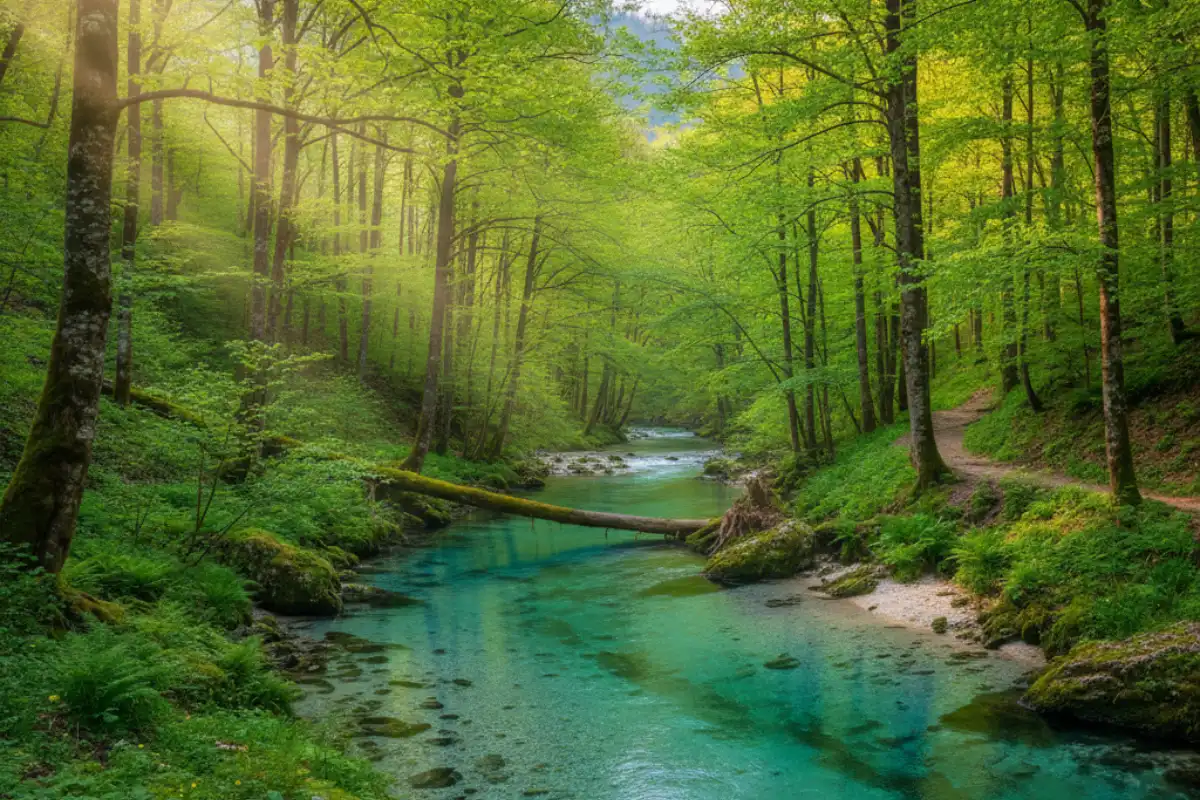
Slovenia’s Soca River is famous for its distinct turquoise hue. In spring, the water is crisp and the valley is filled with the scent of wild garlic and blooming fruit trees. It is the premier destination for sustainable fly-fishing and white-water kayaking before the summer sun lowers the water levels.
3. Coastal Blossoms: The Adriatic and Ionian
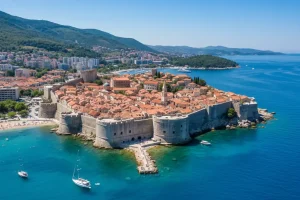
While the mountains are wild, the spring coastline of **Croatia** and **Montenegro** is refined and fragrant. In May 2026, the temperature in the Bay of Kotor sits at a perfect 22°C, ideal for exploring medieval stone towns without the humidity of July.
- **Wildflowers of the Pelješac Peninsula:** Famous for its red wine, this Croatian peninsula is a botanical wonder in May, with wild orchids and lavender starting to peak.
- **The Butrint Wetlands (Albania):** A UNESCO site where ancient ruins are overgrown with spring vines, providing a sanctuary for migratory birds.
Frequently Asked Questions: Balkan Spring 2026
Is it safe to hike in the Balkans in spring?
Yes, but you must be prepared for the “Balkan weather shift.” In the high mountains like Prokletije, a sunny morning can turn into a snowstorm within an hour in May. Always hire a local guide for high-altitude treks and use GPS-enabled maps like Outdooractive.
What is the best way to get around the region?
While bus networks connect major cities, a rental car is essential to reach the “hidden treasures” like the Una waterfalls or the Albanian mountain villages. In 2026, electric vehicle charging stations are more common, especially in Slovenia and coastal Croatia.
Are there many insects or bears to worry about?
The Balkans have a healthy population of brown bears and wolves. While sightings are rare, it is important to make noise while hiking and store food properly. Ticks are active in spring, so wear long trousers and use repellent.
Do I need to carry cash for my spring trip?
In 2026, cards are widely accepted in cities, but the “soul” of the Balkans — the mountain guesthouses and local markets — is still very much a cash economy. Carry Euros in Montenegro/Kosovo and local currency elsewhere.
Can I see the “Plitvice Lakes” without the crowds?
May is your best chance. By arriving at 7 AM on a weekday, you can enjoy the turquoise boardwalks of Croatia’s most famous park before the tour buses arrive. The waterfalls are also much more impressive in spring than in the dry summer.
Conclusion: The Call of the Wild
The Balkan spring of 2026 is an invitation to experience Europe as it once was unfenced, hospitable, and fiercely beautiful. It is a region where you can climb a mountain in the morning and dine on fresh Adriatic seafood by nightfall, all while surrounded by a landscape that is just waking up. This is not just a holiday; it is a rediscovery of the natural world at its most authentic. The meadows are blooming, the rivers are rising, and the mountains are waiting.
Would you like me to help you design a 10-day “Peaks and Rivers” itinerary that connects the best of Slovenia, Bosnia, and Montenegro for May 2026?