Winter travel in Japan: Snow festivals & onsens
Japan in winter is a study in spectacular contrasts: the glittering, massive scale of its **snow festivals** set against the serene, restorative warmth of its **onsen** (hot spring) culture. While the country is renowned for its cherry blossoms and autumn foliage, the winter months, spanning roughly from December to early March, offer a unique form of travel defined by deep snow, historic traditions, and profound relaxation.
The Grandeur of Snow Festivals: Art on Ice
Japan hosts numerous winter festivals, but the events in the northern island of Hokkaido are the biggest and most famous.
1. Sapporo Snow Festival (Yuki Matsuri)
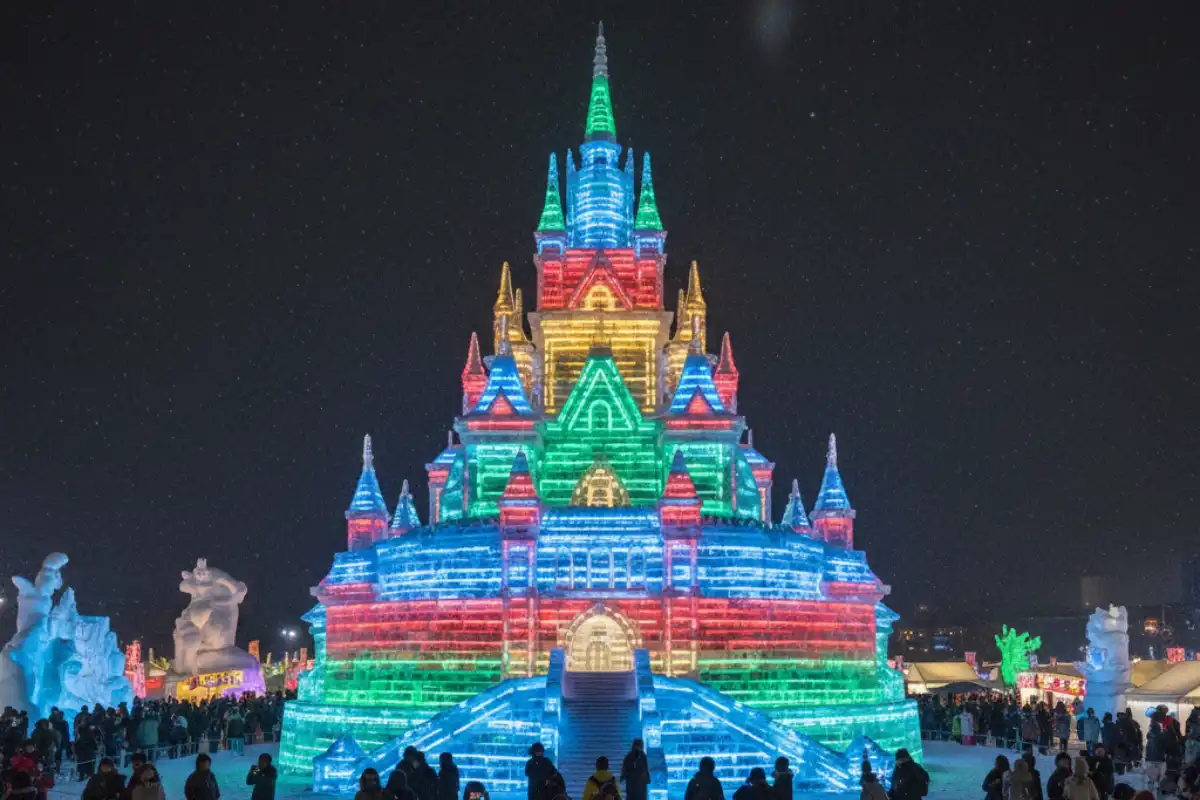
Held every February, the Sapporo Snow Festival is internationally renowned. It features hundreds of snow and ice sculptures, including massive architectural replicas and intricate animated scenes.
- **Key Sites:** The main site at **Odori Park** showcases the largest sculptures, while the **Susukino** site displays hundreds of smaller, illuminated ice carvings, often including an ice bar for drinks.
- **Traveler Tip:** “Hokkaido in February is bitterly cold, but the festival is worth it. Book your accommodation *months* in advance rooms sell out immediately after the dates are announced. Also, use the underground walkways in Sapporo; they save you from the wind and snow.” (Source: Japan Travel Forum)
2. Otaru Snow Light Path Festival
Also held in February, near Sapporo, the Otaru festival offers a quieter, more romantic experience. The canals and streets of this historic port city are illuminated by thousands of floating lanterns and snow candles.
The Serenity of the Onsen Experience: Relaxation and Tradition
No Japanese winter trip is complete without soaking in a natural hot spring. The best experience is found at a traditional *ryokan* (inn) with an attached outdoor *rotenburo*.
1. Best Onsen Destinations for Winter
- **Kurokawa Onsen (Kyushu):** Known for its atmospheric, traditional wooden inns and charming river setting, ideal for a quiet, restorative retreat away from city bustle.
- **Hakone (Central Honshu):** Accessible from Tokyo, offering stunning mountain views, and sometimes even glimpses of Mount Fuji, while soaking.
- **Nyuto Onsen Village (Tohoku):** Famous for its secluded, rustic feel and distinctively milky white thermal water, believed to have strong restorative properties.
2. The Jigokudani Monkey Park (Yudanaka)
A non-bathing but must-see thermal attraction. Visitors can watch **Japanese Macaques (Snow Monkeys)** relax in their own hot spring pool. This destination is often combined with a stay in the nearby Yudanaka or Shibu Onsen towns.
Practical Hacks for Winter Japan Travel 🚂
- **Japan Rail Pass:** Use the JR Pass strategically, as winter travel can involve significant distances (e.g., from Tokyo to Hokkaido). However, check if the pass covers the specific snow festival areas, as many require local lines.
- **Tattoo Friendly Onsen:** Traditional *onsen* often prohibit tattoos due to historical associations. However, many modern facilities, especially those within hotels or designated ‘tattoo-friendly’ pools (often private *kashikiri* baths), have relaxed their rules. Always research and call ahead.
- **Dress in Layers:** Indoors (especially trains and shops) are very warm. You need thin, quality thermal layers under a heavy, windproof outer layer, making it easy to adjust to temperature swings.
Frequently Asked Questions About Japan Winter Travel
When is the best time to visit Japan for the snow festivals?
The best time is usually the **first two weeks of February**, as this period typically covers the main dates for both the Sapporo Snow Festival and the Otaru Snow Light Path Festival.
Do I need special snow gear for visiting an onsen?
You need warm, easy-to-remove outer layers and simple slip-on shoes. Inside the *ryokan*, you will wear a provided *yukata* (cotton robe) and often geta (wooden clogs) for walking to the bath. A **heavy, cozy coat** is essential for the transition from the changing room to the outdoor *rotenburo*.
How cold does it get in Northern Japan (Hokkaido) in winter?
Hokkaido experiences severe cold, with average daytime temperatures in January and February often hovering between -10C and 0C (14F to 32F). Wind chill can make it feel much colder, so proper thermal clothing is non-negotiable.
Can I visit the snow monkeys on a day trip from Tokyo?
It is possible, but extremely long and exhausting (over 4 hours one way via Shinkansen and local trains/buses). It is highly recommended to spend at least **one night** in a nearby *onsen* town like Yudanaka or Shibu to break up the journey and fully enjoy the area’s hot springs.
Is the New Year period (late December) a good time for winter travel in Japan?
While atmospheric, New Year’s is one of Japan’s biggest public holidays. Many shops, restaurants, and sights close for several days, and transport is incredibly busy and expensive. The snow festivals also do not start until late January/February.
Conclusion: A Winter Journey of Extremes 🌸
Japan’s winter travel offers a perfectly balanced journey of extremes: the exhilarating, loud creativity of human endeavor at the snow festivals, followed by the silent, healing tranquility of the *onsen*. By preparing for the cold and respecting the local customs surrounding thermal bathing, you unlock a side of Japan that is deeply traditional, aesthetically stunning, and profoundly restorative.