Winter travel gear for photographers
Winter photography offers unique opportunities the soft light, the blanket of snow, and the clarity of the air. However, cold-weather conditions pose significant threats to camera gear, primarily due to **extreme cold** affecting electronics and the destructive power of **condensation** when moving equipment indoors. A successful winter photography trip depends as much on smart gear protection as it does on photographic skill.
Protecting the Electronics from Cold 🥶
Batteries and sensitive moving parts suffer the most in sub-zero temperatures.
1. Battery Management is Crucial
Lithium-ion batteries lose their charge much faster in the cold. A battery that lasts four hours in summer might last only one hour at 0°C.
- **Keep Them Warm:** Always carry spare batteries in an **inner pocket** close to your body heat (like a jacket or pants pocket). Only insert the battery into the camera immediately before shooting.
- **Battery Warmers:** Some photographers use chemical or electronic hand warmers taped to the battery grip for prolonged outdoor shooting, though this is only necessary in extreme cold.
2. Maintaining Usability
Winter gloves are essential for comfort but deadly for camera controls.
- **Photographer Gloves:** Invest in gloves designed for photography. These typically have **fold-back index finger/thumb caps** or are made of highly conductive material, allowing you to operate small dials and buttons without exposing your entire hand.
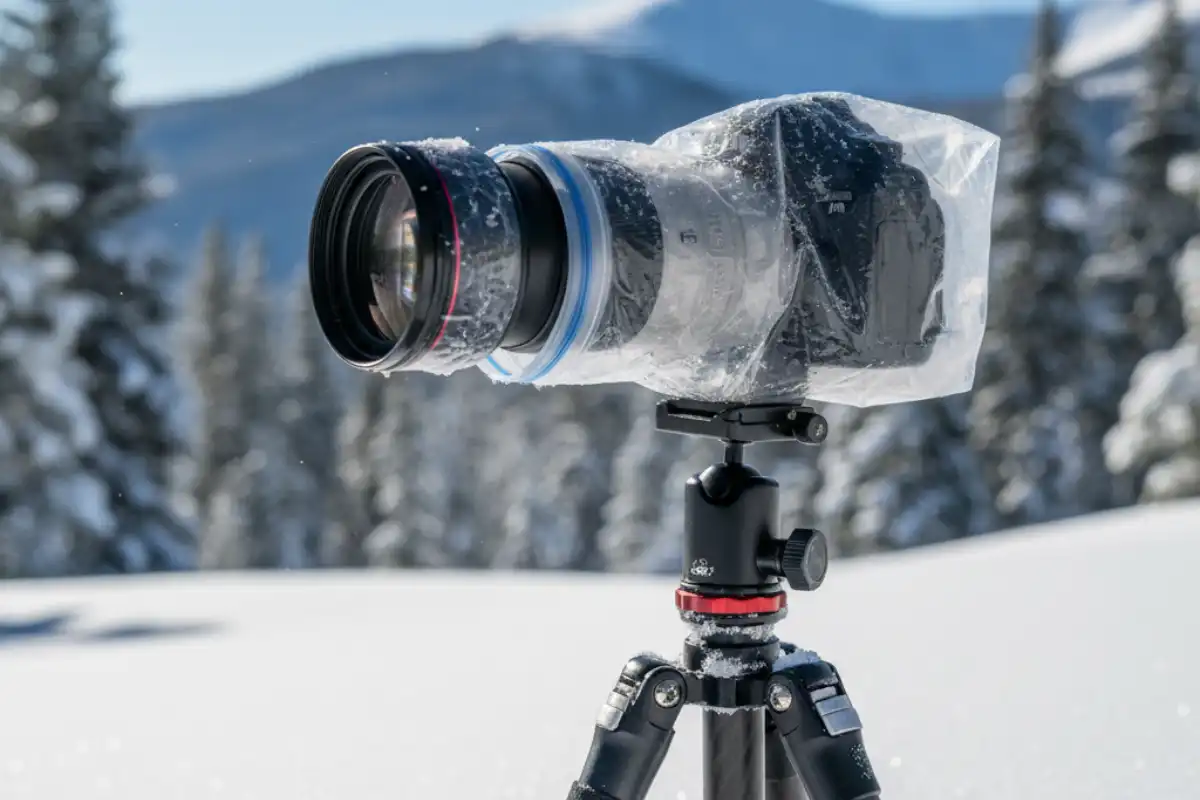
- **Rain Covers/Hoods:** Even dry snow can quickly melt and seep into electronics. A simple rain cover or a specialized **cold-weather camera jacket** can protect your camera body from falling snow and wind.
Professional Photographer Advice: The “Two-Battery” Cycle
“My routine is simple: I shoot with one battery until it drops to 50%, then swap it with a warm one from my inner pocket. The 50% battery goes straight into the warm pocket for rejuvenation. Batteries that feel ‘dead’ often regain significant power once warmed up. Never let a battery die fully outside; it takes too long to warm it back up.” (Source: Outdoor Photography Magazine)
The Condensation Protocol 💦
Condensation when warm, moist air meets a cold surface is the single greatest risk to your gear in winter, leading to fogged lenses and potential internal corrosion.
1. The Ziploc Bag Method
This is the simplest, cheapest, and most effective way to prevent condensation:
- **Before Going Inside:** Place your entire camera (lens attached) inside a large, **airtight Ziploc bag** or dedicated dry bag while you are still outside in the cold.
- **Seal and Wait:** Seal the bag completely, trapping the cold, dry air around the camera. Bring the sealed bag inside and let it warm up **slowly** for at least 1-2 hours. The condensation will form on the outside of the bag, not on your gear.
2. Use Desiccant Packs
Place a few packets of **silica gel desiccant** inside your camera bag. These absorb any moisture that does enter the bag, further protecting against condensation and humidity. Always keep the camera bag closed when not actively changing lenses.
Essential Accessories for Winter Shooting ⚙️
- **Tripod:** Necessary for low-light winter shots (dawn, dusk, long exposures of aurora/stars). Use a **carbon fiber** tripod, as metal ones get painfully cold to the touch.
- **Lens Cloths:** Pack multiple high-quality microfiber cloths. They will quickly become useless once damp or frozen, so having backups is crucial for wiping off snow or moisture.
- **UV/Protection Filters:** Use a clear UV filter on every lens. It serves as a sacrificial layer, protecting the front element of your expensive lens from snow, ice, or accidental bumps on hard, icy ground.
- **Hand Warmers:** These can be used for your hands or, strategically, placed inside your camera bag (near spare batteries) for added warmth.
Frequently Asked Questions About Winter Photography Gear
Does cold weather permanently damage camera sensors?
Extreme cold (well below freezing) can slow down mechanical components and affect the LCD screen responsiveness. However, permanent damage is **rare** unless the camera is exposed to sudden temperature changes that cause condensation, which can short circuit electronics.
Should I use lens heaters to keep condensation off my lens?
Lens heaters (usually designed for astrophotography) are primarily used to prevent **dew** from forming on the lens when the outside air is humid. They can be useful in very damp cold conditions, but the Ziploc bag method is better for preventing condensation when moving between cold and warm environments.
Is it safe to change lenses outside in the snow?
It’s generally advised against. Snowflakes or moisture can easily enter the camera body and land directly on the sensor, causing spots or condensation. If you must change lenses, do it quickly, with your back to the wind, and ideally **under a protective layer** (like inside your jacket or a portable shelter).
How do I keep my tripod from sinking into the snow?
Use **snow baskets** (small circular attachments) on the bottom of the tripod legs, similar to those used on trekking poles. These increase the surface area and prevent the tips from sinking deeply into soft snow, providing a much more stable base for long exposures.
Do I need a special camera bag for winter travel?
A specialized bag isn’t necessary, but choose one that is **waterproof or highly water-resistant** and has **thick padding** for extra insulation against the cold. A dedicated tripod attachment is helpful, and internal pockets for keeping batteries warm are a bonus.
Conclusion: Discipline Protects Your Investment 🌟
Winter photography is highly rewarding, but the joy of the scenery should not overshadow the need for discipline. The two key rules **keep batteries warm** and **prevent condensation with the Ziploc bag method** will protect your expensive investment. By prioritizing these simple gear strategies, you ensure that your equipment remains functional and ready to capture the breathtaking beauty of the cold season.