Winter Glamping: What to Expect and How to Stay Cozy in Luxury
Glamping, or glamorous camping, takes on a magical dimension in winter. Trading a leaky tent for a sturdy, insulated structure like a **yurt**, **geodesic dome**, or **safari tent** allows travelers to fully immerse themselves in stunning, snowy wilderness while retaining access to crucial luxuries like reliable heat, hot water, and a proper bed. It’s the ultimate way to enjoy the silence and beauty of winter without sacrificing comfort.
The Accommodations and Essential Heating Systems 🏠
The structure and its heating source determine the quality of your winter glamping experience.
1. Geodesic Domes and Safari Tents
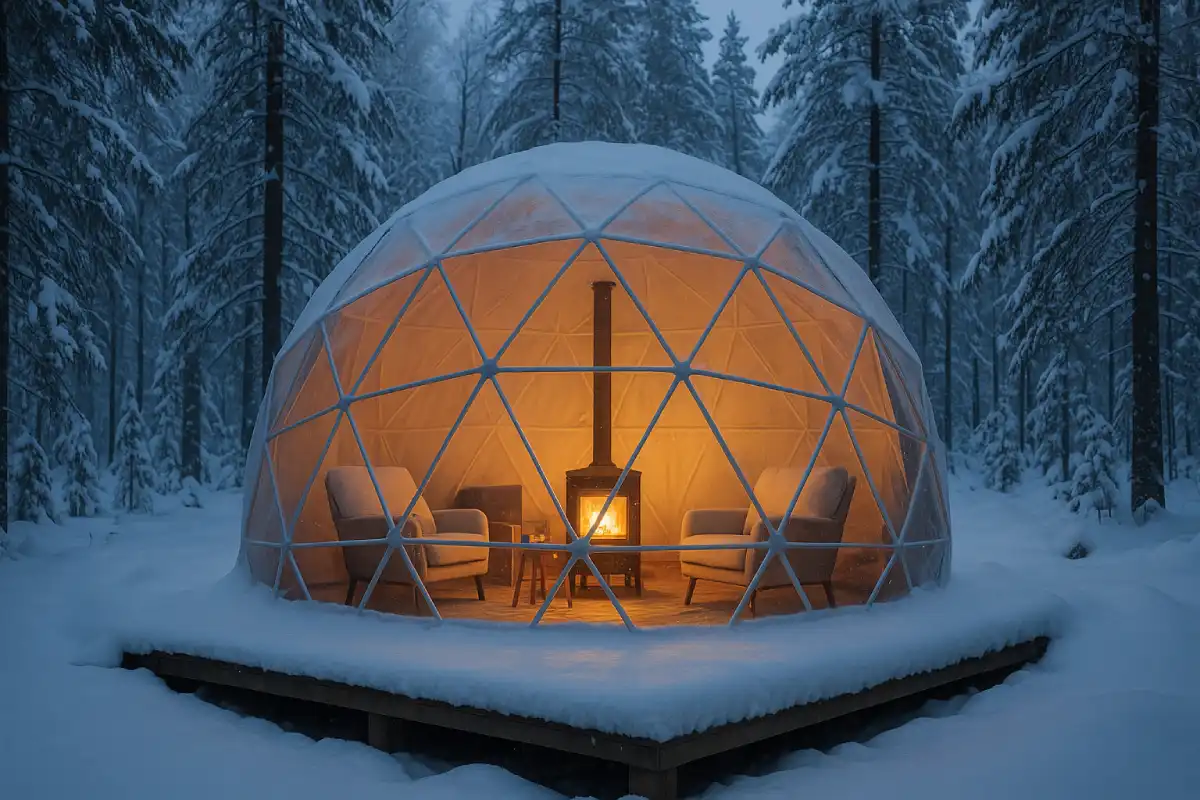
These are popular for their large windows or transparent panels, offering panoramic views of the snowy landscape, perfect for Northern Lights viewing.
- **Heating Expectation:** These often rely on **propane heaters** or high-powered **electric blankets**. While effective, propane heaters require ventilation and can dry out the air quickly.
2. Yurts and Cabin Tents
Traditional yurts, with their circular shape and thick felt insulation, are naturally excellent at retaining heat. Cabin tents (sturdier, canvas-covered structures) offer a cabin feel with a tent’s proximity to nature.
- **Heating Expectation:** The gold standard for yurts is the **wood-burning stove**. They provide a much drier, deeper, and cozier heat than propane. Expect to manage the fire yourself, especially overnight.
- **Traveler Tip:** “If your unit has a wood stove, request the fire to be started an hour before you arrive. It makes a huge difference in the initial comfort level. Also, learn how to manage the air vents (dampers) to keep the fire going slowly overnight.” (Source: Glamping Enthusiast Forums)
Amenities That Make the Difference 🛀
Luxury in the cold is defined by thoughtful details.
1. Water and Bathroom Facilities
Do not assume full plumbing. Always verify the following:
- **On-site vs. Communal:** Some sites have **private en-suite bathrooms** with flushing toilets and hot showers. Others may use **composting toilets** inside the unit and require a short walk to a communal bathhouse for showering. In cold weather, the walk to a communal shower can be a major comfort deterrent.
2. Outdoor Comfort and Relaxation
The best winter glamping experiences include features designed to enhance cold-weather enjoyment.
- **Private Hot Tubs:** A wood-fired or electric **outdoor hot tub** is the ultimate luxury, providing a steaming sanctuary under a winter sky. Confirm if it’s operational in the freezing temperatures.
- **Fire Pits and Cooking:** Look for a **covered deck with a propane grill or fire pit** for cooking and roasting marshmallows without having to stand in the snow.
Experienced Glamping Advice: The Unsung Hero
“The single most useful item is a high-quality, long-sleeved, mid-weight **thermal dressing gown** and warm slippers or wool socks for walking from the bed to the heating source, or to the bathroom. Even with a stove running, floors and doorways can be surprisingly cold.” (Source: Lifestyle Travel Magazine Review)
What to Expect and What to Pack 🎒
Preparation bridges the gap between camping and glamping.
- **Expect Temperature Swings:** Even with good heating, the temperature near the walls and floor will be much colder than near the stove or heater. **Layering** (even indoors) is crucial.
- **Pack Smart Layers:** Bring **Merino wool base layers** (pajamas) for sleeping, a warm fleece mid-layer, and a waterproof shell jacket for walking to the car or communal area.
- **Footwear:** Bring rugged, waterproof **winter boots** for the exterior and warm, dedicated **indoor slippers** (not just socks).
Frequently Asked Questions About Winter Glamping
Will it be warm enough to sleep comfortably in a dome or yurt?
Yes, absolutely. High-quality winter glamping structures are heavily insulated and come equipped with robust heating. However, temperatures can drop significantly overnight if the wood stove runs out, so many resorts provide **extra-heavy blankets** or **electric blankets** to ensure comfortable sleep.
Do I need to bring my own firewood for the stove?
In almost all luxury glamping scenarios, **firewood will be provided** and stocked near your unit. However, check the operator’s policy. Some include a fixed amount, while others charge a small fee for additional bundles.
Is the kitchen fully equipped for winter cooking?
Most glamping kitchens are equipped for basic cooking (small fridge, microwave or two-burner stove, pots/pans). **Confirm if they have a full oven** if you plan to bake. Assume facilities will be smaller than a typical rental home kitchen, and bring non-perishable staples like coffee, tea, and spices.
What unique winter activities can I do while glamping?
Beyond traditional hiking, many glamping sites are near areas offering **snowshoeing, cross-country skiing, or sledding**. Remote, Northern locations often specialize in **Northern Lights viewing**, which is perfect for dome/yurt rentals with transparent sections.
Are winter glamping trips more expensive than summer ones?
Pricing varies, but high-demand winter glamping (especially units with hot tubs or those located near ski resorts) can be **significantly more expensive** than the off-season or regular camping. However, the period right after New Year’s (January/February) often offers better value than the peak holiday season.
Conclusion: Luxury Meets Wilderness 🌲
Winter glamping is a sophisticated retreat that allows you to swap icy discomfort for insulated serenity. By focusing on accommodations with reliable, efficient heating (especially wood stoves), confirming the practicality of the plumbing, and packing high-quality layers, you can fully embrace the stark beauty of the winter landscape. It is truly the perfect blend of rugged wilderness and relaxing luxury.