Waterproof vs. Insulated Boots: What to Pack for Your Winter Trip
Packing for cold-weather travel presents a universal dilemma: Should you prioritize keeping your feet dry or keeping them warm? The difference between a comfortable trip and a miserable one often comes down to the functionality of your boots. While many winter boots claim to do both, understanding the core distinction between **waterproofing** and **insulation** is essential for matching your footwear to your destination's climate and your planned activities.
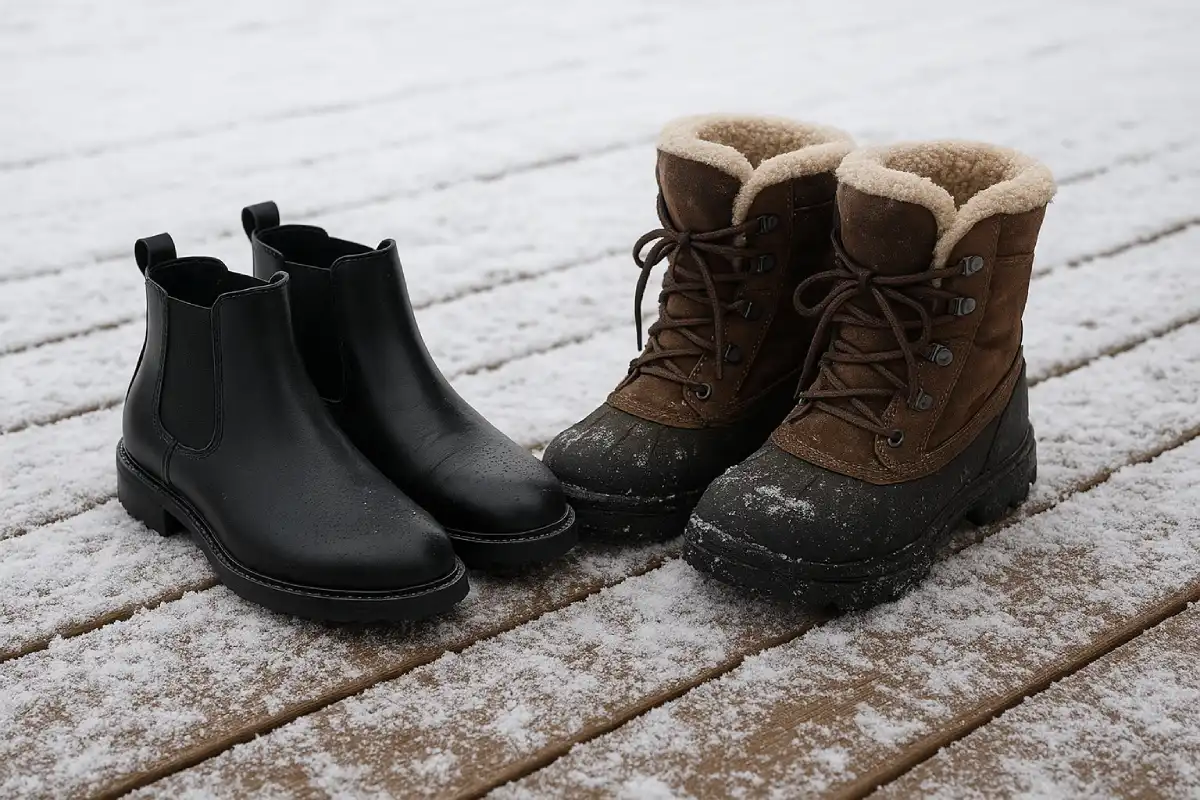
Understanding the Core Difference 🌡️
Waterproofing and insulation address two separate problems: external wetness and internal heat retention.
1. Waterproofing: The Barrier Against Wetness
A boot is considered waterproof if no external moisture (rain, slush, puddles) can penetrate the outer shell to the foot. This is achieved through:
- **Membranes:** Technology like **GORE-TEX** is a semi-permeable membrane that blocks water droplets while allowing sweat vapor to escape (breathability).
- **Sealed Seams:** Quality waterproofing requires seams to be sealed, preventing water from leaking through stitching holes.
- **When to Prioritize:** **Wet Snow, Slush, Rain, and Urban Travel** (e.g., London, Vancouver, or early winter in Eastern Europe).
2. Insulation: The Heat Retention Shield
Insulation is measured in grams (g) and refers to the material (usually synthetic fiber like Thinsulate or a down alternative) layered inside the boot to trap and retain body heat.
- **Rating System:** Typical winter boots range from 200g (mild cold) to 600g+ (extreme cold). Some Arctic-rated boots have temperature ratings down to -40°C.
- **When to Prioritize:** **Extreme Dry Cold and Deep Snow** (e.g., Arctic Lapland, Alaska, high-altitude ski resorts).
Matching Boots to Your Destination 🗺️
The travel itinerary should dictate your packing choice.
Scenario 1: Urban Exploration (Wet and Variable Cold)
For trips involving city walking, museums, and light commuting, prioritize **Waterproofing with Light Insulation (200g or less).**
- **The Danger:** Wet feet cool 25 times faster than dry feet. Slush and wet pavements are the biggest threats. Over-insulated boots will cause your feet to sweat indoors, leading to cold, damp feet outside.
- **Traveler Advice:** “I made the mistake of wearing my huge Arctic boots to NYC. My feet were sweating constantly on the subway and then freezing when I stepped outside. Stick to waterproof leather boots with good wool socks for urban slush.” (Source: Frequent Traveler Blog)
Scenario 2: Arctic Adventure (Dry and Extreme Cold)
For dog sledding, Northern Lights hunting, or deep mountain snow, prioritize **Heavy Insulation (400g+) with Adequate Waterproofing.**
- **The Focus:** The primary concern is protecting against prolonged exposure to sub-zero temperatures. You need maximum thermal protection.
- **Recommended Features:** High-cuff boots (to keep deep snow out) and removable liners (for drying overnight). Look for boots explicitly rated for **-20°C or colder**.
Outdoor Gear Specialist Advice: The Sock Solution
“If you are debating between two similar pairs of boots, choose the less insulated but roomier pair. You can always *add* warmth with a high-quality **Merino wool sock system** (a thin liner sock under a thick cushion sock) but you cannot remove insulation that’s built into the boot. Socks are your versatile thermal layer.” (Source: Specialized Outdoor Retailer Journal)
Frequently Asked Questions About Winter Footwear
Are ‘water-resistant’ boots sufficient for snowy trips?
**No.** Water-resistant means the boot can shed light rain or momentary splashes. Once snow turns to slush or you step into a puddle, water-resistant material will eventually soak through. For any serious winter travel, always opt for explicitly **waterproof** (sealed and fully protected) footwear.
Do I need to size up my boots for winter travel?
Yes. You should always size up a half to a full size when buying winter boots. This is crucial for two reasons: **1) Accommodating thick thermal socks** without bunching, and **2) Ensuring proper circulation** around your toes. If your boot is too tight, it compresses the insulation and restricts blood flow, making your feet colder.
What is a good multi-purpose insulation weight for general winter travel?
For general travel that involves both indoor time and outdoor exposure (e.g., cold European cities), a boot with **200g to 400g of insulation** is an excellent balance. This range provides sufficient warmth for most climates without causing excessive overheating indoors.
How do I dry my boots overnight in a hotel room?
The best method is to **remove the insoles and any removable liners**. This allows air to circulate inside. Place them near, but not directly on, a heat source (like a vent, not a radiator). Stuffing the boots with newspaper can also help absorb residual moisture.
Is GORE-TEX breathable enough for active use?
GORE-TEX is highly regarded for its balance of waterproofing and breathability, making it suitable for active use (like winter hiking or light snowshoeing). However, no waterproof boot is 100% breathable. If you are doing intense aerobic exercise, some sweat buildup will occur, making proper sock choice even more important.
Conclusion: Prioritize Based on Climate 🧊
The decision to pack waterproof or insulated boots hinges entirely on the nature of your trip. If your itinerary involves wet conditions (slush, rain, or indoor/outdoor transitions), prioritize high-quality **waterproofing** with moderate insulation. If you are heading into extreme, dry cold, prioritize **maximum insulation** and ensure the boot is rated for the expected temperatures. By choosing the right tool for the job, you guarantee comfort, warmth, and the ability to focus on your winter adventure.