Springtime in the Canadian Rockies
Spring in the Canadian Rockies spanning Banff, Jasper, and Yoho National Parks is a season of dramatic contrast. Known as the "shoulder season," this period from April to early June is when the mountains shed their winter coats. It is a time when you can ski in the morning and bike on dry valley trails in the afternoon. For travelers, it offers the rarest of gifts: the majesty of the peaks without the mid-summer gridlock. Navigating the Rockies during the thaw requires a unique strategy. You aren't just visiting a destination; you are witnessing a transition where frozen waterfalls begin to roar and grizzly bears emerge from their dens to find the first greenery of the year.
The Great Awakening: Timing Your Trip
Spring doesn’t arrive all at once in high altitudes. The “thaw” moves from the valley floors up to the mountain passes over several months.
- **April:** Still feels like winter at higher elevations. Ski resorts like Sunshine Village often have their best “spring skiing” conditions.
- **May:** Valley trails begin to clear. This is the peak time for waterfall watching as the snowmelt (freshet) turns trickles into torrents.
- **June:** The alpine begins to green up, and the famous turquoise lakes start to lose their ice cover.
Experienced hikers on AllTrails and local forums warn that “hiking season” doesn’t truly start until July for high-elevation passes. “If you want to avoid post-holing in knee-deep slush, stick to the lower loop trails near the Banff townsite or Jasper’s Valley of the Five Lakes in May,” suggests one local guide.
Wildlife Watching: The Bear Reality
Spring is arguably the best time for wildlife photography. As the snow recedes, animals are drawn to the “green-up” along the roadsides where the sun hits first. Grizzly and black bears are frequently spotted in the Bow Valley Parkway and the Icefields Parkway after they emerge from hibernation in mid-April.
Safe Viewing Practices
Expert advice from Parks Canada highlights that “a fed bear is a dead bear.” Always stay in your vehicle when spotting bears on the roadside and maintain a distance of at least 100 meters. Spring is also elk calving season; mothers are extremely protective and can be more dangerous than bears if approached.
Pro-Tip: The “Icefields” Strategy
Driving the Icefields Parkway (Hwy 93) in late May is a bucket-list experience. While the lakes like Bow and Peyto may still be frozen, the lack of traffic allows for serene stops. Take a thermos of coffee and stop at Goats and Glaciers lookout in Jasper spring is when the mountain goats are most active near the mineral licks.
The Blue Transformation: When do the Lakes Melt?
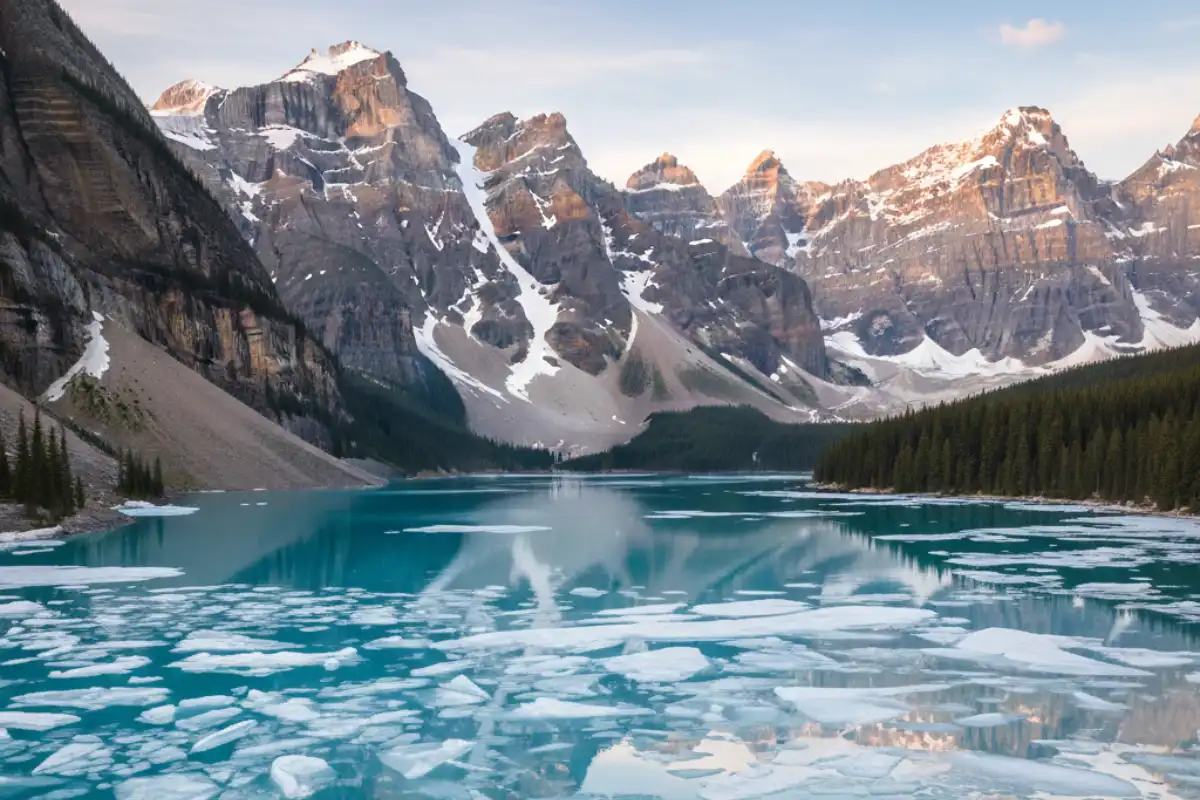
One of the most frequent disappointments for spring travelers is arriving at Lake Louise in May only to find it still covered in white ice. If you are chasing that famous blue water, timing is everything.
- **Lake Louise:** Typically thaws by the first week of June.
- **Moraine Lake:** The road usually opens the Tuesday after Victoria Day (late May), but the lake often remains partially frozen until mid-June.
- **Peyto Lake:** Its high elevation means it can stay frozen well into June.
For early-season “blue water” fixes, head to Abraham Lake or Barrier Lake in Kananaskis, which tend to thaw much earlier than the glacial giants.
Frequently Asked Questions About Rockies in Spring
Is the Icefields Parkway open in spring?
Yes, the highway is open year-round, but spring snowstorms can trigger temporary closures for avalanche control. Always check 511 Alberta before heading out. Winter tires or chains are legally required until April 16th and highly recommended until June.
Can I hike the Plain of Six Glaciers in May?
It is not recommended. Many high-elevation trails are under significant avalanche risk during the spring melt. Check the Parks Canada trail conditions report daily. Lower elevation trails like Johnston Canyon are much safer alternatives.
What should I wear?
The “Rockies Tuxedo”: layers. You need a waterproof shell, a down mid-layer, and waterproof boots. It can be 15°C in the sun and -5°C the moment a cloud covers the sun or you gain 200m in elevation.
Are the crowds really that much smaller?
Yes. While Banff townsite is always busy, the trails and viewpoints see about 40% of the traffic compared to July and August. Parking at Lake Louise is significantly easier in May than in the summer months.
Is everything open in the parks?
Most seasonal campgrounds and some secondary roads (like the road to Edith Cavell in Jasper) don’t open until mid-to-late June. However, most major attractions, shops, and restaurants in Banff and Jasper are open year-round.
Conclusion: Beauty in the In-Between 🏔️
Spring in the Canadian Rockies is for the traveler who prefers the sound of a rushing creek over a bustling crowd. It is a season of patience waiting for the ice to crack and the wildflowers to peek through the mud. By planning for “all-seasons-in-one-day” weather and focusing on valley activities, you’ll discover the raw, quiet power of the mountains as they return to life. The Rockies don’t just wake up in the spring; they perform a grand reopening.