Spring Hiking in the Swiss Alps
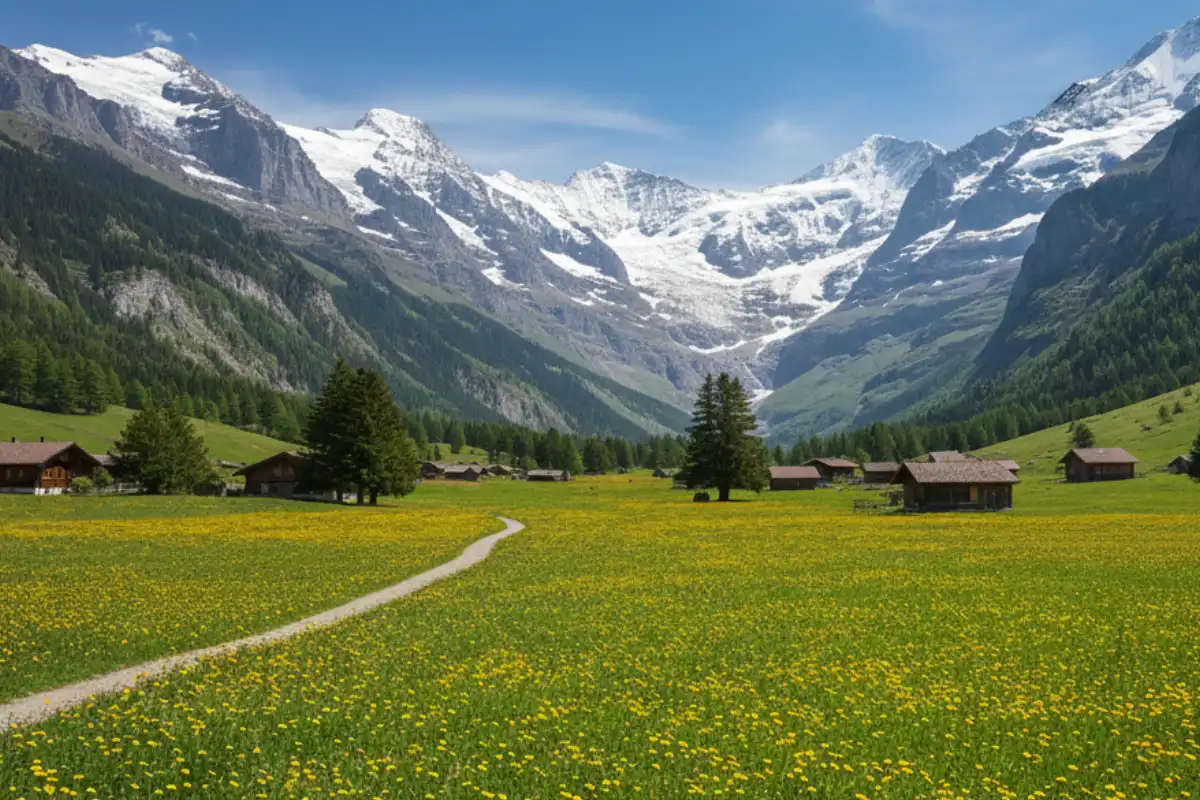
Spring in the Swiss Alps is a time of dramatic contrast. While the high-altitude peaks remain locked in a winter embrace, the valleys begin to explode with vibrant greenery and alpine wildflowers. For hikers, this "shoulder season" (typically April to June) offers a unique opportunity to witness the mountains waking up without the summer crowds. However, it requires a specific strategy: you must follow the **snow line**.
The Golden Rule: Stay Below the Snow Line
In spring, the most common mistake is attempting high-altitude iconic trails (like the Five Lakes Hike in Zermatt) too early. Most trails above **1,500–2,000 meters** remain covered in deep, slushy snow until late June.
- **Valley Floors:** Focus on deep glacial valleys like Lauterbrunnen. You can hike from Lauterbrunnen to Stechelberg, passing dozens of thundering waterfalls fueled by melting snow.
- **Lakeside Trails:** Trails around Lake Brienz, Lake Thun, and Lake Lucerne are at lower elevations and are usually clear and lush by late April.
- **The Sunny South:** The canton of Ticino (the Italian-speaking region) warms up much faster. Trails in the Verzasca Valley or around Lugano are often perfect for spring hiking while the rest of the country is still thawing.
Logistics: Navigating the “Zwischensaison”
In Switzerland, spring is known as the *Zwischensaison* (interseason). This is the period between the end of ski season and the start of summer hiking season.
- **Cable Car Maintenance:** Many mountain railways and cable cars close for 2-4 weeks in May or early June for essential safety checks. Always check the official website (e.g., Jungfrau.ch or Pilatus.ch) before planning your route.
- **Mountain Huts:** Most high-altitude SAC (Swiss Alpine Club) huts remain closed until mid-to-late June. Do not plan multi-day hut-to-hut tours during this time.
The “Marmot” Insider Advice
“Check the webcam of your destination 10 minutes before you leave. Spring weather in the Alps is notoriously fickle; it can be 20°C in Interlaken and snowing in Mürren. If the webcam shows white, don’t go slushy spring snow is incredibly tiring and dangerous to hike through without snowshoes.” (Source: Swiss Hiking Forum Community)
Essential Gear and Spring Safety
Spring hiking isn’t about ice axes, but it is about staying dry and protected:
- **Waterproof Boots:** Melting snow means mud. Lots of it. Gore-Tex boots are non-negotiable for spring trails.
- **Gaiters:** If you do encounter small snow patches, gaiters will keep the slush out of your boots.
- **Tick Protection:** As the grass grows long and the air warms, ticks become active in the lower Swiss forests and meadows. Use repellent and perform “tick checks” after your hike.
- **Trekking Poles:** Essential for navigating slippery, muddy descents.
Frequently Asked Questions About Spring Hiking
Can I hike to the Seealpsee in the spring?
Usually, yes. Seealpsee (in the Appenzell region) is at a lower elevation (approx. 1,143m). While the lake might still be partially frozen in early April, the path from Wasserauen is often accessible. However, the steeper trails beyond the lake toward the Ebenalp may still be dangerous and snow-covered.
When do the alpine wildflowers actually bloom?
It varies by altitude. Crocuses often push through the snow in April. By May, the lower meadows are full of yellow dandelions and buttercups. The famous “Alpine Rose” and high-altitude gentians usually don’t appear until late June or July.
Are there any open mountain peaks in May?
Mount Rigi near Lucerne is one of the best “early” peaks. Because it is lower than the surrounding giants and has paved or well-maintained paths, it is often hikeable while Pilatus or Titlis are still under deep snow.
Is spring a cheaper time to visit Switzerland?
Yes. Many hotels offer “shoulder season” discounts, and it is much easier to find last-minute accommodation. However, keep in mind that fewer restaurants and mountain attractions will be open compared to the peak summer months.
What is the weather like in the Alps in May?
Unpredictable. It is often the wettest time of the year. You should expect “four seasons in one day” intense sunshine, followed by heavy rain, and potentially a dusting of snow if the temperature drops.
Conclusion: Embracing the Quiet Beauty 🌲
Hiking the Swiss Alps in spring is a lesson in patience and adaptation. If you insist on reaching the high peaks, you will be disappointed by closed trails and deep snow. But if you embrace the valley floors, the roaring waterfalls, and the quiet, blooming meadows, you will experience the Alps at their most intimate. Respect the snow line, pack your waterproofs, and enjoy the mountains before the rest of the world arrives.