South Africa’s Spring Wonders: Wildflower Carpets and Safaris
As of May 2026, the southern hemisphere is gently cooling into autumn, but for savvy travelers, this is the crucial window to plan for the "Great Bloom." Come August and September, South Africa undergoes a metamorphosis so dramatic it rivals the cherry blossoms of Japan. The arid Northern Cape explodes into a multi-colored tapestry of wildflowers, while the wildlife in the east prepares for the arrival of new life. According to frequent contributors on Satraveler and local conservation journals, the 2026 spring season is expected to be particularly vibrant following a well-timed rainy season. This is a journey of contrasts: from the silent, floral deserts of the west to the roaring, predator-rich bushvelds of the north. Here is your definitive guide to South Africa’s most celebrated season.
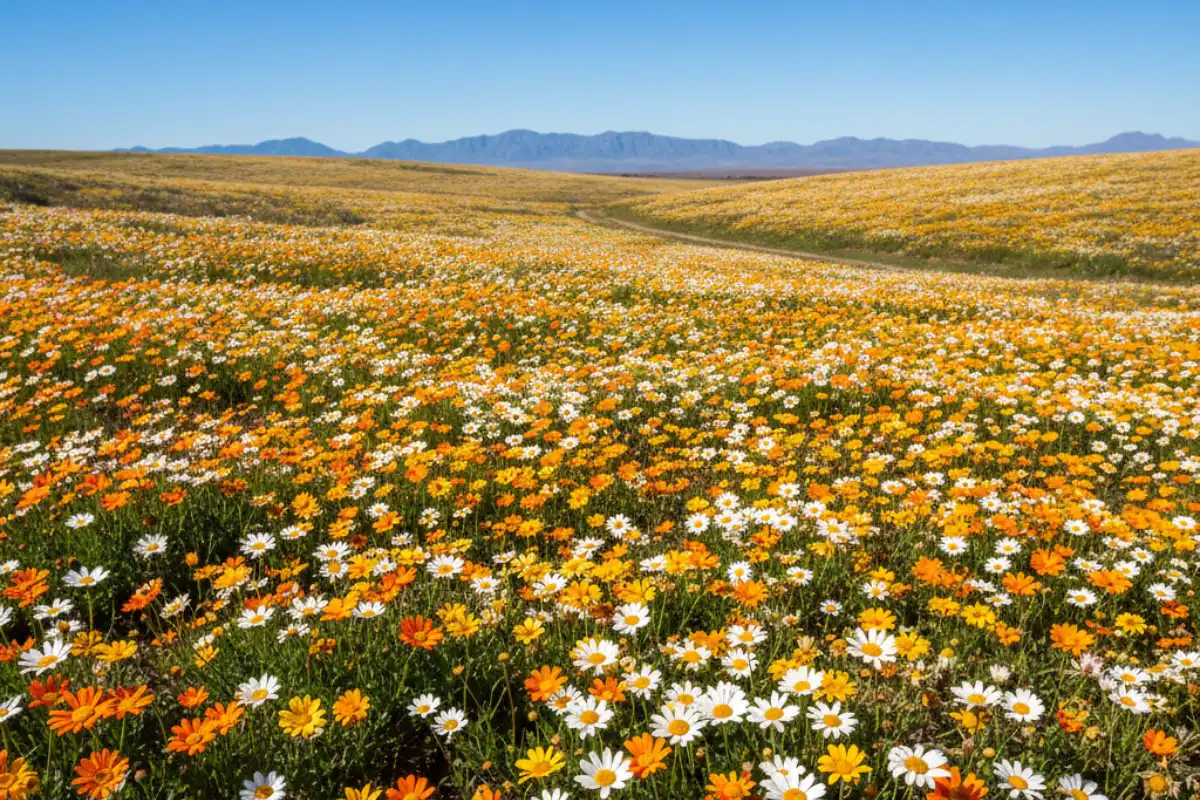
1. The Namaqualand Superbloom: Nature’s Painted Desert
The star of the show is undeniably **Namaqualand**. Usually a semi-desert landscape, it transforms into a kaleidoscope of millions of daisies after the first spring rains. In 2026, experts suggest focusing on the “Flower Route” that stretches from Garies to Springbok.
- **Namaqua National Park:** Home to the Skilpad Wildflower Reserve, where orange daisies create a density of color that almost looks artificial.
- **Timing the Bloom:** This is nature’s most fickle performance. Generally, the flowers move from north to south. Start in late July in the north and follow the bloom toward Cape Town through September.
- **The Heliotropic Effect:** Remember that these flowers follow the sun. They open fully when the sun is high and bright, so mid-morning to late afternoon is the “golden hour” for floral photography.
2. Spring Safaris: New Life in the Bush
While flowers steal the spotlight in the west, the east of the country offers its own spring magic. In the **Kruger National Park** and the private reserves of Sabi Sands, spring marks the end of the dry season.
Pro-Tip: The Visibility Advantage
“Spring is the secret weapon for safari lovers,” shares a veteran guide from Getaway Magazine. “By September, the bush is thin and sparse. Animals gather in huge numbers around the remaining waterholes. It’s the best time to spot leopards who are no longer hidden by thick summer foliage, and the arrival of impala lambs brings a surge in predator activity.”
The Birthing Season
In 2026, travelers are increasingly booking “Baby Safari” tours. Spring is when many species, from elephants to warthogs, welcome their young. The sight of a newborn elephant calf navigating its legs for the first time is a quintessential spring memory.
3. Coastal Spring: Whales and West Coast National Park
Just an hour from Cape Town, the **West Coast National Park** offers the Postberg section, which is only open during the two months of spring. Here, you can photograph zebras and antelope grazing amidst fields of wild white and purple blossoms overlooking the turquoise Langebaan lagoon.
Simultaneously, the town of **Hermanus** becomes the whale-watching capital of the world. Southern Right Whales migrate to these coastal waters to mate and calve, often visible just meters from the shore cliff paths.
Frequently Asked Questions: South Africa Spring 2026
When exactly should I visit for the flowers?
The peak is typically from mid-August to mid-September. However, it changes every year based on the rains. It is highly recommended to follow local “Flower Hotlines” or social media groups in early August 2026 for real-time updates before you drive out.
What is the weather like in South Africa in spring?
Spring is mild and pleasant. In the Cape, temperatures range from 15°C to 22°C (59°F-72°F). In the Kruger area, it starts getting warmer, often reaching 30°C (86°F), but without the high humidity of the summer months.
Is it safe to drive the Flower Route solo?
Yes, the Flower Route is very popular and generally safe. The roads are well-maintained, but ensure you have a full tank of fuel as distances between towns in the Northern Cape can be vast. Download offline maps as cell signal can be spotty in remote valleys.
Do I need to book safari lodges far in advance?
Absolutely. Spring is considered a “high-demand” shoulder season. For 2026, we suggest booking popular lodges in the Kruger or Sabi Sands at least 6 months ahead to secure the best rates and availability.
What should I pack for a spring trip?
Layering is key. The mornings on a safari vehicle can be freezing (8°C-10°C), while the afternoons are hot. Bring a windproof jacket, a wide-brimmed hat, and polarized sunglasses to help see through the glare when spotting whales or flowers.
Conclusion: A Continent in Rebirth
South Africa in the spring of 2026 is a masterclass in biodiversity. It is a time when the land feels energetic and renewed, offering a travel experience that balances the quiet awe of a floral desert with the heart-pounding excitement of a wild hunt. By planning your trip between August and September, you catch the country in its most flattering light literally and figuratively. Whether you are chasing the bloom or the Big Five, South Africa’s spring is a bucket-list journey that never disappoints.
Would you like me to help you draft a 10-day “Cape to Kruger” spring itinerary that specifically targets the 2026 peak bloom dates?