Snowboarding vs. Skiing: Which One Should You Try First?
For the first-timer hitting the slopes, the fundamental choice between skiing and snowboarding can be tough. Both offer thrilling ways to enjoy the mountain, but their initial learning curves, physical demands, and equipment are vastly different. Skiing provides a more intuitive start but a longer path to mastery, while snowboarding involves a steep, frustrating initial learning phase followed by rapid progression. Your choice should hinge on your athletic background, tolerance for discomfort, and long-term goals.
The Learning Curve and Difficulty
1. Skiing: Easier Start, Harder to Master
Skiing allows the legs to move independently, which feels more natural for movement. The initial goal is to learn the “pizza” (snowplow) maneuver to control speed.
- **Initial Experience:** Most beginners can learn to stop and navigate gentle slopes within a few hours. This makes the first day less physically demanding and less frustrating.
- **Physical Toll:** Skiing is easier on the wrists and tailbone but harder on the knees, particularly during falls or poor technique.
- **Traveler Insight:** “I started with skiing because I wanted to feel successful on the first day. It was great I could actually get down the mountain. The tough part was years later, trying to transition from parallel skiing to carving aggressively; that took forever.” (Source: Ski Instructor Forum)
2. Snowboarding: Harder Start, Easier to Master
Snowboarding requires binding both feet to a single board, which involves learning how to balance and shift weight without the intuitive independence of your legs. The core technique involves edge control (heel and toe side).
- **Initial Experience:** The first day is often spent falling, sitting down to unstrap/strap in, and generally feeling clumsy. Expect a lot of time on your butt.
- **Physical Toll:** Snowboarding is easier on the knees but notorious for bruised tailbones (from sitting and falling) and sore wrists (from catching yourself). **Wrist guards are highly recommended for beginners.**
Equipment and Resort Logistics
1. Equipment Differences
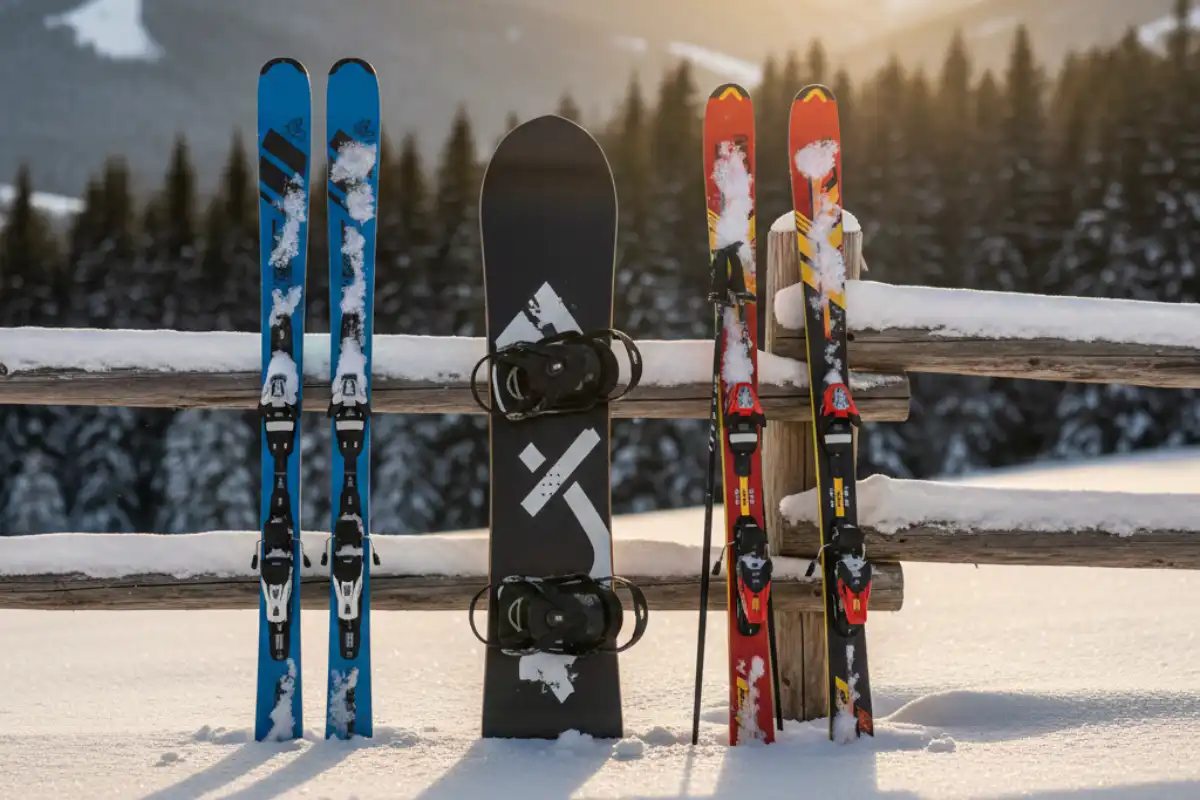
Ski equipment is heavier and bulkier, but the boots are rigid and provide immediate control. Snowboard boots are softer, more comfortable for walking around the resort, and feel more like regular boots.
- **Boots:** Ski boots are restrictive but excellent for power transfer. Snowboard boots are comfortable but require more ankle strength.
- **Walkability:** Snowboarders can walk much more easily around the village. Ski boots are famously difficult and cumbersome for walking.
2. Lift Access Frustration
This is where snowboarding loses the convenience battle.
- **Chairlifts:** Snowboarders must unstrap one foot to ride the chairlift, which is fine, but re-strapping at the top can be slow and awkward.
- **Flat Terrain:** Skiers can pole themselves across flat sections or queues. Snowboarders must unstrap and “skate” (push with one foot) or walk, leading to frustration.
Physical Trainer’s Recommendation: Core Strength
“If you have a background in board sports (surfing, skateboarding), the balance required for snowboarding will likely click faster. If you have a strong background in sports requiring independent leg movement (running, cycling), skiing will feel more natural. Both require strong core muscles, especially for controlling the rotation needed for advanced turns.” (Source: Mountain Fitness Journal)
The Vibe and Long-Term Appeal
- **The Community:** Skiing historically has a more traditional, established feel. Snowboarding often carries a more relaxed, counter-culture, and terrain-park-focused vibe, though this gap has narrowed significantly.
- **Future Terrain:** Advanced skiing allows for incredibly fast cruising and precision carving on groomed runs. Advanced snowboarding excels in deep powder (due to natural float) and terrain park features (jumps and rails).
- **The Fall:** Snowboarders tend to fall more often during the learning process, but skiers often have more high-speed, potentially injurious falls once they reach the intermediate stage.
Frequently Asked Questions About Starting Out
Which sport is safer for beginners?
Statistically, snowboarders have a higher incidence of minor, upper-body injuries (wrist, shoulder), while skiers have a higher rate of severe, lower-body injuries (knee, ankle). Snowboarding has more falls, but skiing has more high-speed accidents.
Should I take a lesson for my first time, regardless of my choice?
Yes, absolutely. A professional instructor will teach you the correct, safe technique from the start, preventing bad habits and reducing the risk of injury. A 2-hour lesson will save you a full day of self-taught frustration.
Is one significantly more expensive than the other for renting?
The rental cost is almost identical. A full-day package (board/skis, boots, bindings) usually falls within the same price range. However, if you buy your own equipment, ski gear tends to be slightly more expensive due to the complexity of bindings and boots.
Do I need different clothing for skiing vs. snowboarding?
No. The three-layer system (base, mid, shell) is essential for both. Snowboard jackets and pants are typically looser for mobility and style, while ski gear is often more fitted, but the functional need for warmth and waterproofing is the same.
Which sport is better for traversing flat areas?
Skiing is significantly better for flat traverses and navigating lift lines because skiers can use poles and maintain both feet in the bindings. Snowboarders must unstrap one foot and ‘skate,’ making flat sections cumbersome.
Conclusion: Choose Your Challenge 🏔️
If your goal is immediate gratification to be able to get down a green slope standing up on your first day **choose skiing**. If your goal is to master a smoother, more fluid style over the long term and you don’t mind a tough first day with some painful falls, **choose snowboarding**. Either way, commit to a lesson, rent the gear, and get ready to enjoy the mountain!