Patagonia in Bloom: Nature Awakens
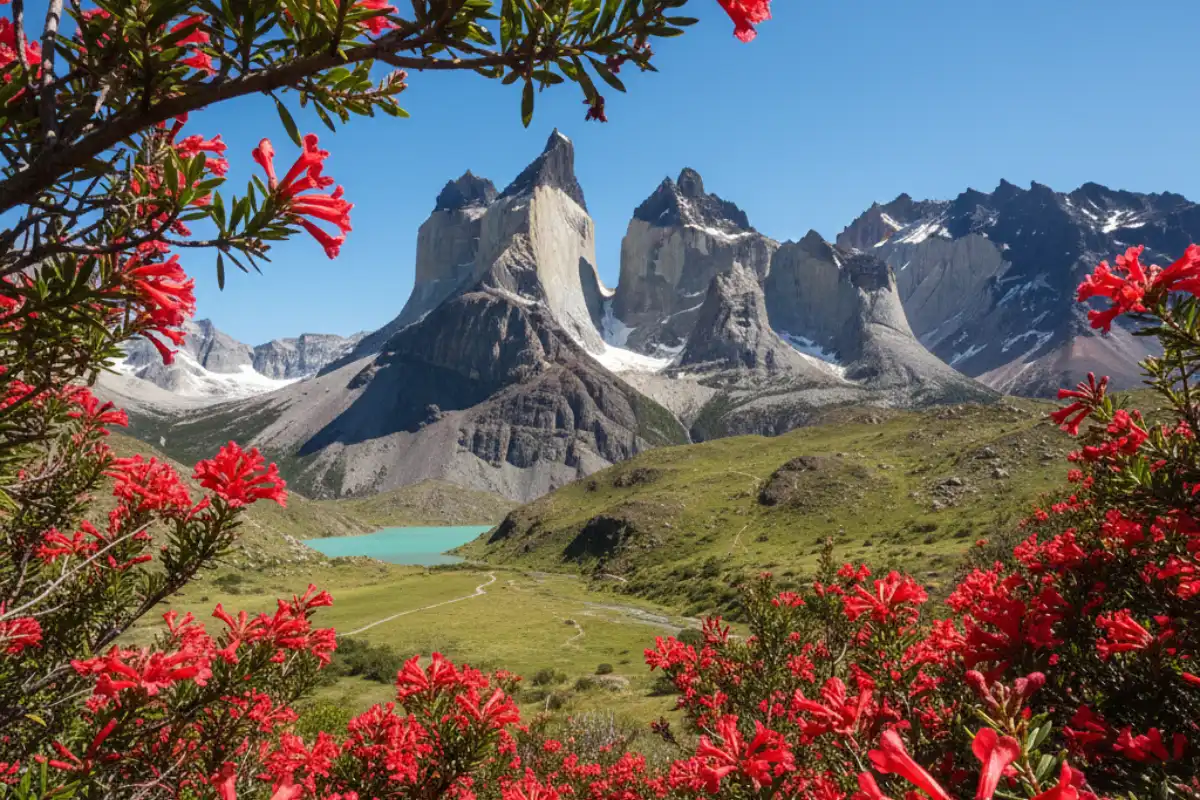
While the Northern Hemisphere prepares for winter, Patagonia is shaking off its icy slumber. Spring in the Southern Hemisphere stretching from September to November is a period of raw, untamed beauty. As the snow recedes from the lower valleys of Chile and Argentina, the landscape erupts in a palette of fire-red blossoms and emerald greens, set against the permanent white of ancient glaciers. Traveling to Patagonia during this "awakening" offers a unique advantage: you witness the region's legendary wildlife at its most active and the flora at its most vibrant, all while avoiding the ferocious summer winds and the peak-season crowds of January.
The Floral Tapestry: Wildflowers of the South
Spring is the only time to see Patagonia’s botanical diversity in its full glory. The transformation begins in the north (Bariloche region) and moves south toward Tierra del Fuego.
- **The Chilean Firebush (Notro):** These iconic, trumpet-shaped red flowers create a stark contrast against the grey granite of the Andes.
- **Lady’s Slipper Orchids:** Look for these delicate yellow and orange flowers in the shaded forest floors of Los Glaciares National Park.
- **Lupines:** By November, massive fields of purple and pink lupines dominate the roadsides near El Calafate and Puerto Natales.
Botany enthusiasts on iNaturalist and trekking forums suggest that the French Valley in Torres del Paine is the premier spot for flower photography in mid-November, as the diverse microclimates allow different species to bloom simultaneously.
Wildlife Watching: New Life on the Steppe
Spring is “baby season” in the wild. If you are a wildlife photographer, this is the most rewarding window of the year.
Guanacos and Pumas
In October and November, you will see thousands of “chulengos” (baby guanacos) dotting the plains. This abundance of young prey makes it the best time for puma tracking tours in the eastern sector of Torres del Paine. Professional guides on r/Patagonia note that pumas are more visible as they hunt during the daylight hours to feed their own growing cubs.
Penguin Colonies
September marks the arrival of Magellanic penguins to the coasts near Punta Arenas and Puerto Madryn. Witnessing the nesting rituals and the early stages of chick-rearing is a highlight of the spring coastal experience.
Hiker’s Tip: The “Wind Window”
Patagonia is famous for winds that can top 100km/h. However, spring (specifically October and early November) often experiences lower wind speeds than the peak summer month of December. Hikers on the “O” or “W” treks report that while temperatures are cooler, the lack of bone-shaking gusts makes for a much safer and more pleasant trekking experience.
Logistics: Navigating the Shoulder Season
Spring is a transition period, and “Patagonian weather” remains the most unpredictable force on the continent. You must be prepared for four seasons in a single hour.
Trail Conditions: In September and early October, high passes like John Gardner Pass may still be closed or require crampons due to lingering snow. By mid-November, almost all trails are accessible to regular hikers. Always consult the CONAF (Chile) or Parques Nacionales (Argentina) websites for current trail status before setting out.
Frequently Asked Questions About Patagonia in Spring
What is the best month for photography?
November is widely considered the best month. You get the peak of the wildflower bloom, active wildlife, long daylight hours (up to 15 hours), and the glaciers are still massive from the winter’s accumulation.
Is it too cold to camp in October?
It can be. Nighttime temperatures can still drop to 0°C (32°F) or lower. If you plan to camp, ensure you have a 4-season tent and a sleeping bag rated for at least -5°C. Many Refugios open in October, offering a warmer bed for those not ready for the spring chill.
Are flights and hotels cheaper?
Yes. October and November are considered shoulder season. You can often find accommodation at 20-30% less than the December/January peak prices, and reservations for the W-Trek are slightly easier to secure.
Can I see the glaciers calving in spring?
Glacier calving (ice chunks falling into the water) happens year-round, but it increases as temperatures rise. While mid-summer sees the most activity, a sunny day in November at the Perito Moreno Glacier provides plenty of dramatic “ice thunder.”
What should I pack for spring weather?
Waterproof everything. In spring, the rain is frequent but usually short-lived. A high-quality hardshell jacket, waterproof trousers, and sturdy boots are essential. Don’t forget high-SPF sunscreen; the ozone layer is thinner here, and the spring sun is deceptive.
Conclusion: Witnessing the Rebirth 🌸🏔️
Patagonia in spring is not for those seeking predictable luxury; it is for those seeking a front-row seat to the raw power of the natural world. It is the sound of cracking ice, the sight of a condor soaring over a red-blossomed valley, and the feeling of a crisp breeze that has traveled thousands of miles across the Pacific. By arriving before the summer crowds, you earn a sense of solitude and a connection to the land that is impossible to find at any other time.