Packing list for a ski vacation
Packing for a ski vacation is a unique challenge. You need specialized, bulky gear to keep you safe and comfortable on the slopes, alongside casual, cozy clothes for downtime and socializing. The difference between a fantastic trip and a miserable one often comes down to one principle: **layering** and the avoidance of moisture-trapping fabrics.
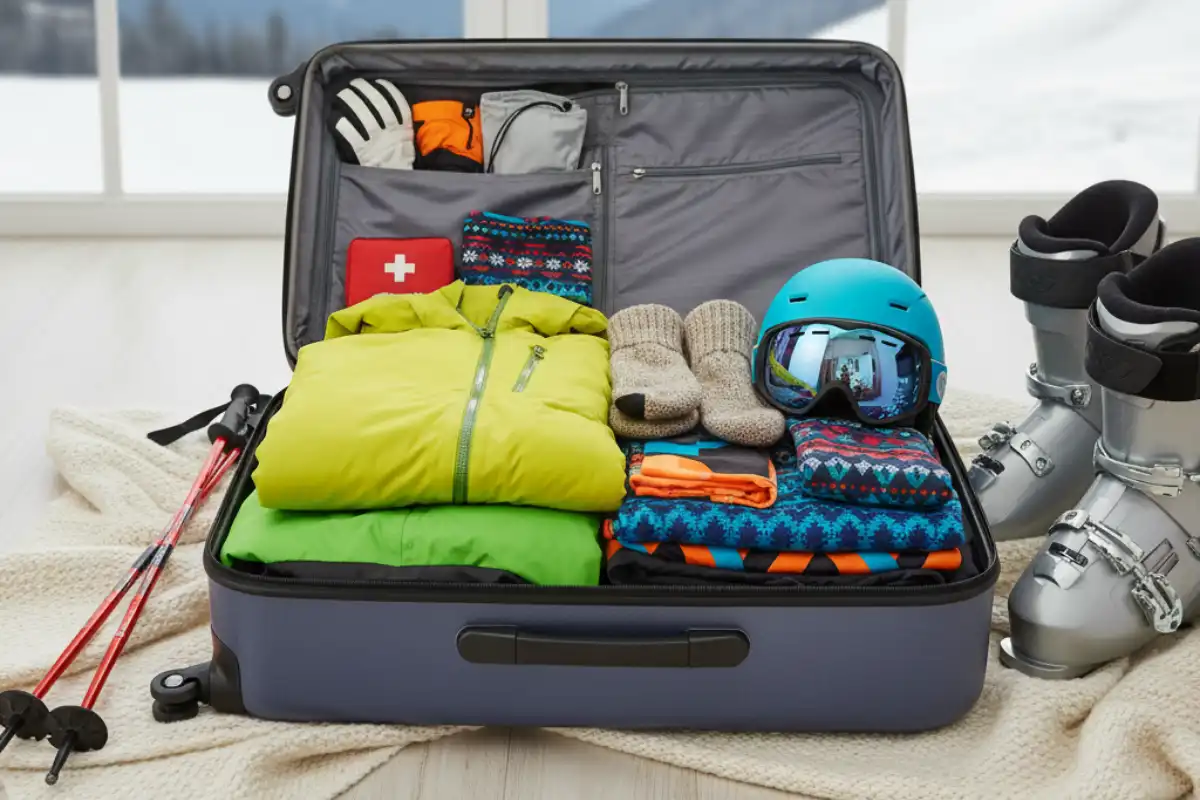
On-Slope Essentials: Mastering the Three-Layer System 🧥
The secret to staying warm and dry while skiing is a strategic layering system that wicks away sweat and insulates against the cold.
1. The Base Layer (Wicking)
This layer sits against your skin and is crucial for wicking away moisture. **Avoid cotton entirely**—it holds sweat, which will quickly make you cold.
- **Tops & Bottoms:** 2–3 sets of long-sleeved shirts and leggings made from **Merino wool or synthetic fabrics**. Merino is excellent for odor resistance on multi-day use.
- **Pro Tip from Instructors:** “Never wear two pairs of socks! A single, high-quality pair of thin-to-medium thickness wool or synthetic ski socks is all you need. Thick socks restrict circulation and make your feet colder.” (Source: Ski Instructor Forum)
2. The Mid Layer (Insulation)
This is your primary source of warmth. It traps body heat and keeps you insulated.
- **Mid-Layer Top:** 1–2 items like a **fleece jacket, wool sweater, or a lightweight synthetic puffy jacket**. Choose based on how cold the forecast is; you can always add or remove this layer.
3. The Outer Layer (Protection)
This is your shell against wind, snow, and rain. It must be waterproof and windproof.
- **Ski Jacket & Pants (or Bibs):** Waterproof, breathable ski-specific jacket and trousers. Look for a **minimum 10,000mm waterproof rating** and features like pit zips for ventilation.
4. Critical Accessories
- **Gloves/Mittens:** One waterproof, insulated pair (mittens are generally warmer than gloves). Bring a spare thin liner pair for very cold days.
- **Head Protection:** **Helmet** (mandatory for safety and warmth; rent if you don’t own one). **Warm Beanie** for off-slope.
- **Face/Neck:** **Neck Gaiter or Balaclava** (a buff is essential for protecting exposed skin from windburn and extreme cold).
- **Eyes:** **Goggles** (for weather/snow), and **Sunglasses** (for breaks and sunny resort walks).
Off-Slope Comfort and Après-Ski 🍹
After a long day, you’ll want to change out of your technical gear immediately. Comfort is key.
1. Footwear & Loungewear
- **Waterproof Winter Boots:** Essential for walking around the resort on icy, snowy paths. Ensure they have good traction.
- **Slippers/House Shoes:** Crucial for staying cozy in a chalet or apartment and keeping your feet off cold floors.
- **Apres-Ski Attire:** Jeans, leggings, thick sweaters, and flannel shirts. The mountain casual style is standard you don’t need formal wear.
- **Swimsuit & Flip-Flops:** A must-pack for the hotel’s hot tub, sauna, or spa (a common après-ski recovery ritual).
Experienced Traveler Tip: Dry Everything!
“If you are in a large rental house, pack a **portable boot dryer** or a small power strip. Nothing is worse than putting on damp gear the next morning. Use the power strip to plug in all your electronics and a boot dryer at once. This small investment will save your trip.” (Source: Reddit Skiing Community Reviews)
Health, Safety, and Miscellaneous 🩹
High altitude and intense sun exposure require specific additions to your standard toiletries kit.
1. Skin & Sun Protection
- **High-SPF Sunscreen Stick:** The sun reflects off the snow, creating a double whammy of UV exposure. Apply a high SPF to your face every few hours.
- **Lip Balm with SPF:** Essential to prevent chapping and sun damage.
- **Thick Moisturizer/Body Oil:** Mountain air is extremely dry. Combat dry, cracked skin by applying a thick cream at night.
- **Blister Care:** Blister plasters (moleskin) and a small first aid kit for minor scrapes and aches.
2. Travel Smart
- **Documents:** Lift tickets, resort reservation confirmations, ID, and travel insurance details (ensure it covers winter sports).
- **Gadgets:** Power bank, international adaptors, and an **AirTag/Tile** if checking expensive ski gear.
- **Medication:** Anti-inflammatories (Ibuprofen) for muscle soreness and headaches often associated with altitude.
Frequently Asked Questions About Ski Packing
Should I rent my gear or bring my own?
For **first-timers or infrequent skiers**, **renting is highly recommended** for skis/board, boots, and poles. It saves on airline baggage fees and bulk. However, **always pack your own helmet and goggles**, as these are personal fit items essential for hygiene and safety.
How many base layers do I need for a week-long trip?
Most travelers find that **2–3 sets of base layer tops and bottoms** are sufficient for a week. Merino wool is naturally odor-resistant, allowing for multiple uses between washes. You can wear one set for two days, or wash a set in the sink overnight if staying longer.
Can I use regular cotton thermal underwear as a base layer?
**No, avoid cotton completely.** When you sweat, cotton absorbs the moisture and holds it against your skin. As soon as you stop moving, that moisture cools, leading to a rapid and dangerous drop in body temperature. Always opt for moisture-wicking synthetic (polyester) or natural (merino wool) materials.
Is it necessary to pack a backpack for the slopes?
A small, low-profile backpack (like a small day pack or hydration pack) is highly recommended. It allows you to carry essential items like your water bottle, extra mid-layer, snacks, sun cream, and a phone all vital for longer days on the mountain.
What should I wear for dinner/evenings out in a ski resort?
Most ski resort evening wear is casual and focused on warmth. Think stylish sweaters, thick long-sleeved shirts, dark jeans or wool trousers, and your best snow boots. Very few resorts outside of high-end, exclusive locations require formal dress.
Conclusion: Pack Smart, Ski More 🌟
A successful ski trip starts with a meticulously planned packing list that prioritizes the three-layer system and accounts for the specific challenges of the alpine environment. By investing in the right technical gear and ensuring your off-slope comfort, you’ll spend less time fussing with cold hands or damp clothes and more time carving down the mountain. Pack smart, and let the powder fly!