Nepal’s Spring Trails: Himalayan Treks and Mountain Sunrises
As April 2026 unfolds, Nepal enters its most legendary trekking window. Known as the "Post-Winter Awakening," spring in the Himalayas is a sensory masterpiece. The high-altitude air is crisp and exceptionally clear, the lower valleys are a riot of crimson rhododendrons, and the sound of glacial meltwater echoes through the deep ravines of the Khumbu and Annapurna regions. For the 2026 season, the Nepalese government and local teahouse collectives have doubled down on "Sustainable Altitude" initiatives, focusing on waste management and eco-friendly energy in remote camps. Travelers from Trekking Partners and Outside Online suggest that spring offers a more stable weather pattern for those eyeing the high passes, making it the preferred season for both novice hikers and seasoned mountaineers.
The Crimson Forest: Spring Flora
While the granite peaks of the 8,000-meter giants get most of the glory, the lower slopes of Nepal in spring are a botanical wonder. April is the peak for the national flower of Nepal, the **Lali Gurans** (Giant Rhododendron).
- **The Ghorepani-Poon Hill Route:** This is the epicenter of the spring bloom. Walking through tunnels of 20-foot-tall rhododendron trees in various shades of red, pink, and white is a surreal experience.
- **Langtang Valley:** Often overlooked, Langtang comes alive in April with alpine wildflowers and lush larch forests turning vibrant green against the receding snowline.
- **Biodiversity:** Keep an eye out for the Danphe (Himalayan Monal), whose iridescent feathers perfectly match the colorful spring landscape.
Golden Horizons: The Best Spring Sunrises
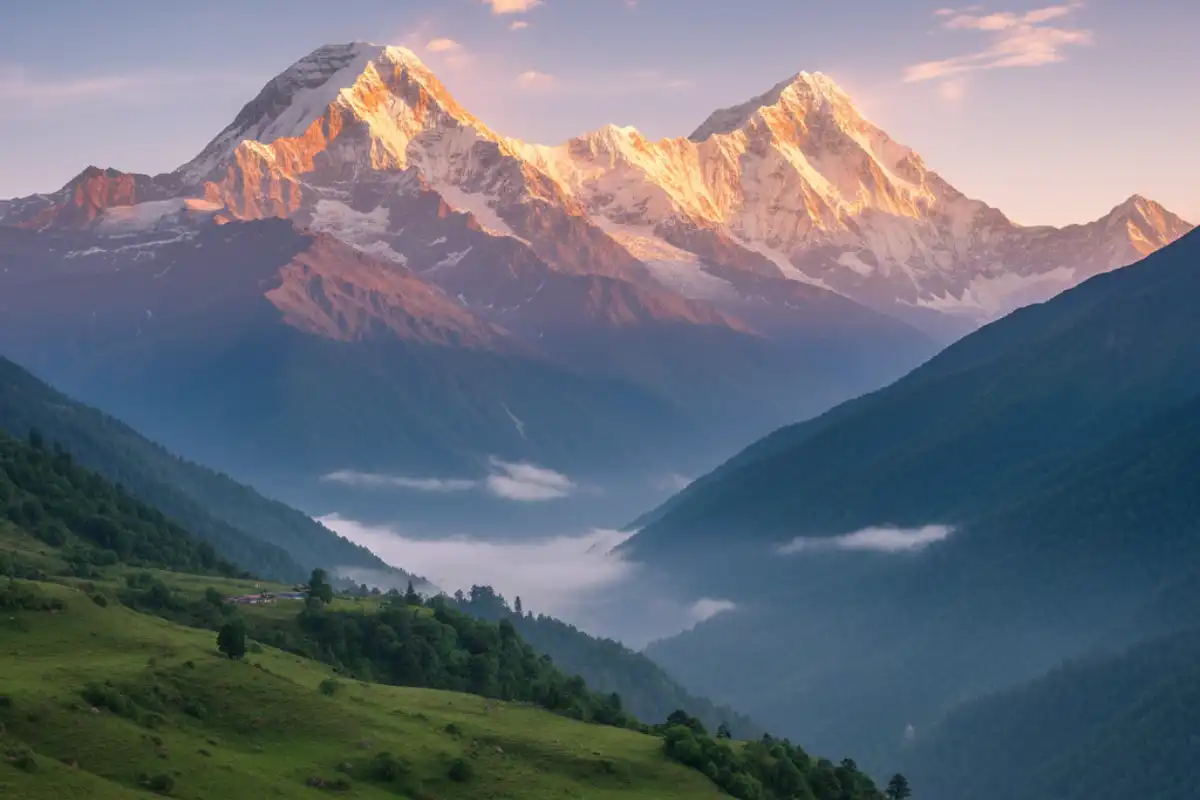
Spring air in Nepal is less hazy than in autumn, offering a sharp clarity that makes sunrises over the giants truly spectacular. The dust levels are low, and the pre-monsoon moisture hasn’t yet arrived to cloud the horizons.
Poon Hill (3,210m)
Perhaps the most famous sunrise in the world. In April, the view of Dhaulagiri and Annapurna I as they catch the first light is a spiritual experience. The cold dawn air is quickly forgotten as the sun warms the ridge.
Pro-Tip: The Kalapatthar Alternative
“If you are on the Everest Base Camp trek in 2026, don’t just settle for the base camp itself,” advises a contributor to The Himalayan Times. “The sunrise from Kalapatthar (5,644m) in April offers a superior view of Everest’s southwest face, often illuminating the ‘plume’ of snow blowing off the summit in a fiery orange glow.”
Trekking Logistics 2026: Permits and Gear
The 2026 season requires all trekkers to have a valid TIMS (Trekkers’ Information Management Systems) card and specific regional permits. Solo trekking is restricted in many areas to ensure safety; hiring a local guide is not just a requirement in some zones, but a way to deeply connect with the Sherpa and Gurung cultures that define these mountains.
Frequently Asked Questions: Nepal Spring 2026
Is April the best time for Everest Base Camp?
Yes. April is considered the prime month. The temperatures at night are manageable (around -5°C to -10°C), and the daytime is sunny. Crucially, it is also the peak of the climbing season, so the Base Camp is a vibrant “tent city” filled with expeditions aiming for the summit.
What is the “Teahouse Culture” like in spring?
Teahouses are bustling social hubs. In 2026, many teahouses have upgraded to solar heating and satellite Wi-Fi. It’s the best time to meet fellow travelers from around the world over a bowl of Sherpa stew and ginger-lemon-honey tea.
How do I avoid Altitude Sickness (AMS)?
The golden rule remains: “Walk high, sleep low.” Acclimatize properly, stay hydrated, and avoid alcohol. In spring 2026, many guides carry portable oximeters to monitor your oxygen saturation levels daily.
What gear is essential for a spring trek?
Layers are vital. You will start the day in a t-shirt at lower elevations but need a heavy down jacket and thermal layers at the passes. Good quality polarized sunglasses are a must to prevent snow blindness on the upper glaciers.
Do I need to worry about leeches in April?
Generally, no. Leeches are a concern during the summer monsoon (June–August). In April, the trails are dry and clear, making it much more comfortable for lower-altitude trekking.
Conclusion: Standing on the Roof of the World
Nepal in the spring of 2026 is a destination of profound contrast. It is a place where the fragility of a wildflower meets the immortal strength of the Earth’s highest peaks. By walking these trails, you aren’t just a visitor; you are part of a seasonal rhythm that has existed for centuries. Whether you seek the challenge of a high pass or the quiet of a mountain sunrise, the Himalayas in bloom offer a perspective that stays with you long after you’ve descended the final stone stairs. The mountains are calling, and the trails are ready.
Would you like me to help you compare the difficulty levels between the Annapurna Circuit and the Everest Base Camp trek for your 2026 spring dates?