Mental health benefits of winter travel
The winter months, characterized by short days and low sunlight, often bring increased feelings of fatigue, low mood, and stress a phenomenon often called the "winter blues" or, in severe cases, Seasonal Affective Disorder (SAD). While many instinctively seek tropical warmth, a winter vacation can offer profound, often overlooked, mental health benefits by forcing a necessary shift in routine, exposing us to therapeutic natural environments, and promoting deep psychological rest.
Psychological Reset and Focus 🎯
The stark environment of winter travel naturally changes our mental state.
1. Combating Monotony and Burnout
Winter travel often involves specialized activities (skiing, hiking, Northern Lights viewing) that require **focused attention**. This shift from everyday mental clutter forces the brain to engage differently.
- **The Flow State:** Engaging in focused outdoor winter sports (like snowboarding or cross-country skiing) can induce a **”flow state,”** which is deeply calming and reduces rumination on daily worries.
- **Traveler Insight:** “I found that being out in the mountains, where you have to focus intensely on your skis and the terrain, completely silenced my work stress. It’s an active form of meditation. I came home feeling less drained than I would have after a beach vacation.” (Source: Mental Wellness Forum)
2. The Therapeutic Power of Blue Light
The reflection of sunlight off snow dramatically increases the amount of **blue light** exposure you receive. This type of light is essential for regulating the body’s circadian rhythm and boosting mood.
- **SAD Mitigation:** Even on cloudy days, the high reflectivity of snow can significantly increase light levels, which is a key treatment factor for SAD symptoms.
The Benefit of Hygge and Coziness 🔥
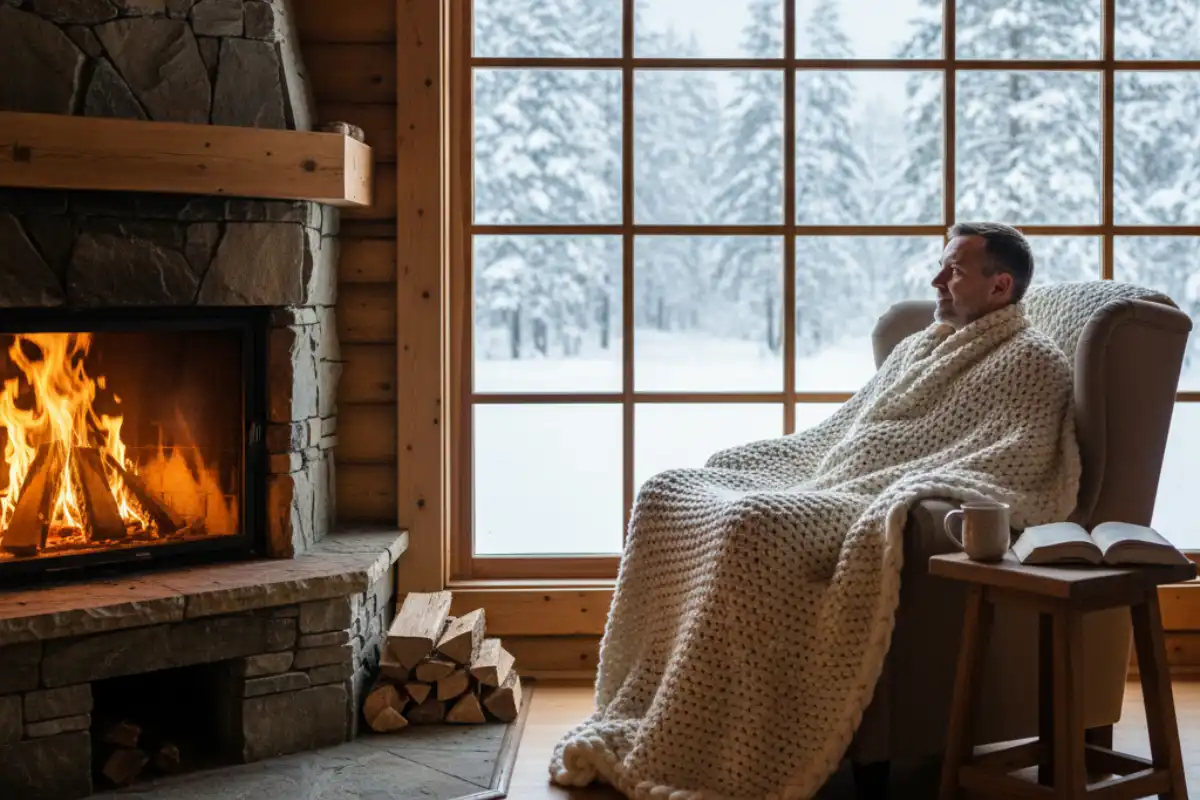
The Danish concept of *hygge* (a quality of cozy contentment and well-being) is maximized during winter travel.
1. Intentional Relaxation
Winter travel naturally promotes a slower pace focused on internal comfort:
- **Ritual of Warmth:** The deep satisfaction of moving from extreme cold (outdoor activity) to extreme warmth (fireside, hot tub, sauna) is psychologically rewarding, signaling safety and comfort to the nervous system.
- **Journalist Take:** “Hygge isn’t just about candles; it’s about intentional rest. In a snowy cabin, you are actively choosing connection reading, long conversations, slow cooking over distraction. This dedicated downtime is a critical mental health strategy we often neglect in our busy lives.” (Source: Wellness Travel Magazine)
2. Digital Detoxification
The urge to spend time outside is balanced by the need to recharge indoors. This balance often facilitates a natural, necessary break from digital devices.
Cold Exposure and Resilience 🛡️
Exposure to cold can have surprising physical and mental benefits, often linked to mood regulation.
- **Hormonal Boost:** Cold exposure such as a quick dash outside or a cold plunge in a Nordic spa—triggers the release of **norepinephrine**, a hormone that can improve focus and vigilance, and also boosts mood and energy levels.
- **Increased Resilience:** Successfully managing and enjoying extreme temperatures builds a sense of personal resilience and strength.
Psychologist’s Note: Embracing the Challenge
“We often seek comfort, but the brain benefits greatly from novel, manageable challenges. Planning and executing a winter trip, successfully navigating layers, and engaging with the cold environment gives the traveler a distinct feeling of competence and mastery. This sense of achievement is a powerful antidote to feelings of helplessness or low self-esteem often associated with seasonal depression.”
Frequently Asked Questions About Winter Travel and Mental Health
Does traveling to a cold climate make Seasonal Affective Disorder (SAD) worse?
Not necessarily. While SAD is linked to lack of light, the reflection of light off snow, combined with increased time spent outdoors engaging in physical activity, can counteract the effects of short days. Furthermore, the novelty of the environment can interrupt depressive thought patterns.
Should I still take Vitamin D supplements during a snowy winter vacation?
Yes. Although sun reflection off snow is beneficial, the angle of the sun in winter is often too low for the body to synthesize adequate Vitamin D. Continue supplements as advised by your doctor, especially if you live at high latitudes.
Is a ski vacation or a city break better for mental health in winter?
A **ski vacation** or any trip involving intense, focused outdoor nature time is generally better. The combination of physical activity, exposure to nature, and the focused challenge is highly therapeutic compared to the urban environment.
What is the most mentally restorative winter activity?
Activities that combine physical effort with silence and nature, such as **snowshoeing, cross-country skiing, or silent winter hiking**. These activities are typically lower-impact than downhill skiing, reducing anxiety and promoting a state of quiet contemplation.
How can I maximize the “hygge” feeling in my accommodation?
Choose lodging with specific cozy elements: a fireplace (or wood stove), soft lighting (lamps, not overhead light), warm textures (wool, knit throws), and a dedicated area for reading or quiet contemplation, such as a window seat.
Conclusion: A Chill That Clears the Mind 🧘
The mental benefits of winter travel extend far beyond simple relaxation. By actively seeking the challenging beauty of cold environments, embracing focused activity, and prioritizing intentional rest through the culture of *hygge*, travelers can effectively disrupt seasonal low moods. A winter vacation is not just a break from work; it’s a deliberate psychological strategy to enhance resilience and restore mental clarity.