London on a Budget: Your Essential Guide to Affordable & Safe Travel in the UK Capital (July 2025)
Explore iconic landmarks, vibrant culture, and diverse neighborhoods without breaking the bank. This comprehensive guide, updated for **July 2025**, will help you experience London affordably and safely.
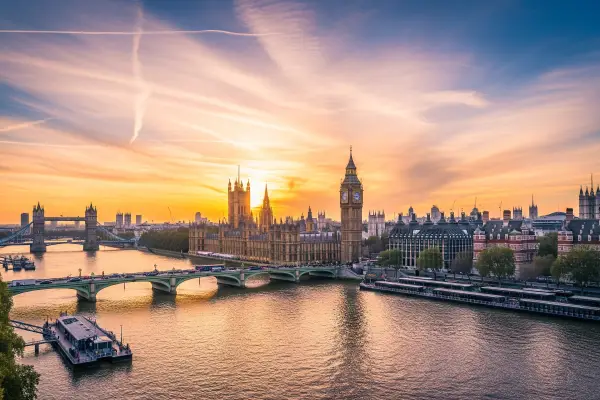
Discover London’s Charm, Smartly and Safely
London, a global powerhouse of culture, history, and innovation, is renowned for its vibrant energy and iconic sights. While it often carries a reputation for being an expensive city, a visit to London doesn’t have to drain your savings. With strategic planning and smart choices, you can experience the best of the UK capital on a budget. As of July 2025, economic conditions in the UK mean being mindful of costs is still key. This guide will equip you with practical advice on finding affordable accommodation, enjoying delicious cheap eats, navigating the extensive public transport system, and staying safe, ensuring your London adventure is both economical and unforgettable.
1. Cost of Accommodation in London: Budget Options
London offers a wide range of accommodation, from world-class hotels to budget-friendly hostels and guesthouses. Prices vary considerably based on location, quality, and time of year. Booking well in advance is highly recommended, especially for peak travel periods like summer (July) and major holidays.
Hostel & Budget Hotel Prices by Area (Average per night for a dorm bed/budget private, July 2025)
| Area | Description | Average Price (GBP/night) | Pros for Budget Travelers |
|---|---|---|---|
| **King’s Cross / Euston** | Major transport hub, good connections across UK and London. | £35 – £60 (Dorm) £80 – £130 (Budget Private) |
Excellent transport, many hostels, walking distance to British Library. |
| **Victoria / Pimlico** | Close to Buckingham Palace, decent transport, generally quieter. | £40 – £65 (Dorm) £90 – £140 (Budget Private) |
Central, good tube/bus connections, accessible to major sights. |
| **Earl’s Court / Kensington** | Residential, safe, good Tube links to central London. | £30 – £55 (Dorm) £75 – £120 (Budget Private) |
Relatively quieter, safe, good value for location, close to museums. |
| **Southwark / Waterloo** | South Bank attractions, good transport, vibrant. | £38 – £62 (Dorm) £85 – £135 (Budget Private) |
Great for South Bank, Borough Market, good transport links. |
| **Stratford / Greenwich (Outer East/South East)** | Olympic Park, Cutty Sark. Requires more travel time to central. | £25 – £45 (Dorm) £60 – £100 (Budget Private) |
Best value, modern facilities in Stratford, good transport (DLR/Jubilee Line). |
Note: Prices are estimates and highly variable. July is peak season, so expect prices at the higher end or book very early.
Tips for Saving on Accommodation:
- **Book Early:** Especially crucial for London, as demand is high. Prices can double closer to your travel date.
- **Consider Hostels with Amenities:** Many London hostels are modern, clean, and offer features like free breakfast, kitchens, or social events that save money. Look at chains like Generator, Wombat’s City Hostel, or Safestay.
- **Stay Slightly Out of Zone 1:** London’s Tube system is excellent. Staying in Zone 2 or 3 (e.g., Earl’s Court, Camden, Stratford) can significantly reduce accommodation costs, and you’re still just a short Tube ride from the center.
- **Guesthouses/B&Bs:** These can offer a more personal touch and sometimes better value than budget hotels, particularly outside the immediate city centre.
- **Check University Accommodations:** During summer months, some university halls of residence offer affordable rooms to tourists.
2. Cost of Food in London: Eating on a Budget
London’s food scene is incredibly diverse, and you can eat well on a budget if you know where to look. Avoid tourist-trap restaurants around major landmarks; instead, seek out markets, ethnic eateries, and supermarket deals.
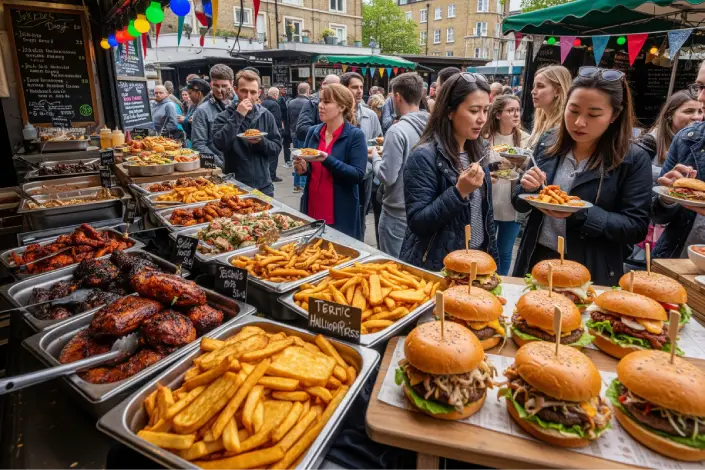
London’s diverse food markets offer delicious and affordable meals.
Estimated Budget Food Costs (July 2025):
- **Breakfast:** £3 – £8 (Supermarket pastries/sandwich: £3-5; simple café breakfast: £6-8)
- **Lunch:** £7 – £15 (Meal deal at supermarket: £4-6; street food/market: £7-12; casual pub lunch: £10-15)
- **Dinner:** £12 – £25 (Casual ethnic restaurant: £12-20; pub dinner: £15-25; supermarket meal: £5-10)
- **Daily Budget for Food:** £25 – £45 if you combine supermarket/meal deals with casual eateries and street food.
Budget Eating Tips:
- **Supermarket Meal Deals:** Tesco, Sainsbury’s Local, and M&S Simply Food offer excellent value “meal deals” (sandwich/wrap + snack + drink) for around £4-£6. Perfect for a quick, cheap lunch.
- **Food Markets:** London has fantastic food markets like Borough Market (pricier, but great samples), Brick Lane Market, Portobello Road Market, and various street food hubs. You can find incredible, diverse, and often cheaper meals here.
- **Ethnic Restaurants:** Areas like Brick Lane (curry), Soho (Asian), or local high streets away from central London offer fantastic and affordable Indian, Chinese, Vietnamese, Turkish, and other cuisines.
- **Pub Lunches:** Many pubs offer decent, hearty meals at reasonable prices, especially at lunchtime. Look for “lunch specials.”
- **”Pret A Manger” / “Eat” / “Leon”:** These chains offer fresh sandwiches, salads, soups, and hot food at reasonable prices for a quick bite.
- **Happy Hour Deals:** Many pubs and bars offer discounted drinks and sometimes food during specific hours.
- **Bring a Water Bottle:** Tap water is safe to drink. Refill at public fountains or cafes/restaurants to save on bottled water.
- **Picnics:** Buy groceries from supermarkets and enjoy a picnic in one of London’s beautiful parks (Hyde Park, Regent’s Park, Hampstead Heath).
3. Cost of Public Transportation in London
London’s public transport system, managed by Transport for London (TfL), is extensive and efficient, consisting of the Tube (Underground), Overground, DLR, buses, trams, and National Rail services within London. It operates on a zonal fare system.
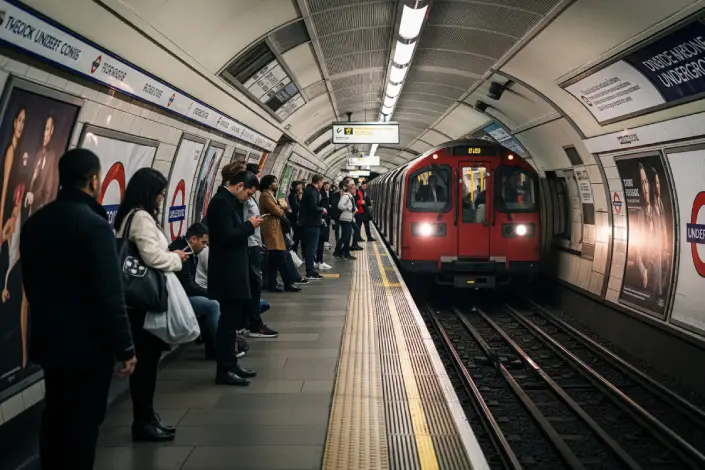
The London Underground is the quickest way to get around the city.
Fares (As of July 2025, subject to minor changes):
- **Oyster Card / Contactless Payment:** The most cost-effective and convenient way to pay. Tap in and out at stations (only tap in on buses/trams). It caps your spending at a daily or weekly travelcard rate, ensuring you never pay more than the equivalent pass.
- **Single Tube Fare (Zone 1):** Around £2.80 – £3.50 (peak/off-peak) with Oyster/contactless, significantly more expensive with a paper ticket.
- **Bus/Tram Single Fare:** £1.75 (flat fare, regardless of distance) with Oyster/contactless.
- **Travelcards:** Offer unlimited travel on Tube, DLR, Overground, buses, and National Rail services within specified zones for a period.
- **Daily Travelcard (Zones 1-2):** Around £15.20
- **7-Day Travelcard (Zones 1-2):** Around £40.70
- **Visitor Oyster Card:** A pre-loaded Oyster card aimed at tourists, can be bought before arrival. Offers the same benefits as a regular Oyster but usually has a non-refundable activation fee.
- **London Pass / Go City Explorer Pass:** Tourist passes that include attraction entry and sometimes travel. Generally **NOT recommended for budget travelers** unless you have a very specific, intensive itinerary visiting many expensive attractions. Often, pay-as-you-go with Oyster/contactless and free museums is cheaper.
Tips for Transportation:
- **Use Contactless Payment or an Oyster Card:** This is the golden rule for saving money and convenience. Just tap your bank card (ensure no foreign transaction fees) or phone/watch, or get an Oyster Card (£7 refundable deposit).
- **Walk When Possible:** Many central London sights are walkable, allowing you to save money and discover hidden gems.
- **Utilize Buses:** Buses are cheaper than the Tube for single journeys (£1.75 flat fare) and offer a scenic view of the city. Use them for shorter hops or when the Tube is crowded.
- **Avoid Peak Hours (if possible):** Tube fares are higher during peak times (Mon-Fri 06:30-09:30 and 16:00-19:00).
- **Use Citymapper / Google Maps:** Essential apps for navigating London’s complex transport network. They provide real-time updates, route options, and fare estimates.
- **Know the Zones:** Understand the zonal system to estimate costs. Most major tourist sights are in Zone 1.
4. Safety in London: Dangers, Scams, and Areas to Be Cautious
London is generally a safe city for tourists, but like any major global capital, it has its share of petty crime and specific scams targeting visitors. Violent crime against tourists is rare, but vigilance against pickpocketing is essential.
Common Dangers & Scams:
- **Pickpockets:** The most common crime targeting tourists. They operate in crowded areas, on the Tube (especially busy lines/stations like Oxford Circus, London Bridge, Covent Garden), on popular bus routes, and at major attractions (e.g., around Big Ben, Trafalgar Square).
- **Scenarios:** Distraction techniques (someone “accidentally” bumps into you, drops something, “petition” scams where they distract you while an accomplice picks your pocket).
- **ATM Scams/Skimming:** Be cautious when using ATMs. Check for skimming devices on the card slot. If someone offers “help,” politely decline.
- **Street Performers/Artists (aggressive ones):** While most are legitimate, some may try to pressure you for money after a photo or performance. Clarify payment *before* engaging, or politely decline.
- **Overpriced/Unlicensed Taxis (“Cabs”):** Only use official black cabs (which you can hail) or licensed minicabs booked via an app (like Uber or Bolt) or a reputable firm. Avoid unmarked cars offering rides.
- **Begging:** While generally harmless, some beggars can be persistent. It’s best not to engage.
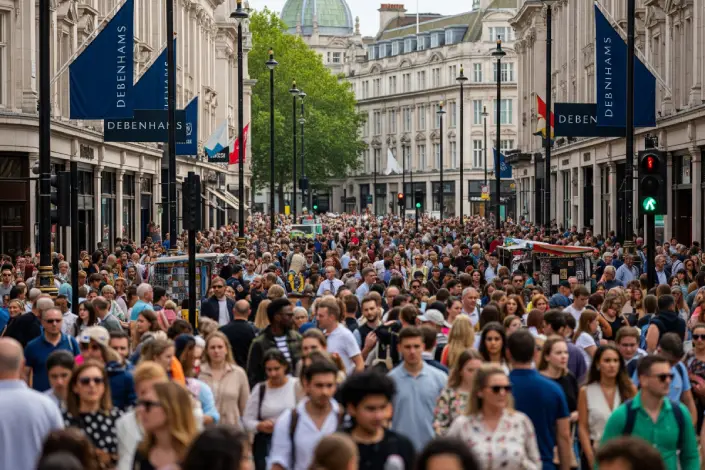
Areas Where Caution is Advised (mainly due to crowds and petty crime):
- **Major Tourist Hubs:** Oxford Street, Piccadilly Circus, Leicester Square, Trafalgar Square, Covent Garden, Borough Market, Westminster (around Big Ben/Parliament). Always be extra aware of your belongings.
- **Crowded Tube Lines/Stations:** Especially Central, Piccadilly, Northern lines during peak hours.
- **Nightlife Areas (Soho, Shoreditch, Brixton):** Generally safe, but late at night, as with any city, be mindful of your drinks, avoid walking alone in deserted areas, and use licensed transport.
- **Around Transport Hubs:** Victoria Coach Station, major train stations (King’s Cross, Waterloo, Paddington) can have higher instances of petty crime due to transient populations.
General Safety Advice:
- **Secure Your Belongings:** Use an anti-theft bag, wear cross-body bags in front, and never keep wallets/phones in back pockets. Be extra vigilant when distracted (e.g., taking photos, checking maps).
- **Be Aware of Surroundings:** Avoid being overly absorbed in your phone or conversations, especially in crowded areas.
- **Leave Valuables in Hotel Safe:** Only carry what you need for the day.
- **Copies of Documents:** Keep digital and physical copies of your passport and important details separate from the originals.
- **Emergency Numbers:** 999 (Police, Ambulance, Fire). 111 (Non-emergency medical advice).
- **Night Safety:** Stick to well-lit, populated areas and use official transport. Trust your instincts.
- **Drink Responsibly:** If consuming alcohol, stay aware of your limits and surroundings.
- **Road Safety:** Remember traffic drives on the left in the UK. Always look both ways before crossing the street.
5. Tips for a Positive London Experience
Beyond the practicalities, these tips will help you immerse yourself in London’s unique charm and maximize your visit.
- **Embrace Free Attractions:** London boasts world-class free museums (British Museum, National Gallery, Tate Modern, V&A, Natural History Museum) and beautiful parks (Hyde Park, Regent’s Park, Hampstead Heath, Richmond Park). You could spend days exploring these without spending a penny on entry fees.
- **Walk!:** London is highly walkable, especially within zones. You’ll discover charming side streets, beautiful architecture, and hidden gems you’d miss on the Tube.
- **Explore Beyond Zone 1:** While iconic, central London is just a fraction of what the city offers. Explore diverse neighborhoods like Camden Town (alternative culture), Shoreditch (street art, nightlife), Greenwich (maritime history, views), or Notting Hill (charming streets, market).
- **Enjoy a Pub Experience:** A quintessential British experience! Find a traditional pub for a pint, good conversation, and sometimes affordable food.
- **Take Advantage of Theatre Deals:** London’s West End offers incredible theatre. Look for last-minute deals at the TKTS booth in Leicester Square or use apps like TodayTix for discounted tickets.
- **Use Free Wi-Fi:** Many cafes, pubs, and public spaces offer free Wi-Fi. It helps save on mobile data.
- **Understand Queuing Etiquette:** Brits love to queue! Join the line patiently and wait your turn.
- **Mind the Gap:** A famous warning on the Tube! Be careful when stepping on and off trains.
6. London Travel FAQs (July 2025)
Is London safe for solo female travelers in 2025?
Yes, London is generally very safe for solo female travelers. Standard precautions against petty theft in crowded areas and using licensed transport at night apply. Public transport is safe, even late, but always be aware of your surroundings.
What’s the best time to visit London on a budget?
The shoulder seasons (April-May and September-October) offer pleasant weather, fewer crowds than peak summer, and potentially better accommodation deals. Winter (November-February, excluding Christmas/New Year’s) can be the cheapest, but it’s cold and rainy.
Can I use cash or credit cards in London?
London is very much a cashless city. Credit/debit cards and contactless payments (Apple Pay/Google Pay) are widely accepted everywhere, even for small purchases. Carrying a small amount of cash (£20-£30) for emergencies or very small independent shops is advisable, but not strictly necessary for most transactions.
How do I get from Heathrow (LHR) or Gatwick (LGW) airports to central London on a budget?
From **Heathrow**, the **Piccadilly Line** (Tube) is the cheapest option and takes about an hour (€5-€6 with Oyster/contactless). The Heathrow Express is faster but much more expensive. From **Gatwick**, the **National Rail Southern service** or **Gatwick Express** are options; for budget, look at Southern trains or **National Express coaches** (buses) which are usually the cheapest if booked in advance.
Is it easy to find vegetarian/vegan food in London?
Yes, absolutely! London is one of the best cities in the world for vegetarian and vegan options. Most restaurants have clearly marked vegetarian/vegan dishes, and dedicated plant-based eateries are abundant across the city. Apps like HappyCow are very useful.
Should I buy a London Pass or an Oyster Card?
For budget travel, get an **Oyster Card** or simply use your **contactless bank card/phone** for transport. Tourist passes like the London Pass are generally only cost-effective if you plan to visit many specific, expensive attractions in a short period. London’s free museums mean you can save a lot without needing a pass.
What’s the tipping etiquette in London?
Tipping is not as ingrained as in the US, but it is appreciated. In restaurants, a 10-15% tip is standard if a service charge isn’t already included. For pubs, it’s not customary to tip for drinks at the bar. For taxis, rounding up the fare is common. For exceptional service, feel free to leave a bit extra.
Your London Adventure Awaits!
London is an incredible city with something for everyone, regardless of budget. With smart planning, a focus on free attractions, and an awareness of safety, you’re ready to dive into its vibrant culture, explore its historic streets, and make unforgettable memories.
Start Planning Your London Trip