Layering tips for cold weather travel
The single most effective strategy for surviving and thriving in cold weather travel is mastering the art of layering. Unlike simply wearing one bulky coat, a well-executed layering system allows you to manage moisture, regulate body temperature instantly, and stay comfortable across varied activities from a brisk city walk to a strenuous mountain hike. Done right, layering also lets you pack lighter by using fewer, more versatile items.
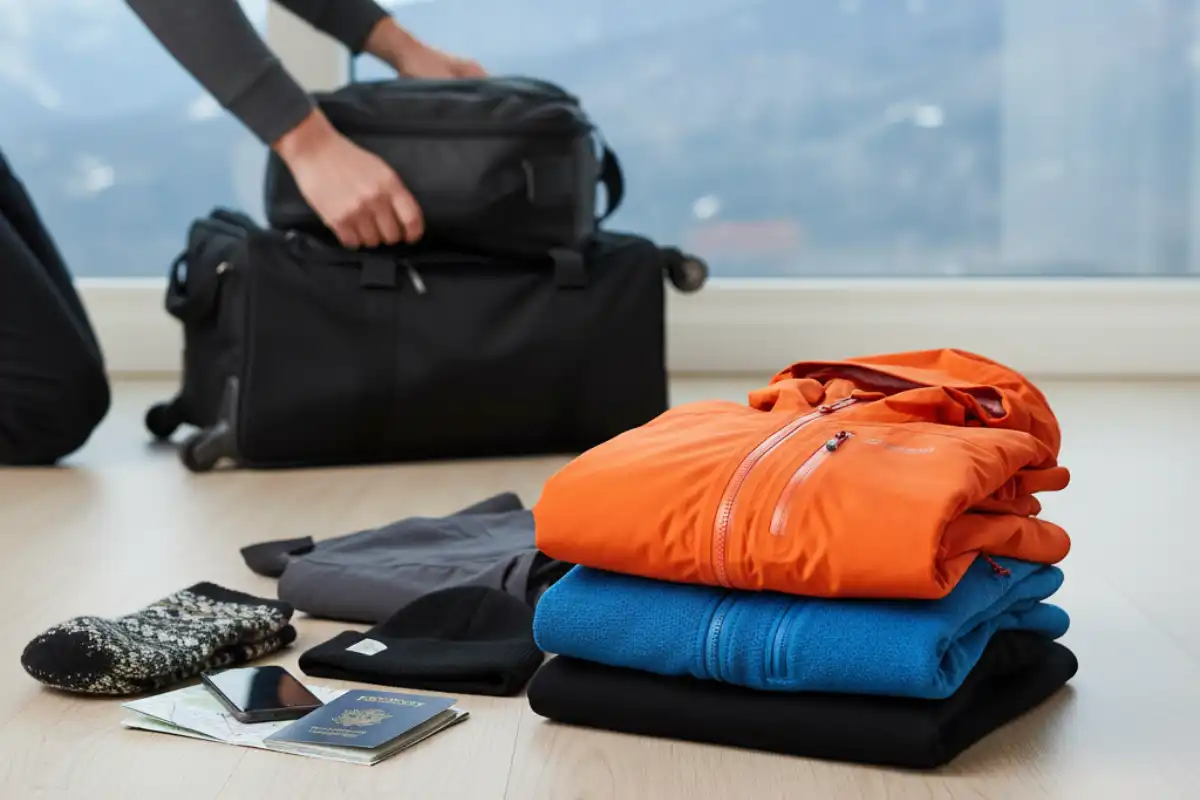
The Three-Layer System: A Breakdown 🌡️
Every piece of clothing serves a distinct purpose in combating cold and moisture.
1. The Base Layer (Wicking)
This is the foundation, sitting directly against the skin. Its job is to manage perspiration by moving moisture (sweat) away from the body.
- **Ideal Fabrics:** **Merino wool** (naturally antimicrobial, excellent warmth-to-weight ratio) or high-quality **synthetic fabrics** (polyester, polypropylene).
- **The Critical Rule:** **Absolutely no cotton.** Cotton absorbs and holds sweat, leading to rapid cooling (known as the “cotton kills” phenomenon in cold environments).
- **Traveler Tip:** “Invest in two good Merino wool base tops. They can be worn for several days without washing due to wool’s odor resistance, which saves massive space and weight in your bag.” (Source: Backpacking & Adventure Travel Blogs)
2. The Mid Layer (Insulation)
This layer is your primary source of warmth. It traps air close to your body to slow the rate of heat loss.
- **Ideal Fabrics:** **Fleece** (easy to dry, lightweight, affordable), **down** (excellent warmth-to-weight, highly compressible), or **synthetic insulated jackets** (retains warmth when wet).
- **Versatility Check:** Choose items that can be worn both as a mid-layer and as outerwear in slightly milder conditions (e.g., a stylish fleece jacket for walking around a warm museum).
3. The Outer Layer (Protection/Shell)
This is your shield against the external elements wind, snow, and rain. It should be both waterproof and windproof while still being breathable enough to let the inner layers work effectively.
- **Types:** **Hardshells** (most durable, fully waterproof) or **Softshells** (more breathable, flexible, but less waterproof).
- **Must-Have Feature:** Look for jackets with **ventilation zippers** (pit zips) under the arms. This allows you to dump excess heat quickly without having to remove the entire jacket, which is essential when moving from outdoors to indoors.
Practical Layering for the Traveler 🚶♀️
Applying the system to real-world travel scenarios makes all the difference in comfort.
1. The Core Principle: Zippers and Vents
The most important part of layering is controlling your microclimate. When you start an activity (e.g., climbing stairs, running for a bus), you will start to sweat. The key is to **adjust your layers before you get too warm and sweat profusely.** Open zippers, use pit zips, and remove your hat or scarf *before* your body overheats.
2. Don’t Forget the Extremities
Your head, hands, and feet lose heat quickly, but you must prevent them from sweating.
- **Feet:** Use only one pair of quality **Merino wool or synthetic socks**. Avoid thick socks, which can crowd your boots, restrict blood flow, and make your feet colder.
- **Hands:** Use a **glove-and-mitten system** for extreme cold: a thin liner glove (base layer) underneath an insulated mitten (outer shell). The mitten keeps your fingers warmer than a glove because they share heat.
- **Head/Neck:** A warm hat and a neck gaiter (or buff) are non-negotiable, as they cover the most exposed areas where heat escapes most readily.
Outdoor Guide Advice: Pack for the Inside
“Travelers focus so much on the outer layers, they forget the power of the base layer. Pack an extra pair of base layer bottoms (leggings). You can wear them under jeans for city touring or under technical pants for skiing. They take up almost no space but double the warmth of your pants instantly.” (Source: Mountain Guide Training Manuals)
Frequently Asked Questions About Layering
Is it better to wear a down jacket or a synthetic jacket as a mid-layer?
It depends on the environment. **Down** offers the best warmth-to-weight ratio and is highly compressible, ideal for dry, freezing cold. **Synthetic** insulation is better if there’s a risk of rain or heavy snow, as it retains most of its insulating properties even when wet, whereas down collapses when damp.
I only have one bulky winter coat. Can I still layer effectively?
Yes, focus intensely on the base and mid-layers. Wear a quality moisture-wicking base layer and use a thick fleece or a vest as your mid-layer underneath your coat. You can still regulate heat by using your coat’s zipper and adjusting your scarf/hat, but you lose the versatility of removing the outer shell entirely.
Is cashmere a good base layer for travel?
Cashmere is luxurious and warm, but it is **not recommended as a base layer** directly against the skin for active travel. It’s delicate, expensive, and not as efficient at wicking moisture as Merino wool or synthetics. It is best used as a sophisticated, lightweight **mid-layer** for dinner or light walking.
How do I transition from cold outdoors to warm indoors without overheating?
The moment you step indoors (e.g., a museum or cafe), immediately **remove the outer layer and the hat/gloves**. If you plan to stay awhile, remove the mid-layer too. Holding these items prevents your body temperature from spiking and causing you to sweat, which would make stepping back outside cold and miserable.
What about layering on my legs?
Most travelers need only two layers on their legs: the **base layer bottom** (Merino or synthetic leggings) and the **outer layer** (waterproof/windproof trousers or insulated ski pants). For urban travel, the base layer can be worn under jeans or non-technical pants for immediate warmth without the bulk of a third layer.
Conclusion: Comfort Through Control ❄️
The power of the three-layer system lies in control. It’s not about how many layers you wear, but how strategically you use them to manage moisture and temperature. By investing in quality base layers and understanding the role of each piece, you can pack efficiently and stay perfectly warm and dry, transforming cold weather from an obstacle into a breathtaking backdrop for your travels.