Is flying safe during pandemics?
Air travel during a global health crisis is a major source of anxiety for many travelers. While the perceived risk is high due to close proximity to others, scientific and industry data suggest that the modern aircraft cabin is, surprisingly, one of the safest indoor environments available, often comparable to a hospital operating room. This high safety level is not accidental but is achieved through a combination of engineering, protocol, and individual responsibility.
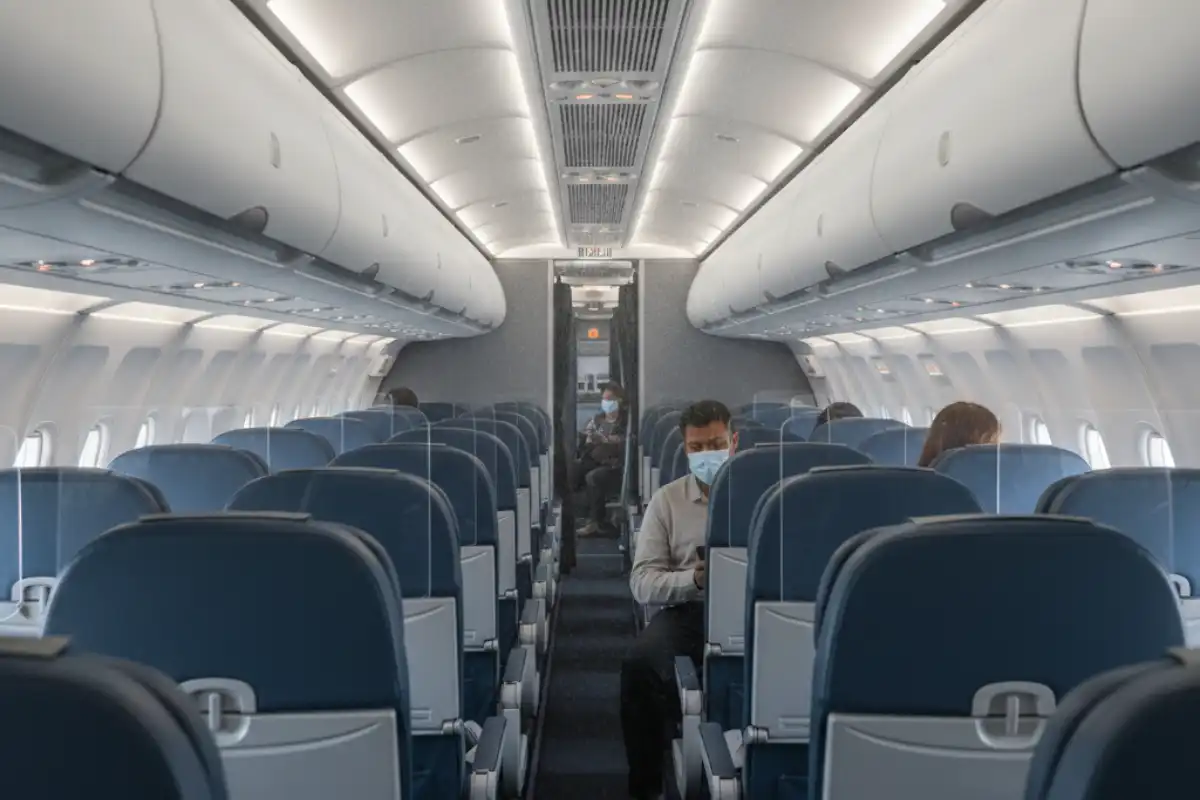
The Science of Cabin Air Quality: HEPA Filtration 🔬
The core element making flying safer than many other public spaces is the sophisticated aircraft ventilation system.
1. The HEPA Filter Advantage
Most modern commercial aircraft use High-Efficiency Particulate Air (HEPA) filters, which are the same standard used in hospital operating theaters and industrial clean rooms:
- **Superior Filtration:** HEPA filters are capable of removing **99.97% to 99.99%** of airborne particles, including bacteria, fungi, and viruses, which are often sized similarly to or larger than the SARS-CoV-2 virus (which causes COVID-19).
- **Constant Air Exchange:** The cabin air is not stagnant. It is typically replaced every **2 to 3 minutes** entirely (20-30 times per hour), with half of the air being fresh outside air and the other half being HEPA-filtered recirculated air. This is significantly faster than standard office buildings.
2. Airflow Dynamics as a Barrier
The direction of air movement plays a crucial role in limiting the lateral spread of contaminants:
- **Top-to-Bottom Flow:** Air enters the cabin from vents above the seats and flows downward, exiting near the floor level. This vertical circulation minimizes the chance of air moving horizontally along the length of the plane, reducing the spread of respiratory particles to distant rows.
- **Seatback Barrier:** Individual seatbacks naturally act as physical barriers, helping to isolate passengers and contain droplet spread from coughs or sneezes.
Aviation Health Expert Review: Dr. Chen & Prof. Steffen, Journal of Travel Medicine
“While transmission remains a risk, studies consistently show the air-flow management implementations and HEPA filters dramatically limit the spread. The highest risk points are not mid-flight, but during **boarding and deplaning**, when the ventilation system may be less effective and passengers are tightly clustered.”
Layered Risk Mitigation Strategies 😷
While aircraft engineering provides a safe environment, individual and airline protocols are critical.
1. Personal Protective Measures (The Traveler’s Role)
Your actions significantly influence your personal risk:
- **Mask Quality:** Travelers consistently recommend wearing the most protective mask possible, such as a well-fitting **N95 or KN95**, especially in crowded airports and throughout the flight.
- **Hand Hygiene and Surface Wiping:** Maintain frequent hand sanitizing (especially after touching surfaces like seatbacks, buckles, and lavatory handles). Many veteran travelers bring disinfectant wipes to clean their own tray table and armrests immediately upon boarding.
- **Strategic Seating:** Some research suggests that **window seats** may offer a slightly lower risk due to the proximity to the downward airflow near the cabin wall. Aisle seats involve more contact with passing passengers.
2. Airline and Airport Protocols (The Industry’s Role)
Airlines have adopted enhanced measures to manage risk on the ground and in the air:
- **Enhanced Cleaning:** Increased frequency of deep cleaning and disinfection of cabins, often using electrostatic or specialized sprays before and after flights.
- **Streamlined Service:** Many airlines reduced or streamlined food and beverage services to minimize the time passengers spend with their masks off.
- **Screening:** Pre-flight health declarations or temperature checks (where mandated) added a layer of screening to reduce the chance of symptomatic individuals boarding.
Traveler Insight: Mark S., Frugal Travel Forum
“My biggest anxiety was the airport terminal, not the plane. On a recent trip, I found the plane felt safer than the crowded gate area. My hack: I bought a lounge pass even a cheap one to wait in a less crowded, more distant environment. It cost a little extra but was worth the peace of mind and access to less-trafficked bathrooms before the flight.”
Frequently Asked Questions About Flying Safety
Is the air during the boarding process as safe as during the flight?
No. When the aircraft is on the ground and the engines are off, the HEPA-filtered air circulation system is often running at reduced capacity or using auxiliary power, making the air exchange rate lower. This, combined with close proximity during boarding/deplaning, is generally considered the highest-risk period of the journey.
Do I need to worry about catching a virus from the person two rows in front of me?
The risk is low. Due to the vertical (top-to-bottom) airflow, the air in the cabin does not typically travel far along the length of the plane. While direct aerosol or droplet spread within a two-row radius is possible, the efficient HEPA filtration system quickly removes particles from circulation, making the risk less significant than in a standard room.
What is the safest time to take my mask off to eat or drink?
Minimize “unmasked time.” Experts recommend eating/drinking quickly and replacing your mask immediately. If traveling with a companion, coordinate your breaks so that only one person is unmasked at any given time, providing a layered defense for the duration of the meal.
Do all airplanes have HEPA filters?
The vast majority of large, modern commercial jets (e.g., Boeing 737s, Airbus A320s and larger) are equipped with HEPA filters. However, some older, smaller regional jets (fewer than 100 passengers) may use less advanced filtration systems. If concerned, check the aircraft type used by your airline.
Should I avoid using the airplane restroom during the flight?
Restrooms are cleaned frequently, but they are high-touch areas. While studies suggest a low risk of aerosol transmission in the small space, the primary risk is surface contact. Use a paper towel to touch the latch and flush button, and meticulously wash your hands afterwards. It’s safe to use them if proper hygiene is maintained.
Conclusion: Calculated Risk, Informed Travel
The question of whether flying is safe during a pandemic has been largely answered by aviation science: the risk of transmission onboard a modern aircraft is statistically low, primarily due to the exceptional performance of HEPA filters and efficient cabin airflow. However, this low risk is not zero. The overall safety of your journey is a product of these engineering controls combined with your own adherence to protective measures wearing a high-quality mask, maintaining hand hygiene, and minimizing time spent in crowded, unfiltered areas like boarding gates. By being informed and prepared, you can approach air travel with calculated confidence.