Ice climbing adventures for thrill seekers
Ice climbing is the sport of scaling frozen waterfalls, icy cliffs, or even vertical ice formations. It’s an adrenaline-fueled fusion of hiking, mountaineering, and rock climbing, offering unparalleled views and a raw confrontation with the power of nature. Far from a simple winter activity, it demands precise technique, specialized gear, and an unwavering respect for the environment.
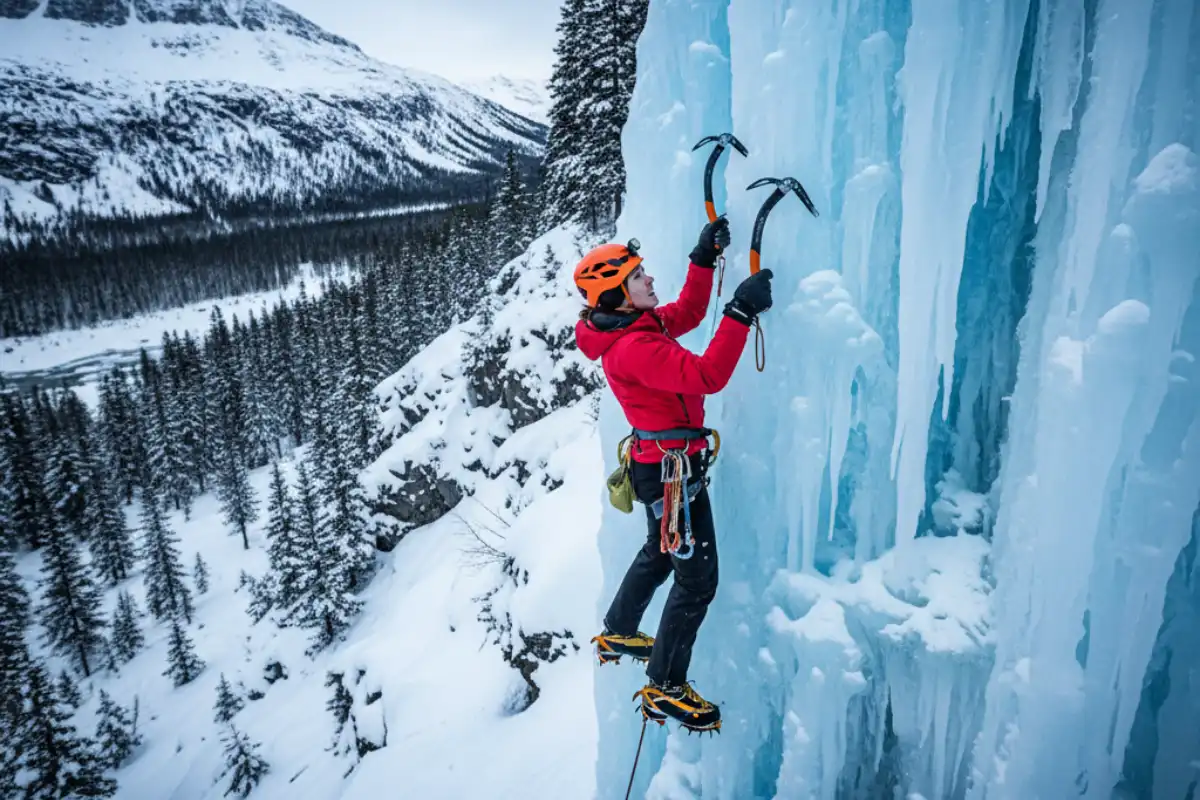
Top Global Destinations for Ice Climbing 🗺️
The best ice climbing locations are defined by reliable, sustained freezing temperatures that create and maintain thick, solid ice formations known as ‘WI’ (Water Ice).
1. Ouray, Colorado, USA (The Ice Climbing Mecca)
Ouray is perhaps the most famous ice climbing destination globally, largely thanks to the **Ouray Ice Park** an artificially created, maintained, and safely managed canyon where climbers can practice top-roping and leading.
- **Why it’s great:** Accessibility, abundant routes for all skill levels (WI2 to WI6), and a strong community. Perfect for **beginners and intermediates** to learn safely.
- **Must-Do:** Visit during the annual Ouray Ice Festival for clinics and gear demos.
2. Cogne, Aosta Valley, Italy (Alpine Classics)
Cogne is a stunning, natural ice climbing destination in the Italian Alps, renowned for its classic, long, and aesthetic frozen waterfalls.
- **Why it’s great:** Beautiful setting, proximity to excellent alpine skiing, and high-quality, long multi-pitch routes. Ideal for **intermediate to advanced climbers**.
- **The Vibe:** Authentic Italian mountain culture combined with world-class ice.
3. Canadian Rockies, Canada (Remote Giants)
Areas like the **Icefields Parkway** in Alberta and **Canmore** offer some of the largest, most remote, and most challenging routes in the world, including mixed routes (rock and ice).
- **Why it’s great:** Huge scale, high commitment, and the ultimate test of endurance. Many routes are **multi-day expeditions** only suitable for experts.
- **Traveler Advice:** “When climbing in the Rockies, never go without a partner who has serious avalanche training. The approaches are often just as dangerous as the climb itself.” (Source: Alpine Club of Canada Safety Reports)
Essential Gear and Safety Prep 🔒
Ice climbing is gear-intensive. Safety relies entirely on the quality and condition of your equipment and proper training.
1. The Tools of the Trade
The primary equipment is highly specialized and non-negotiable for safety:
- **Boots:** Rigid, insulated, mountaineering boots suitable for automatic or semi-automatic crampons.
- **Crampons:** Technical crampons with sharp, vertically oriented front points for maximum purchase on the ice.
- **Ice Axes/Tools:** Two specialized tools (not general mountaineering axes) designed for steep ice, featuring an aggressive curve and a sharp pick.
- **Protection:** **Ice Screws** are the fundamental protection placed into the ice. Learning to place them quickly and reliably is critical.
Veteran Climber Tip: The Sharper, the Better
“New climbers often underestimate how critical sharp picks and crampon points are. Dull gear means you have to swing harder, wasting energy, and risk breaking the ice. **Always sharpen your tools** the day before your climb. It’s the cheapest way to make the route feel easier and safer.” (Source: Climbing Magazine Gear Review)
2. Training and Avalanche Awareness
Unlike indoor climbing, the environment itself is a major hazard.
- **Professional Guidance:** **Never attempt natural ice climbing without professional instruction** or a highly experienced mentor. Start in controlled environments like the Ouray Ice Park.
- **Avalanche Training:** In mountain areas, many waterfall ice routes form in avalanche paths. Carrying **avalanche beacons, shovels, and probes** and having **AIARE Level 1 (or equivalent)** training is mandatory.
Technique and the Thrill Factor 🚀
The exhilaration of ice climbing comes from balancing brute strength with graceful precision.
The A-Frame Stance and Core Principles
Beginners quickly learn the “A-Frame” stance: feet wide, knees slightly bent, and arms extended. The key is to climb using your **legs, not your arms**. You hook the ice with your axes and stand up on your crampons (known as **French Technique**). Repeatedly swinging the axe, placing the screw, and trusting the ice is the mental challenge that feeds the thrill.
The Ultimate Challenge: Mixed Climbing
For the truly extreme thrill seeker, **Mixed Climbing** combines ice climbing with rock climbing (often referred to as ‘Dry Tooling’). This involves using the ice axes and crampons to hook tiny rock edges and cracks. These routes are rated ‘M’ (Mixed) and demand technical expertise that blends two distinct mountaineering disciplines.
Frequently Asked Questions About Ice Climbing
How cold does it need to be for safe ice climbing?
Ideally, temperatures should remain **consistently below freezing (0°C/32°F)** for several days to weeks to ensure the ice is stable and well-bonded to the rock. The best conditions are often between **-5°C and -15°C (23°F and 5°F)**. Warmer temperatures (above freezing) greatly increase the risk of ‘pillar collapse’ or ‘dinner plating’ (large chunks of ice breaking off).
Can I learn ice climbing if I have no experience?
Yes, but only with a qualified guide or in a controlled environment. **Ice climbing schools and introductory courses** often run weekend clinics in dedicated parks (like Ouray or Frankenstein, NH). These courses provide all the necessary gear and teach the fundamentals of movement, gear placement, and safety.
What is the difference between Glacier Ice and Water Ice (WI)?
**Water Ice (WI)** forms when water freezes as it flows over rock (like a waterfall). It can be brittle, blue, and crystalline. **Glacier Ice** is compacted snow that has recrystallized into ice over many years. It is typically found in large alpine icefalls and crevasses and has a different texture, often requiring slightly different techniques.
What are the biggest dangers in ice climbing?
The primary dangers are **falling ice** (both from above and pieces you knock off), **ice collapse**, and **avalanches** (when climbing in the mountains). Unlike rock climbing, placing reliable protection (ice screws) is often more difficult and gear is more subject to failure due to melting or poor placement. Training and constant environmental awareness are essential.
How does ice climbing compare to indoor rock climbing in terms of fitness?
Ice climbing is physically and mentally demanding. While indoor climbing relies heavily on grip strength and finger dexterity, ice climbing requires **endurance, strong forearms (to hold the tools), and significant core and leg strength** to maintain the A-Frame stance. It is often described as a full-body workout that requires a high level of aerobic fitness, especially for multi-pitch routes.
Conclusion: Hooking Into the Frozen Vertical ❄️
Ice climbing is an accessible yet extremely challenging adventure. It demands respect, preparation, and the right gear, but the reward the silent, high-altitude view from atop a shimmering frozen cascade is a true masterpiece of nature. For the serious thrill seeker, this sport offers the chance to ascend an environment that is ephemeral and constantly changing, testing both physical limits and mental fortitude like no other winter activity.