How to Use Hostel Kitchens Without Causing Chaos
For budget travelers, the hostel kitchen is a vital tool it’s where you save money, meet people, and recharge after a long day of sightseeing. However, these communal spaces can quickly descend into chaos if basic rules of etiquette aren’t followed. Sharing limited fridge space, two stove burners, and a single sink with dozens of other travelers requires planning, speed, and above all, respect. Mastering the **hostel kitchen** is mastering the art of efficient, community-minded travel.
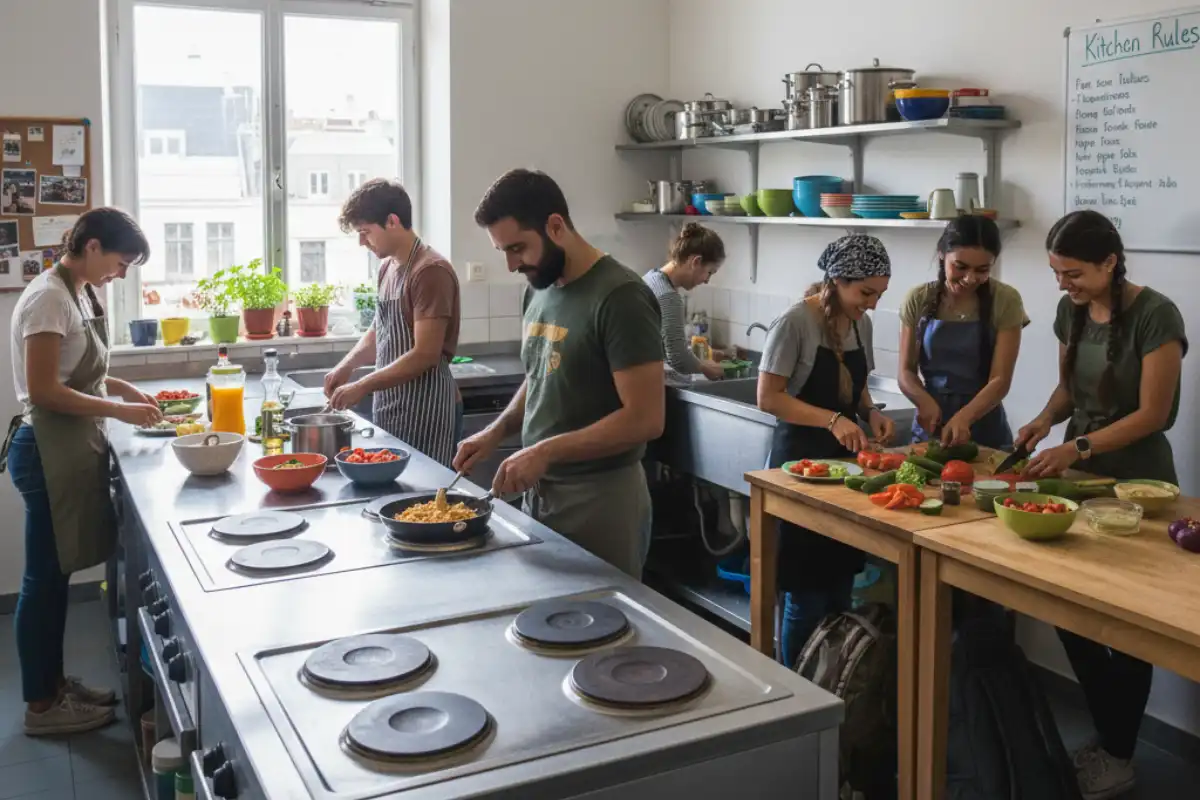
The Golden Rules of Storage and Labeling 🏷️
A hostel fridge is a chaotic ecosystem. Proper labeling is the number one defense against loss and confusion.
1. The Labelling Mandate
Never, under any circumstances, place unmarked food in the common storage areas.
- **Essentials:** Use a clear marker and tape (usually provided by the hostel) to label your food with your **Name, Room Number, and Check-Out Date**.
- **Storage Zones:** Most hostels designate shelves for specific days or zones. Respect these zones, and avoid taking prime real estate (like the door shelves) for bulky items.
- **The Freezer:** If you freeze anything, label it *very clearly* and ensure it’s in a sealed bag or container to prevent freezer burn or leaks.
2. Dealing with Shared Items
The **”Free Food” shelf** is a budget traveler’s best friend, but use it responsibly.
- **Take and Give:** Feel free to use the remnants of pasta, oil, or spices left by others. If you finish a communal item (like the last of the salt), it’s good form to replace it if you can.
- **Hostel Staple:** Only buy large communal items (oil, flour, spices) if you plan to leave them behind. Otherwise, buy small travel sizes of everything.
Budget Traveler’s Defense: Sarah J., Backpacking Blog Contributor
“I learned the hard way: Hostel fridges are notorious for ‘mystery disappearances.’ Now, I keep any expensive or essential ingredients (like good cheese, fresh herbs, or medication) inside a **small, sealed plastic bag or container in my personal locker.** I only take them to the kitchen when I’m actively cooking. This one step saves so much grief.”
Cooking Efficiency and Cleanup Protocols ⏱️
Minimize your time, maximize your cleanliness. This is how you avoid causing bottlenecks during peak hours.
1. The Pre-Chop and Prep Strategy
The time between 6:00 PM and 8:00 PM is kitchen rush hour. Minimize your presence during this time by prepping in advance.
- **Mise en Place:** Do all chopping, measuring, and seasoning at your table or a less-used counter space *before* you need the stove. Never hog a burner while dicing vegetables.
- **Simple Meals Only:** The hostel kitchen is not the place to attempt a five-course meal. Stick to one-pan pasta dishes, stir-fries, or simple rice and beans.
- **Fast Cooking Time:** If the kitchen is packed, opt for meals that take 15 minutes or less of active cooking time.
2. The “Clean As You Go” Mandate
Leaving dishes to soak is an unforgivable sin in hostel life.
- **Immediate Scrub:** As soon as a pot or pan is empty, wash it immediately. Do not leave your dishes stacked in or near the sink. The next person needs that sink space.
- **Stove and Counter:** Immediately wipe down your cooking surface. Clean up any spills of oil, flour, or food scraps. Leave the area cleaner than you found it.
- **Utensils:** Don’t hoard shared utensils, mugs, or plates at your dinner table. Return them to the rack as soon as you are done eating to ensure they are available for the next traveler.
Hostel Manager’s Plea: Mark D., Hostel World Magazine
“The single greatest source of chaos is **leftover food**. Travelers check out and leave bags of unlabeled food behind. We have to throw it all out. Our rule is: If you are checking out today, **empty your shelf and dispose of all personal food before 10 AM.** This simple courtesy prevents mold, makes space, and keeps the kitchen sanitary for everyone.”
Frequently Asked Questions About Hostel Kitchens
What is the least busy time to use a hostel kitchen?
The busiest times are typically 7:30 AM to 9:00 AM (breakfast) and 6:30 PM to 8:30 PM (dinner). The least busy times are usually **mid-afternoon (2:00 PM to 4:00 PM)** or **late evening (after 9:30 PM)**. If you need stove access, aim for these off-peak hours.
Should I bring my own small set of cooking utensils?
Yes, but keep it minimal. Bringing a **sharp knife, a small cutting board, and your own reusable food storage container** can be a game-changer. Hostel knives are notoriously dull, and having your own container prevents food from being mistaken for communal leftovers or going missing.
What do I do if someone takes my clearly labeled food?
This is frustratingly common. First, politely check with the hostel staff, as they may have removed it. If it was stolen, it’s best to **cut your losses** and buy a replacement. Confrontation rarely resolves the issue, and the best defense is the ‘Pro Tip’ of keeping expensive items locked away.
Is it acceptable to ask another traveler to hurry up?
Generally, **no**. It’s bad etiquette to pressure someone directly. If they are clearly misusing the space (e.g., using all four burners for one meal), you can politely ask, “Excuse me, could I use the burner for five minutes to boil some water?” but maintain a non-confrontational tone.
Can I drink the “Free Beer” or use the “Leftover Wine” on the shelf?
Only if it’s explicitly marked as **”FREE” or “COMMUNAL.”** If an alcoholic beverage is clearly labeled with a name and room number, it is strictly off-limits, even if it looks like a remnant. When in doubt, always ask the staff or another traveler.
Conclusion: Cook, Clean, and Connect
The hostel kitchen is a microcosm of the budget travel community: shared resources, diverse cultures, and a collective goal of saving money. Your success in this space depends entirely on your discipline. By prioritizing cleanliness, adhering to the labeling rules, and executing your meal preparation efficiently, you ensure the kitchen remains a pleasant, functional place for everyone. Master the etiquette, and you’ll not only save money but also earn the respect of your fellow travelers, often leading to new friendships and shared meals.