How to Travel with a Budget Spreadsheet
For many travelers, the biggest source of stress isn't navigating a foreign subway system or dealing with a language barrier it's the fear of the budget blowout. While travel apps are convenient, nothing beats the clarity, customization, and control offered by a dedicated **budget spreadsheet**. This simple digital tool transforms vague financial anxieties into concrete, actionable data, allowing you to track your spending in real-time and make informed choices that extend your trip length.
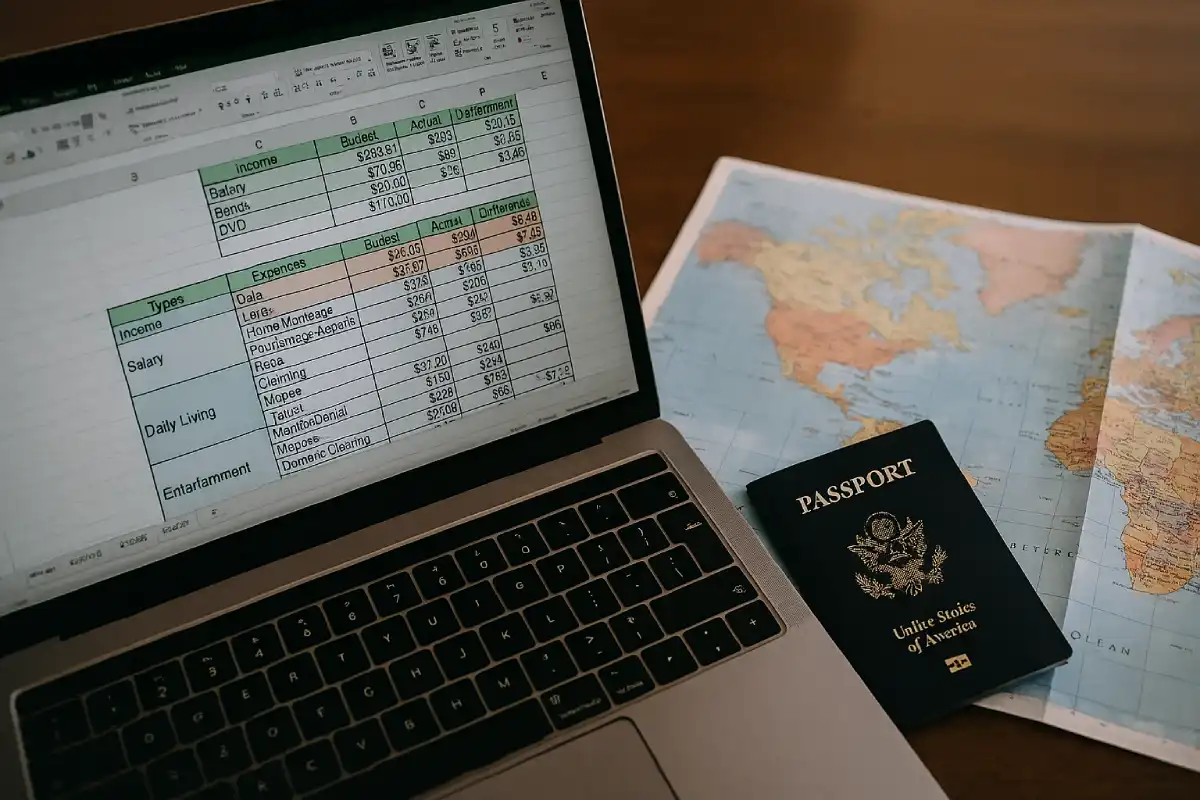
Setting Up Your Travel Spreadsheet: The Foundation 🌱
A well-designed spreadsheet minimizes effort while maximizing insight.
1. The Essential Columns
Your spreadsheet should be built around five core columns, plus two calculated ones:
- **Date:** (Crucial for later analysis.)
- **Category:** (E.g., Accommodation, Food, Transport, Activities, Miscellaneous.)
- **Description:** (Brief note: “Hostel A,” “Street Tacos,” “Bus to City X.”)
- **Local Currency (LC) Cost:** (The exact amount you paid.)
- **Home Currency (HC) Rate:** (The current exchange rate, updated daily or weekly.)
- **Calculated HC Cost:** (= LC Cost / HC Rate) – *This is your true cost.*
- **Running Balance:** (Starts with your total budget and subtracts the Calculated HC Cost.)
2. Establish Fixed vs. Variable Costs
Pre-book and log all your **Fixed Costs** (flights, initial visa fees, first few nights of accommodation) before you leave. This gives you a clear picture of your remaining **Variable Budget**, which must cover daily expenses like food, local transport, and spur-of-the-moment activities.
Digital Nomad’s Workflow: Maya, from a Long-Term Travel Finance Group
“I use a separate tab for my **’Pre-Trip Spending’** (flights, insurance, gear) and only carry the calculated remaining cash onto the main **’Daily Tracking’** tab. This prevents ‘sunk costs’ from skewing my daily reality. I also color-code my categories: Green for Accommodation, Yellow for Food, etc., which lets me see a spending pattern at a glance without crunching numbers.”
Mastering Daily Tracking and Currency 💵
The success of a travel budget relies on the consistency of the tracking ritual.
1. The Daily Log Ritual
Do not wait until the end of the week. Budget travelers who succeed log their expenses **every single night**.
- **Save Receipts:** Keep all physical and digital receipts in one place (a specific wallet pocket or a dedicated phone album).
- **Batch Entry:** Before bed, take 5 minutes to input all the day’s transactions. This keeps the data fresh and holds you accountable before you start the next day.
- **Analyze the “Daily Damage”:** Check the bottom line. Are you under or over your planned daily budget? If you spent $50 over today, you need to spend $50 under tomorrow to stay on track.
2. Handling Multiple Currencies
Currency conversion is the spreadsheet’s biggest challenge.
- **Establish a Base Rate:** Decide on a fixed, slightly conservative exchange rate (e.g., if the rate is 1.25, use 1.22) for the duration of your stay in that country. This buffer helps absorb small bank/ATM fees.
- **Use a Formula:** If you use Google Sheets or Excel, use a dedicated formula or an **API key** to pull the current exchange rate directly into your spreadsheet for accuracy, especially when logging large transactions.
Solo Traveler’s Quick Tip: Tom, Interviewed by a Backpacking Magazine
“Instead of relying on complicated exchange rates for quick logging, I use the simplest conversion rate for the day. For example, if 1 EUR is roughly 1.1 USD, I mentally convert everything to the USD equivalent and only log the final dollar amount into my spreadsheet. I sacrifice minor accuracy for speed, which means I’m far more likely to stick to the habit.”
Frequently Asked Questions About Budget Spreadsheets
Why use a spreadsheet instead of a specialized budgeting app?
Spreadsheets offer **100% customization and transparency**. You control the categories, formulas, and reporting views. Apps, while fast, often lock you into predefined categories, charge subscription fees, and sometimes struggle with accurate cross-currency conversions. For detailed, long-term trips, the spreadsheet provides better analytical control.
How often should I review my spending pattern?
You should input expenses **daily** and conduct a quick **weekly review**. The weekly check allows you to spot trends (e.g., “I’m spending too much on coffee”) and adjust your strategy for the coming week. The daily check prevents unexpected deficits.
What is a reasonable daily budget percentage to allocate to food?
Most long-term budget travelers allocate **30% to 40%** of their daily variable budget to food. This assumes a mix of cheap street food/supermarket meals and occasional splurge meals. If you find your food spending consistently exceeding 50%, look for cheaper breakfast or lunch options.
How do I track shared expenses when traveling with a partner?
Use a separate column called **”Payer”** and track who paid (e.g., “Self” or “Partner”). You can then create a final summary sheet that calculates who owes whom. While apps like Splitwise are faster for splitting, the spreadsheet keeps the full, integrated financial view for the whole trip.
What if I have an emergency expense that blows my budget?
Log the expense immediately and categorize it as **”Emergency/Contingency.”** This item should ideally come out of your separate emergency fund, not your daily budget. If you must use your travel funds, adjust your daily allowance for the remaining trip days to compensate, or cut back on discretionary spending (activities, souvenirs).
Conclusion: Control Your Money, Control Your Trip
The travel budget spreadsheet is more than just an accounting tool; it’s a financial roadmap that empowers you to make proactive decisions, avoid panic, and extend your travel duration. By committing to a simple daily log, setting clear categories, and mastering currency conversion, you gain total command over your funds. This level of financial discipline ensures that your focus remains on the experience of travel, not the fear of running out of money, ultimately unlocking true financial freedom on the road.