How to Hitchhike Safely in 2025
Hitchhiking remains one of the ultimate tests of faith in humanity and a powerful tool for budget travelers seeking authentic local connection. While the landscape of travel has changed, the core principles of hitchhiking relying on the kindness of strangers endure. However, in 2025, successful and safe hitchhiking demands a blend of old-school street smarts and modern technology protocols. It is not an activity without risks, but with preparation, strategic planning, and unwavering adherence to personal safety rules, it can be a rewarding and extremely low-cost way to traverse continents.
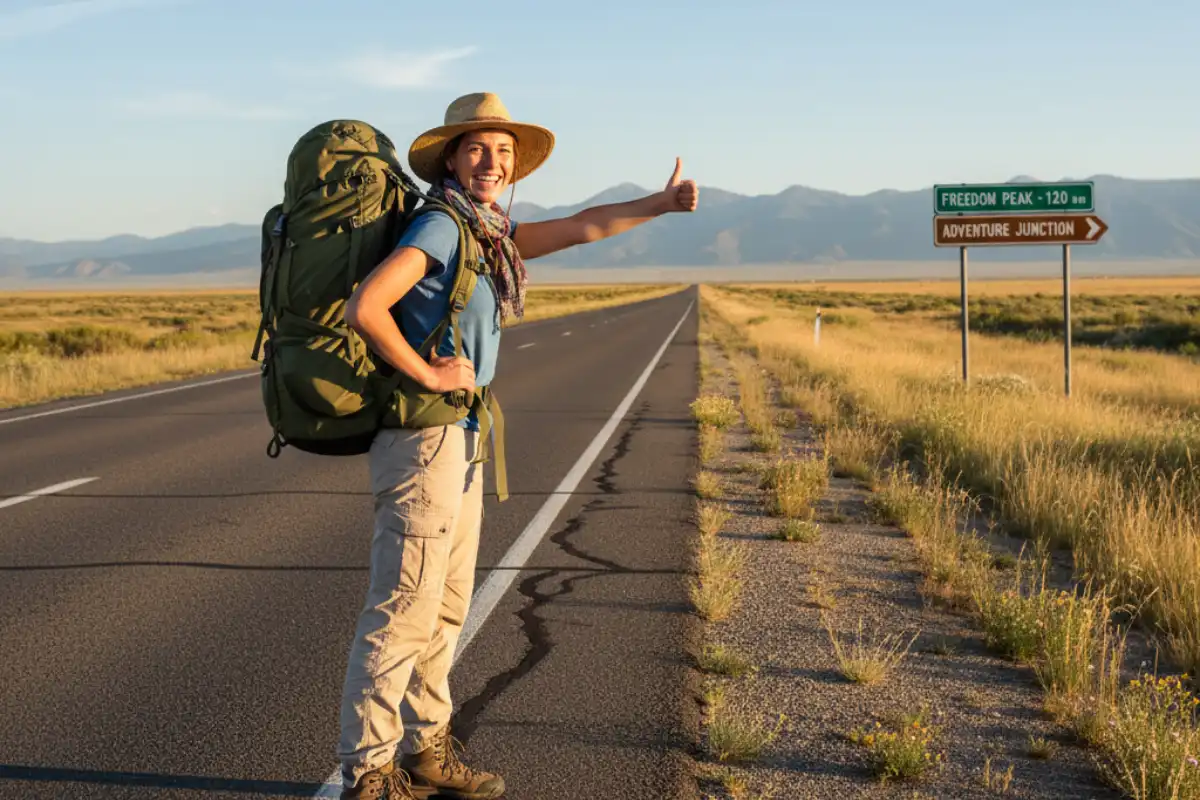
Preparation and Strategic Positioning: Catching the Right Ride 🚦
A successful hitchhiker minimizes their vulnerability through smart planning and choice of location.
1. The Golden Rule of Location 📍
Never hitchhike where a driver cannot safely stop well in advance. The ideal spot is:
- **Visibility:** Drivers should be able to see you from a distance (at least 100 meters).
- **Safe Stopping:** A wide, paved shoulder, a highway on-ramp (before the main speed zone), or, ideally, **gas stations and service areas**. Service areas are preferred because you can approach the driver directly before they get into the car.
- **Avoid Danger Zones:** Never stand on blind corners, bridges, or high-speed freeway on-ramps where stopping is illegal or dangerous.
2. Visibility and Trust Signals 👀
Drivers need to quickly assess if you are safe and reliable.
- **Appearance:** Look clean, friendly, and approachable. Clean clothes and a non-threatening demeanor are vital.
- **Signage:** Use a **clear, large sign** indicating your destination. Drivers are more likely to stop if they know your general direction.
- **Small Group Advantage:** Hitchhike alone or in pairs (one male, one female is often seen as the safest and most effective combination). Large groups are rarely picked up.
Veteran Hitchhiker’s Advice: Ken, from a Budget Travel Zine
“My top tip for safety in any country is to **target professional truck drivers**. They usually have schedule pressure but are often safer, drive long distances, and their cabs are higher, making it harder for anyone to interfere with you. Offer to buy them a coffee or help clean their windshield in exchange for the ride.”
Safety Protocols in the Digital Age 📱
While the act is old-school, modern technology offers essential safety backups that should be utilized every time.
1. Trust Your Instinct (The Veto Power)
If a driver, their vehicle, or their demeanor gives you a bad feeling even if you can’t articulate why **do not get in the car**. Be ready to decline a ride politely and firmly. Your instinct is your best defense mechanism, and it is more important than a few hours saved on travel time.
2. The Modern Check-in Protocol 🚨
Before entering the vehicle, use your phone to snap a quick photo of the **license plate and the driver’s face**. Text this photo, along with the destination and your ETA, to a trusted emergency contact. This serves two purposes: it creates a digital record and shows the driver that someone knows you are with them, which is a powerful deterrent against misconduct.
3. Seating and Belongings Strategy
Always sit in the **back seat behind the driver** if possible. This gives you slightly more distance and a better escape route. If the back seat is full, sit in the passenger seat, but keep your **backpack or essential belongings on your lap**. This ensures you can exit the car quickly without having to worry about your valuables being held hostage.
Solo Female Traveler’s Strategy: Maya, Shared on a Safety Forum
“I always have a **’fake call’ script** ready. As soon as I get in, I pretend to call a friend and say, ‘Hey John, I just got a ride with Mark in a blue Ford truck, license plate ABC 123. I’ll see you in Berlin in about four hours.’ It’s a quick, non-confrontational way to set the boundary and let the driver know my identity and location are known.”
Frequently Asked Questions About Safe Hitchhiking
Is it safe for a woman to hitchhike alone?
Hitchhiking solo carries a higher risk, especially for women, but many successfully do it by adhering to strict protocols. Key tips include using the check-in protocol (license plate photo), never hitchhiking at night, sticking to busy service stations (not remote roadsides), and never entering a vehicle that already has multiple men inside.
Is it illegal to hitchhike in certain countries?
Yes. While it’s culturally accepted in many parts of Europe, Central Asia, and New Zealand, it is often illegal on **motorways (interstates/freeways)** and can carry fines in countries like the US and Canada (though usually only in certain states/provinces). Always research the local road laws and cultural acceptance before setting out.
What should I do if the ride deviates from the agreed-upon route?
Immediately speak up. State clearly, “I need to get out here.” If the driver is resistant, become assertive and demand they stop. If you feel threatened, do whatever is necessary to get out of the vehicle safely, including causing a commotion. Don’t worry about being polite in an emergency.
What if a driver offers to take me far but asks for money?
This is often a gray area between hitchhiking and informal ride-sharing. If the driver is clear about the requested amount upfront and the price is fair (often lower than a bus), it’s an acceptable transaction. If the demand for money only comes after you’ve started the journey, refuse to pay and ask to be let out at the next safe location.
Should I hitchhike after dark?
**Absolutely not.** The risks drastically increase after sunset. Visibility decreases, drivers are less likely to stop, and it becomes much harder to assess the driver or the vehicle. Always stop seeking rides at least an hour before dark and find safe accommodation for the night, even if it means pitching a tent early.
Conclusion: Adventure with Assurance
Hitchhiking in 2025 is an act of prepared confidence. It’s a method of travel that demands you be fully present, constantly aware, and prepared to trust your gut feeling above all else. By integrating modern safety technology, prioritizing visibility, and sticking to proven protocols for seating and communication, you significantly mitigate the inherent risks. When done right, hitchhiking saves money, enriches your journey with unforgettable human connections, and offers a unique perspective on the world. Plan wisely, be safe, and embrace the adventure!