How to find local winter delicacies
Culinary exploration is one of the most rewarding aspects of travel, and in winter, food traditions shift dramatically to focus on **comfort, warmth, and preservation**. Unlike the fresh, light fare of summer, winter cuisine across the globe is built on hearty root vegetables, long-simmered stews, cured meats, and warming spices. These dishes are often deeply rooted in regional history and methods used to survive the cold, short days.
Research and Pre-Trip Planning 🔍
A successful culinary journey starts long before you arrive.
1. Focus on Seasonal Ingredients
Instead of searching for dish names, research what ingredients are **in season** locally during the winter months. In many northern climates, this means game meats, potatoes, cabbage, turnips, and preserved fruits.
- **Example:** If traveling to the Alps, focus on preserved meats (like **Speck**), local cheeses (**Raclette**), and long-fermented doughs. If traveling to the Mediterranean, look for seasonal citrus and coastal soups.
2. Consult Hyper-Local Sources
Forget generic travel guides. Use sources that locals trust:
- **Blogger Tip:** “When I arrive in a new city in winter, I search local food blogs and Instagram accounts using the local language and keywords like ‘seasonal menu’ or ‘winter special.’ The photos of steam and hearty food almost always lead me to the most authentic, non-touristy restaurants.” (Source: Global Food Blogger Journal)
- **Regional Cookbooks:** Check out local cookbooks online or at a library. They often feature traditional winter dishes that are rarely found on restaurant menus but might be available at small taverns.
Finding the Local Hotspots 📍
The environment in which you eat is often as important as the food itself for an authentic winter experience.
1. Traditional Winter Markets
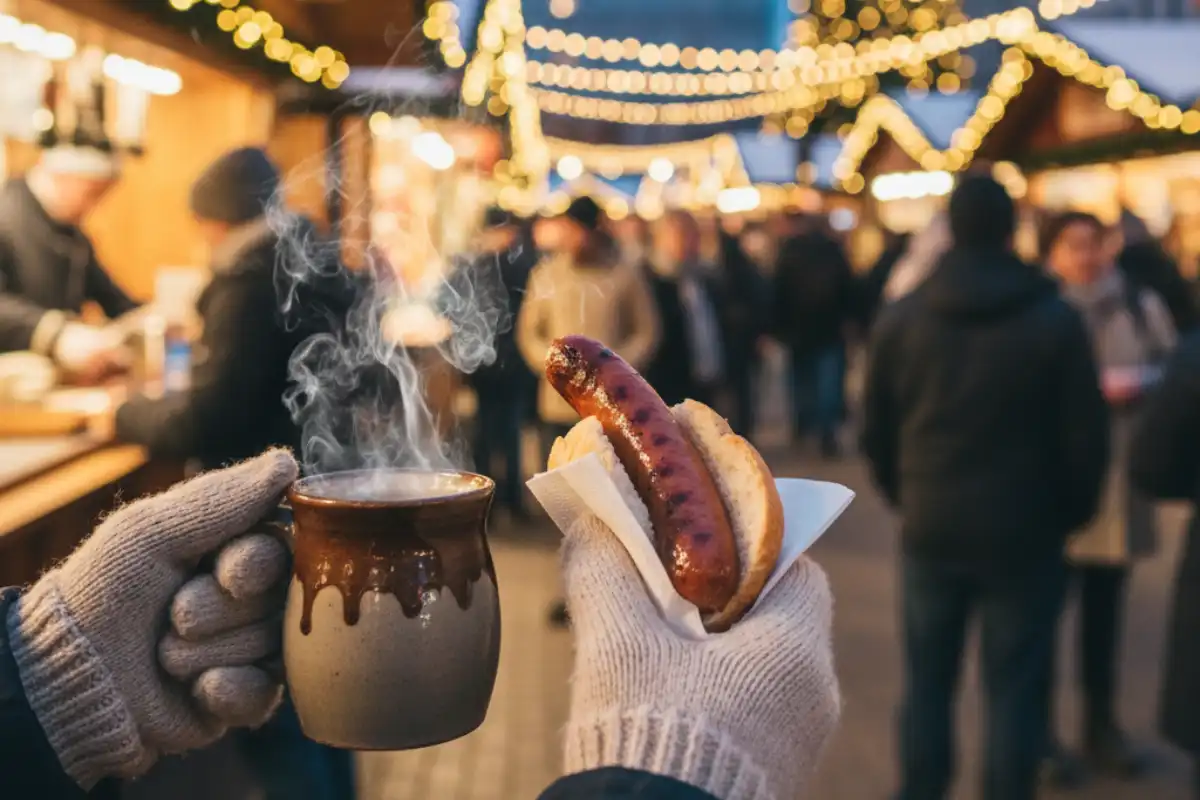
If you are traveling in Europe, **Christmas Markets (Weihnachtsmärkte or Marchés de Noël)** are indispensable. They are not just for crafts; they are the heart of winter street food culture.
- **Street Food Classics:** Look for mulled wine (**Glühwein**), rich hot chocolate, roasted chestnuts, thick soups, and savory pancakes or fritters (like potato **Latkes** or **Reibekuchen**).
- **Rule of Thumb:** Follow the longest line. Locals queue for the best quality and most authentic vendors.
2. Taverns and Rural Establishments
In many regions, the best winter food is served in cozy, rustic settings far from the glass-and-steel restaurants of the city center.
- **Look for:** Restaurants with short, handwritten menus that change daily. These are often indicators of locally sourced, seasonal cooking. In Alpine regions, look for **Stübli** (cozy, wood-paneled taverns) or **Gasthäuser**.
- **Ask the Experts:** “The best winter meal I ever had in Italy came from a recommendation by a market stall vendor. I asked him, ‘Where does *your grandmother* eat on a cold Sunday?’ That led me to a tiny place serving the best **Polenta with Wild Boar Ragù**.” (Source: Travel Magazine Culinary Review)
Warming Drinks and Desserts ☕
Winter delicacies aren’t just savory; the cold season requires powerful warm beverages.
- **Regional Hot Drinks:** Beyond mulled wine, search for local variations. In Iceland, look for rich **Hot Chocolate** (often thicker than continental versions). In Scandinavia, try **Glögg** (mulled wine with stronger spirits and almonds).
- **Winter Sweets:** Look for desserts made with heavy cream, nuts, preserved berries, or warm spices. Examples include **sticky toffee pudding** (UK), baked **apple strudel** (Austria/Germany), or rich, dense cakes.
Dietary Consideration: Embrace the Hearty
Traditional winter food is often intentionally rich and high in calories it was designed to keep people warm through cold, hard work. Be ready to take smaller portions or plan for long walks after dinner. Don’t ask for substitutions or lighter versions; to experience the dish authentically, you need to taste it as it was intended.
Frequently Asked Questions About Winter Culinary Travel
What is a good way to identify a tourist trap restaurant in winter?
Look for very large, multi-lingual menus with glossy photos posted outside, especially if they offer dishes from many different cuisines (e.g., Italian, French, and local specialties all on one menu). True local places usually have shorter menus, often only in the local language, or a simple translation.
Are street food markets safe to eat at in winter?
Generally, yes, especially in Western Europe and North America where health codes are strictly enforced. The high turnover of popular items like sausages and soups means the food is constantly being cooked and served fresh. Look for vendors who have high traffic and clearly clean their stations.
How do I find out what the regional winter specialty is?
A great way is to ask a local hotel concierge or a taxi driver, but ask specific questions: “What food is your region famous for *only* in December/January?” or “What is your favorite local dish to eat when it’s snowing?”
I don’t speak the language. How can I order traditional dishes?
Use a translation app (like Google Translate) to take a picture of the menu. Alternatively, learn one or two key phrases (“What is the specialty of the house?”) and be prepared to point to a dish that another patron is clearly enjoying and say “I’ll have that.”
Are winter foods usually vegetarian-friendly?
Many traditional winter dishes rely on meat (stews, roasts, sausages). However, most cuisines have hearty, vegetable-based winter staples, such as lentil or bean soups, rich potato dishes, or root vegetable gratins. Check menus for terms like “vegetable stew,” “lentils,” or “soup of the day,” but always confirm that no meat broth or bacon fat has been used.
Conclusion: Taste the Season’s History 🍽️
The search for local winter delicacies is more than just finding a hot meal; it’s an opportunity to taste the history and traditions of a place. By leaving the main squares, following the locals, and committing to the hearty, savory, and warming flavors of the season, you unlock an authentic and satisfying dimension of winter travel that nourishes both body and soul.