Hidden Culinary Gems: How to Find Underrated Local Eateries Abroad
Every traveler knows the disappointment of a mediocre meal in a beautiful city. The highly-rated restaurants near major landmarks are often tourist traps, offering inflated prices and watered-down cuisine. The true magic of international dining lies in finding the **hidden culinary gems** the modest, unpretentious, and often undecorated spots where locals eat every day. These are the places that offer authentic flavors, cultural immersion, and incredible value for money.
The Art of Observation and Avoidance 🕵️
Before you even look at an app, your eyes and intuition are your best tools for spotting authenticity.
1. The Tourist Trap Red Flags
Learn to immediately filter out the places designed to attract visitors:
- **Photo Menus:** A large, laminated menu with pictures of every dish (especially pictures that look nothing like the actual food) is a major warning sign.
- **Multi-Language Hailers:** If a staff member stands outside aggressively trying to lure you in using five different languages, keep walking.
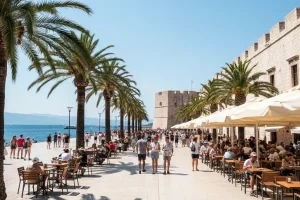
- **Prime Location:** Restaurants directly across from the most famous sight rarely prioritize quality. Look one or two side streets away from the main square.
2. Seek the Local Indicators
The best local spots adhere to unwritten culinary rules:
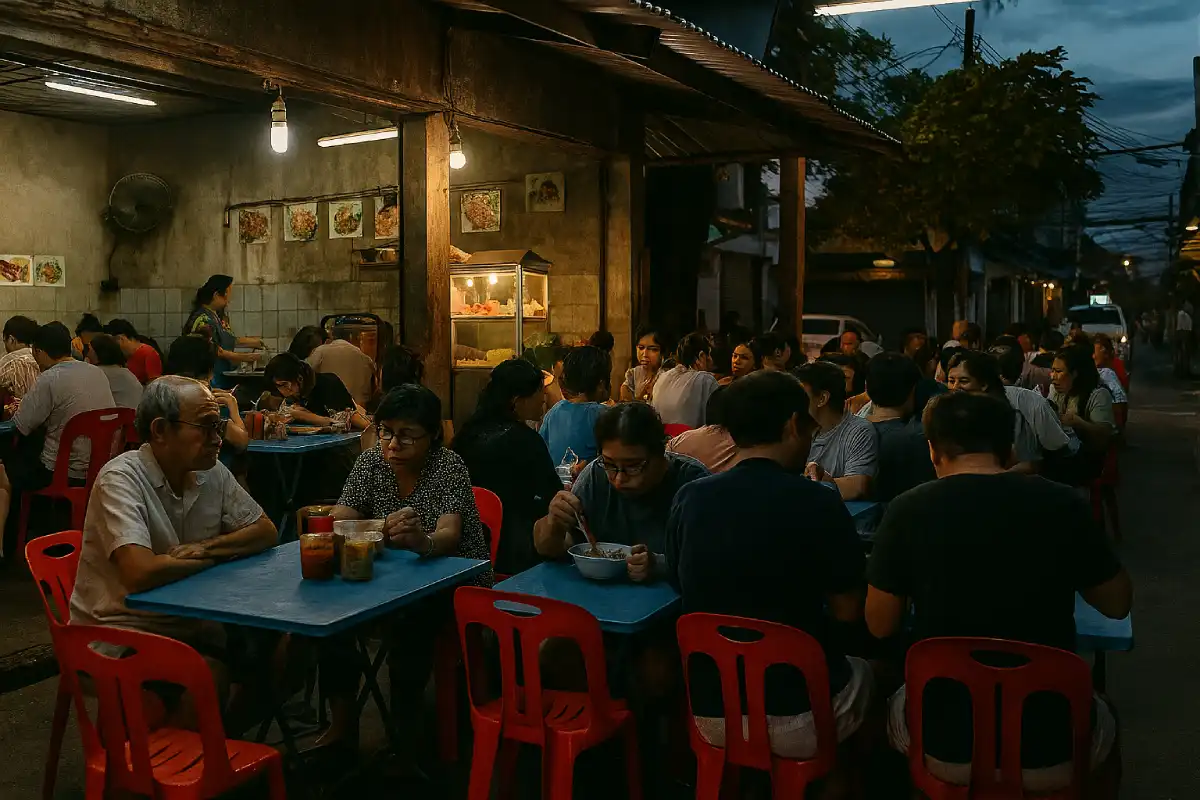
- **The Crowd:** The best sign of quality is a dining room filled predominantly with **local people**, especially families, tradesmen, or older residents. If the restaurant is empty during peak lunch hours, it’s a huge red flag.
- **The Menu Size:** A small menu (a few rotating dishes or specials) is a great sign. It indicates the kitchen specializes and focuses on quality ingredients rather than trying to offer every possible dish.
- **The Line:** A queue of locals, especially at street food stalls, is a near-guarantee of freshness and quality. Join it!
Food Travel Expert’s Rule: David, Culinary Journalist and Blogger
“My ultimate rule is: **Go where the workers go.** I always look for spots near industrial areas, local markets, or transport hubs that cater to tradespeople and office staff. These places must be fast, cheap, and consistently good to survive on local business alone. They are rarely glamorous but almost always delicious.”
Leveraging Local Insights and Tech 📲
When observation isn’t enough, tap into local knowledge networks.
1. Ask the Right Locals
Tourist-facing employees (hotel concierges, souvenir shop owners) often recommend places that give them a commission. Ask locals who have nothing to gain:
- **Taxi/Uber Drivers:** Ask for their favorite place for a quick, cheap, and delicious lunch.
- **Baristas or Bar Staff:** Ask where *they* eat dinner on their night off.
- **Librarians or Bookstore Clerks:** Ask for non-touristy area recommendations, as they often work in the community.
2. Harness Niche Digital Tools
Ditch Yelp and TripAdvisor for authentic local tools:
- **Google Maps Reviews:** Use the “Explore” tab in Google Maps and **filter reviews by the local language**. If a highly-rated spot only has reviews in your home language, it’s a tourist spot. If it has dozens of reviews in the local language, it’s gold.
- **Local Food Blogs/Forums:** Search local subreddits or food blogs in the native language (use Google Translate to search for “best tacos [city name]” in Spanish, for example).
3. Navigating the Menu
If the menu is entirely in a foreign language, smile and point.
- **Point and Smile:** Point to a dish being eaten by a local that looks good. This is a universally understood way of ordering the specialty.
- **Look for the ‘Plato del Día’ (Dish of the Day):** This is the special of the day, often the freshest and best-priced item, and the easiest way to ensure you’re ordering an authentic meal.
Long-Term Traveler’s Advice: Maria, from an Expat Lifestyle Magazine
“I make it a habit to go to the counter and peer into the kitchen or food display. You can tell immediately how clean and efficient a place is. I also check the bathroom if the restaurant doesn’t prioritize cleanliness there, they probably don’t prioritize it anywhere else. A clean, bustling, and small establishment is always my choice.”
Frequently Asked Questions About Finding Local Food
Are street food stalls always safe to eat from?
Generally, **yes, but follow common sense.** The general rule is: **Eat where the crowds are and prioritize stalls with high turnover.** High turnover means the food is fresh and hasn’t been sitting out for hours. Also, look for food that is visibly being cooked fresh in front of you, rather than something that has been pre-made.
Should I be worried if the staff doesn’t speak English?
Quite the opposite it’s a great sign! If staff don’t speak English, it suggests they rely entirely on the local community, which is exactly what you want. Use simple gestures, translation apps, or the point-and-smile technique. Don’t let a language barrier intimidate you; it’s part of the adventure.
What is the best time to find the best local lunch spots?
Target the local lunch rush hour, which can vary widely. In Europe or South America, this is often between 1 PM and 3 PM. In Asia, it might be earlier. Arriving just **before the peak rush** (e.g., 12:45 PM) allows you to secure a seat and observe what the locals are ordering without being overwhelmed by the crowd.
How can I find a truly authentic spot that isn’t on any map?
Wander **5 to 10 blocks away** from the nearest major tourist attraction or subway stop. Look for areas with residential housing and small, independent businesses. These places often survive purely on neighborhood loyalty and are the least likely to appear on any global review platform.
If the menu prices seem very low, should I be skeptical?
Not necessarily. Low prices are often a hallmark of genuine local eateries that cater to local wages. In contrast, very high prices in a less-than-fancy setting are often a sign that the establishment is gouging tourists. If the quality is high and the locals are eating there, low prices are just a budget traveler’s dream come true.
Conclusion: Taste the True Culture
Finding hidden culinary gems is a skill that rewards curiosity and observation. By learning to look past the flashy signs and tourist crowds, and by trusting the local indicators the bustling lines, the minimal menus, and the presence of native speakers you unlock a deeper, more delicious dimension of travel. Embrace the thrill of the hunt; the most memorable meals are rarely found in the travel guide’s highlighted section, but rather down the quiet alleyway, where the food speaks the only language that truly matters.