Green ski resorts in Europe
As the climate crisis directly threatens the future of winter sports, the concept of the **"Green Ski Resort"** is no longer a niche trend but an essential standard. European resorts, particularly those in the Alps, are leading the charge, implementing comprehensive strategies to minimize their environmental footprint from energy consumption to waste management.
Pioneers of Sustainable Skiing: Top Eco-Resorts
These destinations have been globally recognized for their commitment to environmental excellence.
1. Zermatt, Switzerland: The Car-Free Champion
Zermatt is famous not only for the majestic Matterhorn but also for its strict **car-free policy**. Visitors must park miles away and travel to the village by train or electric taxi, dramatically reducing local emissions and noise pollution.
- **Key Green Feature:** All resort vehicles (buses, taxis) are electric. Lifts are often powered by 100% renewable energy (hydroelectric).
- **Traveler Review:** “The air quality in Zermatt is instantly noticeable. Walking through the village without traffic noise or fumes completely changes the mountain experience. It feels clean, quiet, and authentically Alpine a huge difference from typical resorts.” (Source: Eco-Tourism Magazine)
2. Werfenweng, Austria: Mobility and Climate Alliance
Werfenweng is one of the few resorts globally to earn the title of a **’Soft Mobility’** resort. It incentivizes travelers to arrive via public transport by offering free local mobility services.
- **Key Green Feature:** Guests receive a card providing free use of the local electric fleet, horse-drawn carriages, and even complimentary rides on electric scooters.
- **Innovation:** The resort actively participates in the “Alpine Pearls” network, dedicated to eco-tourism.
3. Laax, Switzerland: The Greenstyle Initiative
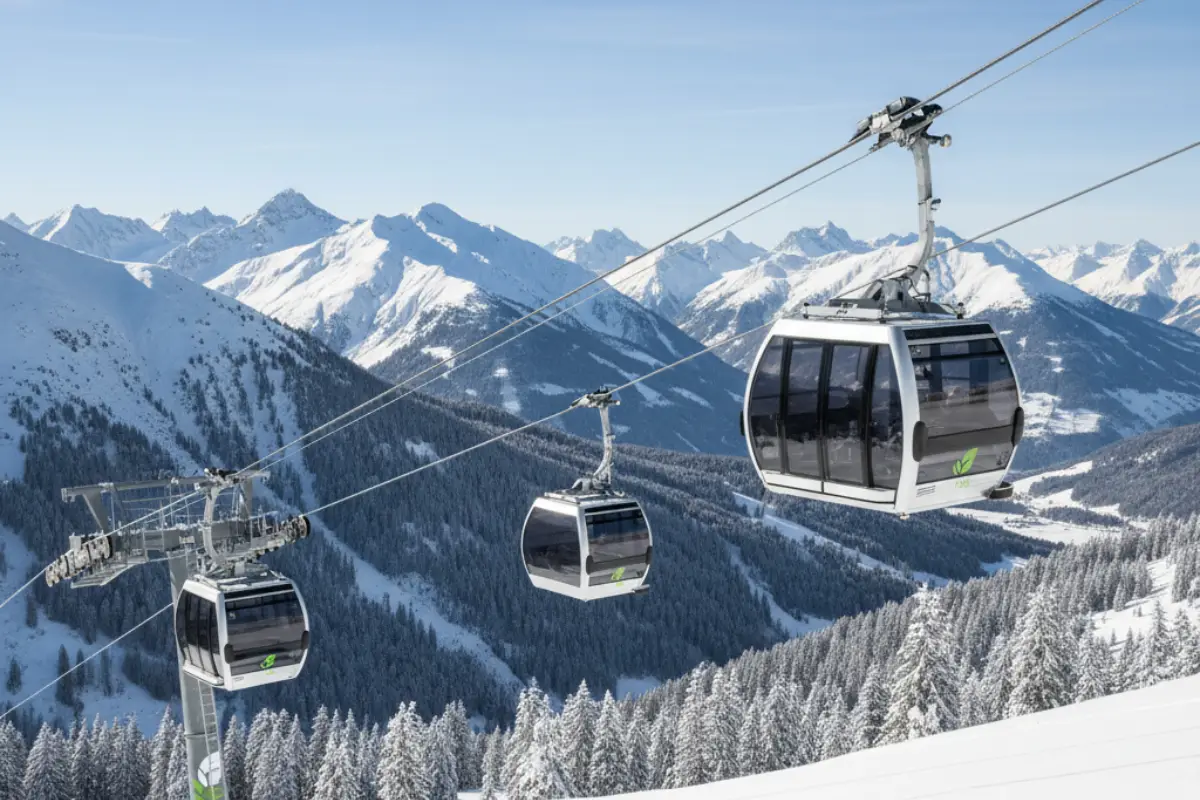
Laax has set an ambitious goal to become the world’s first **100% self-sufficient mountain resort** in terms of energy. They use their own biomass plant and solar arrays, and have made their entire cable car system carbon-neutral.
- **Focus:** Energy efficiency and sourcing. They also minimize the use of water and chemical additives in snowmaking.
Key Aspects of Green Skiing: Beyond the Power Grid 💡
Sustainability in a resort setting involves managing complex resources and operations.
1. Responsible Snow Management
Modern green resorts prioritize natural snow and use technology to minimize energy and water waste in manufactured snow.
- **Reservoir Technology:** Using collected rainwater or meltwater stored in closed-loop systems for snowmaking, rather than pulling from natural sources.
- **PistenBully Management:** Using GPS-guided snow groomers that measure snow depth, ensuring groomers don’t waste fuel or time moving snow unnecessarily.
2. Food and Waste
Reducing the environmental impact of restaurants and lodging is crucial.
- **Local Sourcing:** Resort hotels and mountain restaurants are increasingly committed to serving **locally sourced, seasonal food**, reducing transport emissions.
- **Waste Strategies:** Implementing strict recycling and composting programs throughout the resort and on the slopes.
Environmental Journalist’s Tip: How to Vet a ‘Green’ Claim
“Look beyond simple claims of ‘eco-friendly.’ Check for measurable certifications like **’Best of the Alps’** or official environmental reports. Specifically, ask how they power their **lifts** and **snowmaking** and what their policy is on car access. The biggest climate impact comes from transport and energy, so those areas must be addressed rigorously.” (Source: Green Travel Review)
Frequently Asked Questions About Green Ski Resorts
Are green ski resorts more expensive than regular resorts?
Not necessarily. While initial investments in green technology are high, the long-term cost of operation is often lower due to reduced energy consumption. Prices are typically comparable to other resorts in the same region, with premium fees usually reflecting service and location, not just sustainability.
Does skiing at a green resort mean poor snow quality?
No. Green resorts often use the **latest snowmaking technology** (which is also the most efficient) and focus on preserving natural snow layers better than conventional resorts. The skiing experience is generally excellent, reflecting a commitment to high-quality operations.
How can I, as a visitor, be more sustainable on my ski trip?
Prioritize **public transportation** (trains/buses) to get to the resort, use the resort’s local shuttle systems, minimize waste (especially single-use plastics), and choose accommodation that uses renewable energy and local food sourcing.
Do green resorts limit terrain expansion for environmental reasons?
Yes. A fundamental principle of green resorts is responsible land use. They generally avoid expanding into ecologically sensitive areas like high alpine meadows or virgin forests, prioritizing the preservation of the mountain ecosystem over maximizing skiable acres.
Which resort is recognized as the most ‘car-free’ in Europe?
**Zermatt** in Switzerland is perhaps the most famous and rigorously car-free large resort, with access highly restricted to non-electric private vehicles. It sets the standard for minimizing transport impact in the immediate resort area.
Conclusion: Skiing with a Conscience 💚
The movement toward green ski resorts in Europe demonstrates a vital commitment to the longevity of winter sports. By choosing destinations like Zermatt, Werfenweng, or Laax, travelers aren’t just taking a vacation; they are making a conscious choice to support climate-friendly business models. These resorts prove that world-class skiing, pristine mountain air, and environmental responsibility can and must coexist for the benefit of future generations.