Forest Bathing: What It Is and How to Try It
In our fast-paced, digital world, it’s easy to feel disconnected from nature. The Japanese practice of **Forest Bathing**, or **Shinrin-yoku**, offers a powerful remedy. This isn't about swimming or taking a traditional bath. It's about immersing yourself in the forest atmosphere with all your senses. It's a mindful practice designed to reduce stress, improve well-being, and deepen your connection with the natural world. Far from a simple walk, Forest Bathing is a therapeutic experience with a growing body of scientific evidence supporting its benefits. This guide will explain what Forest Bathing is, its proven advantages, and a simple, step-by-step approach on how to try it yourself.
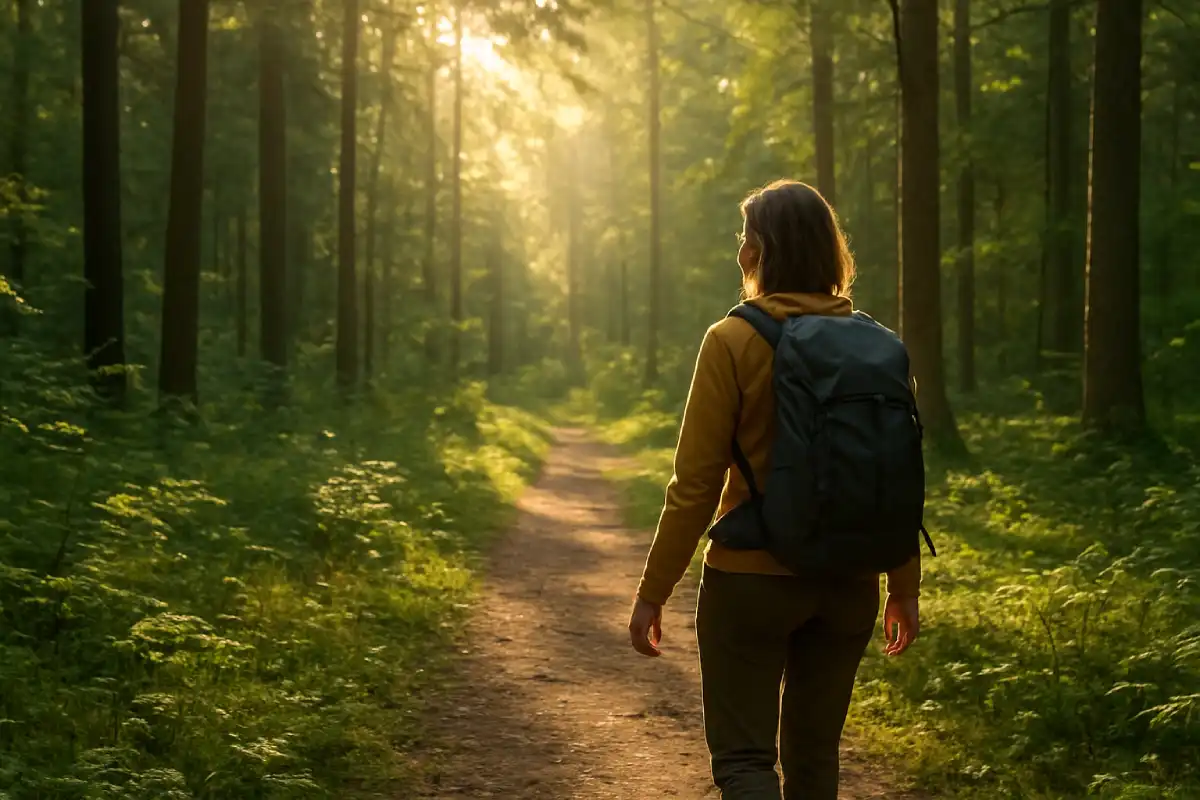
The Science and Benefits of Forest Bathing 🌿
Shinrin-yoku has been a recognized practice in Japan since the 1980s. Research has shown that spending time in a forest environment can have a profound impact on both physical and mental health. These benefits are attributed to the compounds released by trees and plants, known as **phytoncides**.
1. Stress Reduction and Mood Boost 😌
Studies have shown that spending time in a forest can significantly **lower cortisol levels** (the stress hormone) and reduce blood pressure. People report feeling more relaxed, less anxious, and experiencing a boost in their mood. The quiet, calm environment and the gentle sounds of nature help to soothe a frazzled nervous system.
2. Improved Immune Function 💪
One of the most remarkable findings is that Forest Bathing can **increase the number and activity of Natural Killer (NK) cells** in our bodies. These cells are a crucial part of our immune system and help fight off infections and diseases. The boost in NK cell activity can last for days or even weeks after a single trip to the forest.
Public Health Expert’s Insight: Dr. Qing Li, “Forest Medicine” Author
“My research has shown that the volatile organic compounds emitted by trees, known as phytoncides, are a major reason for the health benefits. Breathing in these compounds can directly lower stress hormones and boost our immune system. It’s a simple, natural way to improve our health.”
How to Do It Yourself: A Practical Guide ✨
You don’t need a special forest or a guide. The most important thing is to be present and use your senses.
1. Find a Green Space and Leave Your Devices Behind 📵
The first step is to find a natural area. A local park, a community garden, or a nearby forest will do. The more trees, the better. Leave your phone in your pocket or, even better, in the car. The goal is to disconnect from technology and reconnect with nature.
2. Engage All Your Senses 👂👃👁️
This is where Forest Bathing differs from a simple walk. Slow down and focus on your senses.
- **Smell:** Inhale deeply. What does the air smell like? The damp earth, pine needles, or fresh flowers?
- **Hear:** Close your eyes and listen. Can you hear the rustle of leaves, the song of a bird, or the gentle hum of insects?
- **Touch:** Feel the texture of a tree bark, the smoothness of a stone, or the coolness of a leaf.
- **See:** Notice the different shades of green, the sunlight filtering through the canopy, or the intricate patterns on a mushroom.
Experienced Forest Bather’s Insight: Maria, from a Wellness Blog
“My favorite thing to do is find a mossy spot and just sit for 20 minutes. I try to listen to every sound and feel the breeze on my skin. It’s incredible how much you notice when you’re not in a hurry. It’s a mini-reset for my mind.”
Frequently Asked Questions About Forest Bathing
How long should a session last?
There is no strict rule, but most experts recommend at least **20 minutes** to get the full benefits. However, even a short 10-minute session can help. Aim for a few hours a week if possible to make it a regular practice.
Do I need to be in a deep forest to do it?
No. While a deep forest is ideal, you can still practice it in a local park, a city garden, or even a tree-lined street. The key is to be present and mindful, regardless of the size of the green space.
Is it the same as hiking or walking?
No. While you are walking, the goal is not to get to a destination or to get a workout. The purpose of Forest Bathing is to slow down, be present, and mindfully absorb the forest atmosphere. It’s a non-strenuous activity focused on your senses.
What should I do if I can’t find a quiet place?
If your only option is a noisy park, you can still practice. Focus on the nature around you. Try to block out the noise and focus on the smells and sights of the trees and plants. You can also try to find a more secluded corner of the park, or go during off-peak hours.
What if I get bored?
Boredom is a common feeling when you slow down. When it happens, don’t fight it. Acknowledge the feeling and then gently return your focus to your senses. Notice something new you haven’t seen before. The goal is to be with your thoughts, not to escape them.
Conclusion: A Simple Step to Better Health
Forest Bathing is a powerful and accessible practice that can have a profound impact on your health and well-being. It doesn’t require any special skills or equipment, just a willingness to slow down and reconnect with the natural world. In a world that’s always on, a little time in the forest can be the perfect reset button. So, find a park, put away your phone, and let the forest work its magic.