Best Winter Resorts for Beginners vs. Experts
Choosing the right ski or snowboard resort is paramount to trip satisfaction, yet beginners and experts often seek fundamentally different environments. A resort built for aggressive, double-black terrain can be intimidating and dangerous for a first-timer, while a gentle, low-altitude mountain might bore a seasoned veteran within an hour. The perfect resort matches the **challenge of the mountain** with the **amenities and atmosphere** required by the traveler's skill level.
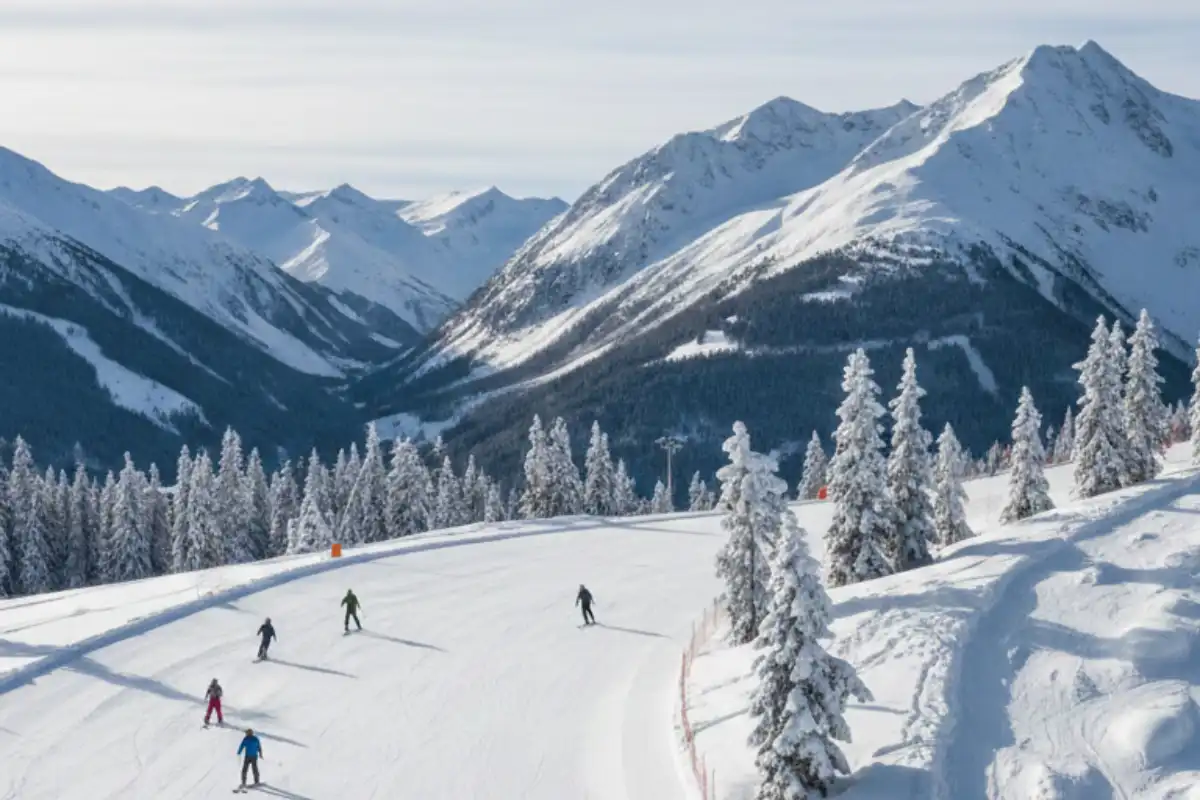
For the Beginner: Learner First and Foremost
Beginners need **forgiving terrain, clear guidance, and easy logistics**. The resort should minimize stress and maximize learning time.
Key Beginner Resort Features:
- **Terrain Ratio:** A high percentage (ideally over 50%) of Green (beginner) and Blue (intermediate) runs.
- **Dedicated Learning Areas:** Separate, flat zones for lessons with magic carpets or slow-moving lifts, isolated from faster traffic.
- **Accessibility:** Easy-to-navigate village and short travel times from lodging to lifts.
Top Beginner Destinations:
- **Park City, USA:** Known for massive terrain with excellent green-rated trails coming off high lifts, offering beginners high-altitude views without steep drops.
- **Courchevel 1850, France:** While expensive, its high proportion of wide, well-groomed green and blue runs makes it incredibly forgiving for learning.
- **Bansko, Bulgaria:** Offers great value. It has a fantastic ski school and wide, gentle slopes near the resort base, minimizing cost anxiety.
A travel writer specializing in ski vacations noted: “For beginners, look for resorts where the green runs are not just at the base. Getting to the top of the mountain on a smooth, gentle run is a huge confidence booster that cheaper, smaller resorts often can’t provide.” (Source: Ski & Snowboard Travel Journal)
For the Expert: Seeking Challenge and Variety
Experts prioritize steepness, varied conditions, access to off-piste areas, and unique mountain features. They need minimal crowding on difficult runs.
Key Expert Resort Features:
- **Terrain Ratio:** A high percentage (ideally over 40%) of Black and Double-Black diamond runs.
- **Backcountry Access:** Reliable, lift-accessed backcountry or easily accessible sidecountry zones.
- **Vertical Drop:** Significant vertical change and terrain that rarely gets groomed (moguls, trees, powder bowls).
Top Expert Destinations:
- **Jackson Hole, USA:** Famous for its steep, challenging terrain and the iconic tram that grants access to huge bowls and chutes.
- **Verbier, Switzerland (Four Valleys):** Renowned for its challenging off-piste routes, enormous vertical drops, and reliance on natural snow conditions over grooming.
- **Revelstoke, Canada:** Offers the largest vertical descent in North America and is a mecca for deep powder and steep gladed skiing.
Expert Skier’s Advice: The Powder Day Hunt
“If you’re an expert hunting fresh powder, look at resorts with high annual snowfall but fewer mega-resort features, like those in interior British Columbia (e.g., Kicking Horse) or Japan (Hokkaido). Crowds are thinner, lift lines are shorter, and you won’t spend half the morning fighting traffic to hit the best fresh tracks.” (Source: Backcountry Skiing Magazine)
The Compromise: Mixed-Group Destinations
When traveling with a group of mixed abilities, choose a large resort with multiple distinct mountain bases or peaks:
- **Whistler Blackcomb, Canada:** Offers two massive, distinct mountains. Blackcomb is slightly more challenging, while Whistler Mountain has excellent beginner zones, allowing the group to split and meet in the central village.
- **Zermatt, Switzerland:** Provides varied terrain across multiple international sectors, including long, gentle cruising runs ideal for intermediates, alongside access to extreme off-piste areas near the Matterhorn.
- **Vail, USA:** Known for its vast ‘Back Bowls’ (expert) and wide, well-groomed front-side runs (beginner/intermediate), providing room for everyone to spread out.
Frequently Asked Questions About Ski Resort Selection
What is a ‘magic carpet’ and why is it important for beginners?
A ‘magic carpet’ is a conveyor belt lift used in the beginner area. It eliminates the difficulty and fear beginners often have with traditional chairlifts, making the process of getting up the hill effortless and allowing them to focus entirely on skiing or snowboarding.
Should a high-level intermediate choose an expert resort?
Only if they are comfortable on all groomed black runs. Many resorts known for experts have “easy” black runs that are comparable to intermediate runs elsewhere. However, if the resort is dominated by extreme off-piste and deep powder, an intermediate will likely spend too much time struggling.
Do expert resorts typically have better snow conditions?
Not necessarily better, but usually more **unpredictable** and **deep**. Expert resorts tend to be at higher altitudes and get more vertical snow, but they often groom less, meaning the surface will be less consistent perfect for those who love bumps and powder, challenging for those who prefer smooth carving.
For beginners, should I prioritize a cheap lift ticket or better ski school?
Prioritize the **quality of the ski school**. A good instructor in a safe learning environment is the most important factor for rapid, injury-free learning. Saving $50 on a lift ticket is meaningless if you spend the whole day frustrated or intimidated.
What does “sidecountry” mean, and is it suitable for advanced skiers?
Sidecountry refers to areas just outside the resort boundary that are typically accessed via a ski lift, requiring a short hike. It’s suitable for **advanced skiers and experts only** who carry avalanche safety gear (beacon, shovel, probe) and know how to use it, as these areas are unpatrolled and pose avalanche risk.
Conclusion: Ski Where You Are 🗺️
The perfect winter resort is the one that best caters to your current skill level and travel objectives. Beginners should seek wide, gentle slopes, excellent instruction, and a low-pressure environment. Experts should chase vertical drop, deep powder, and challenging natural terrain. By accurately assessing your group’s needs and matching them to the mountain’s layout, you guarantee a more enjoyable, confidence-building, and ultimately safer winter sports experience.