Best hot drinks to try while traveling
Food is culture, but often, the most intimate window into a country’s soul is found in its daily warm beverage ritual. Whether consumed in a bustling European square, a quiet South American café, or a mountainous Asian tea stall, the local hot drink offers not just warmth, but a genuine taste of regional history, ingredients, and social customs.
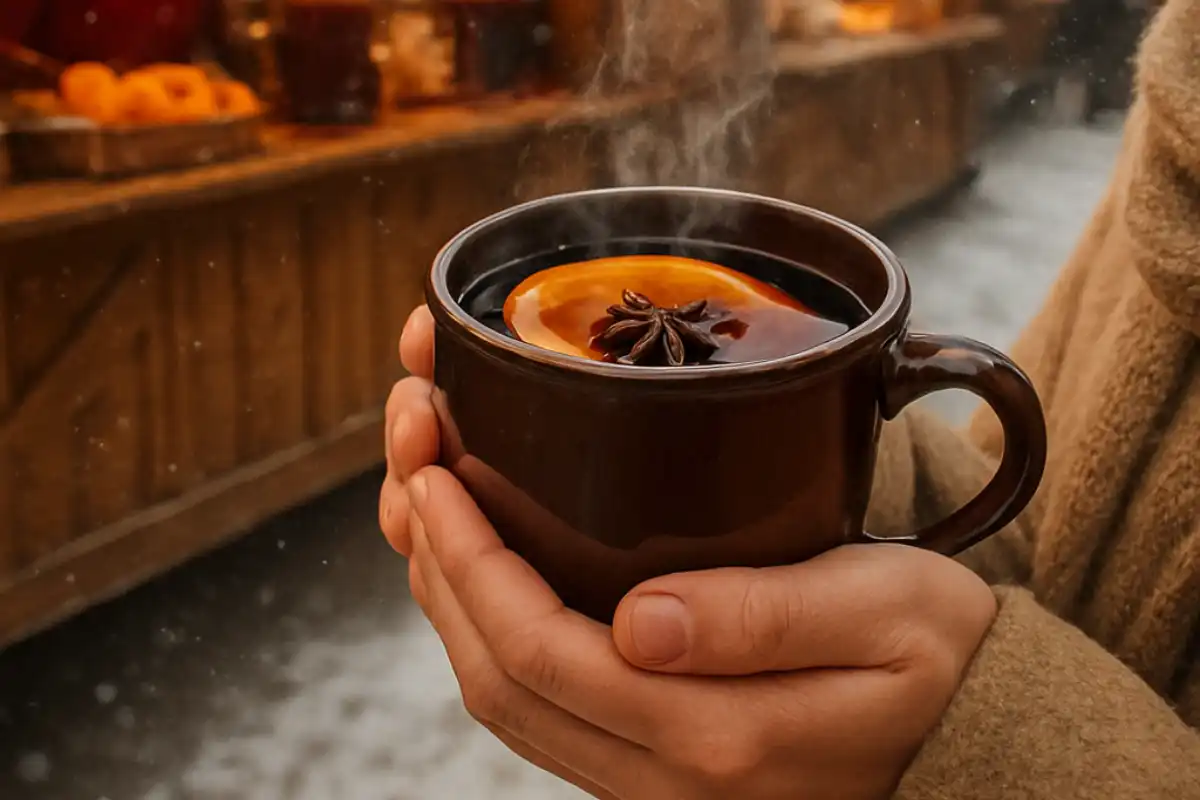
European & Alpine Warmers: Spice and Spirit 🍷
In cold-weather European nations, hot drinks often involve alcohol and deep, comforting spices, traditionally consumed outdoors.
1. Glühwein (Germany/Austria)
The staple of European Christmas Markets, **Glühwein** (literally “glow-wine”) is a spiced red wine served steaming hot. It’s often flavored with citrus, cinnamon, cloves, and star anise.
- **Traveler Tip:** “Never leave a German Christmas market without trying the **Feuerzangenbowle** it’s Glühwein with a sugar cone soaked in rum set on fire and allowed to drip into the wine. It’s more than a drink; it’s a spectacle.” (Source: Christmas Market Vlogs)
2. Vin Chaud (France) & Bombardino (Italy)
While similar to Glühwein, the French **Vin Chaud** is typically less sweet. In the Italian Alps, the **Bombardino** offers a creamy, richer experience: it’s a hot mix of eggnog liqueur (Advocaat or Vov) and brandy or rum, topped with whipped cream, the ultimate après-ski indulgence.
Exotic Spices and Creamy Textures: Asia and the Middle East 🌶️
These regions offer deeply complex, savory, or highly-spiced beverages that double as nutrient-rich treats.
1. Salep / Sahlab (Turkey & Middle East)
**Salep** (Turkish) or **Sahlab** (Arabic) is a thick, creamy, milky beverage made from hot milk and flour derived from the root of the wild orchid. It’s comforting, slightly floral, and usually topped with cinnamon. In Turkey, Salep is now primarily made with substitute thickeners due to the protected status of the orchid.
- **Cultural Note:** Salep is the historical source of the thickening agent for traditional Turkish dondurma ice cream, giving it its unique chewy texture.
2. Masala Chai (India)
While ‘chai’ simply means ‘tea,’ **Masala Chai** is black tea brewed with milk and a blend of aromatic spices (**masala**) like ginger, cardamom, cinnamon, cloves, and black pepper. It’s typically sold by street vendors (chai wallahs).
- **Traveler Tip:** “Never order a ‘Chai Tea’ that literally means ‘Tea Tea.’ When traveling in India, accept the sweetness! It’s meant to be robustly flavored and heavily sweetened to counteract the bitterness of the spices.” (Source: Food Travel Writer Guides)
South American and Global Coffee Traditions ☕
Beyond the common espresso, specific coffee preparations reflect local customs and ingredients.
1. Café Bombón (Spain)
Originating in Valencia, this is an intensely sweet and visual coffee drink. It is made by mixing **equal parts espresso and condensed milk**, served in a small glass to show the distinct layers of dark coffee and white condensed milk.
2. Uncino/Mexican Hot Chocolate (Peru/Mexico)
Forget powdered cocoa. Traditional South American hot chocolate is rich, thick, and often spiced. In Peru, it’s frequently made with dark chocolate tablets and served with a piece of cheese (yes, cheese!) for dipping. Mexican hot chocolate is traditionally frothed with a wooden tool called a **molinillo** and spiced with cinnamon and sometimes chili powder.
Frequently Asked Questions About Hot Drinks
Are international hot drinks safe to drink from street vendors?
Generally, **yes, as long as the water has been boiled and the milk is hot.** Boiling kills most pathogens. Look for vendors who have a steady stream of customers, as high turnover means fresh ingredients. For drinks like Masala Chai, the ingredients are constantly simmering, ensuring safety.
What is the best non-alcoholic warm drink to try in Central Europe?
Try **Kinderpunsch** (Children’s Punch) at any German or Austrian market. It is a spiced, non-alcoholic juice blend (often berry or apple) served hot, utilizing the same comforting spices as Glühwein but without the alcohol.
How should I order coffee in Italy to avoid a tourist mistake?
Never order a “latte” in Italy; you’ll get a glass of plain milk. Order a **”caffè”** (which is an espresso), a **”cappuccino”** (only before noon), or a **”caffè macchiato”** (espresso “stained” with a splash of milk) for an authentic experience.
What is a good high-altitude warm beverage for energy?
In the Andes region, try **Coca Tea (Mate de Coca)**. While it contains no cocaine, the subtle alkaloids in the coca leaf help combat altitude sickness (soroche) and provide a mild energy boost. It is widely available and legal in countries like Peru and Bolivia.
Should I use the specialty mugs provided at European markets?
Yes, use them! Most European Christmas markets use a **Pfand** (deposit) system, where you pay a small fee (usually €2-€5) for the festive ceramic or glass mug. You get the deposit back when you return the mug, or you can keep it as a lovely, authentic souvenir. It’s an eco-friendly tradition.
Conclusion: Sip Your Way Through the World ☕
The world of hot drinks is vast and deeply connected to local geography, history, and customs. From the strong, sugary heat of Masala Chai to the creamy, comforting spice of Salep, seeking out these local beverages provides a rich layer of cultural understanding that complements any travel itinerary. Next time you’re on the road, skip the chain coffee shop, and order the local favorite you’ll be rewarded with warmth, flavor, and a genuine taste of your destination.