Best Christmas markets in Europe
Europe’s Christmas markets are the quintessential winter experience, transforming historic town squares into glittering, ephemeral villages filled with festive crafts, warming foods, and the scent of cinnamon and pine. Dating back to the Middle Ages, these markets are a crucial part of European tradition, offering far more than just shopping they are a cultural deep dive into local customs and regional cuisine.
The Classic Must-See Markets: Tradition & Grandeur ✨
These markets are famed for their scale, history, and dazzling atmosphere, and are the traditional cornerstone of any Christmas market tour.
1. Nuremberg, Germany (The Original & Most Traditional)
Germany is the birthplace of the Christmas market tradition, and Nuremberg’s **Christkindlesmarkt** is one of the oldest and most famous.
- **The Vibe:** Authentic, with a strict focus on traditional, high-quality handmade goods (no mass-produced plastic). It is opened by the *Christkind*, a young girl chosen to represent the Christmas angel.
- **Must-Try:** **Nuremberg Rostbratwurst** (small sausages) and **Elisenlebkuchen** (special gingerbread).
2. Strasbourg, France (The Capital of Christmas)
Nestled in the Alsace region, Strasbourg seamlessly blends French and German holiday traditions, claiming the title of the **Capital of Christmas**.
- **The Vibe:** Spread across multiple sites, with the main market surrounding the magnificent Cathedral. Famed for its extensive decorations and the towering Grand Sapin (Christmas Tree).
- **Must-Try:** **Vin Chaud** (French mulled wine) and Alsatian specialties like **Bredele** biscuits.
3. Vienna, Austria (Elegance & Scale)
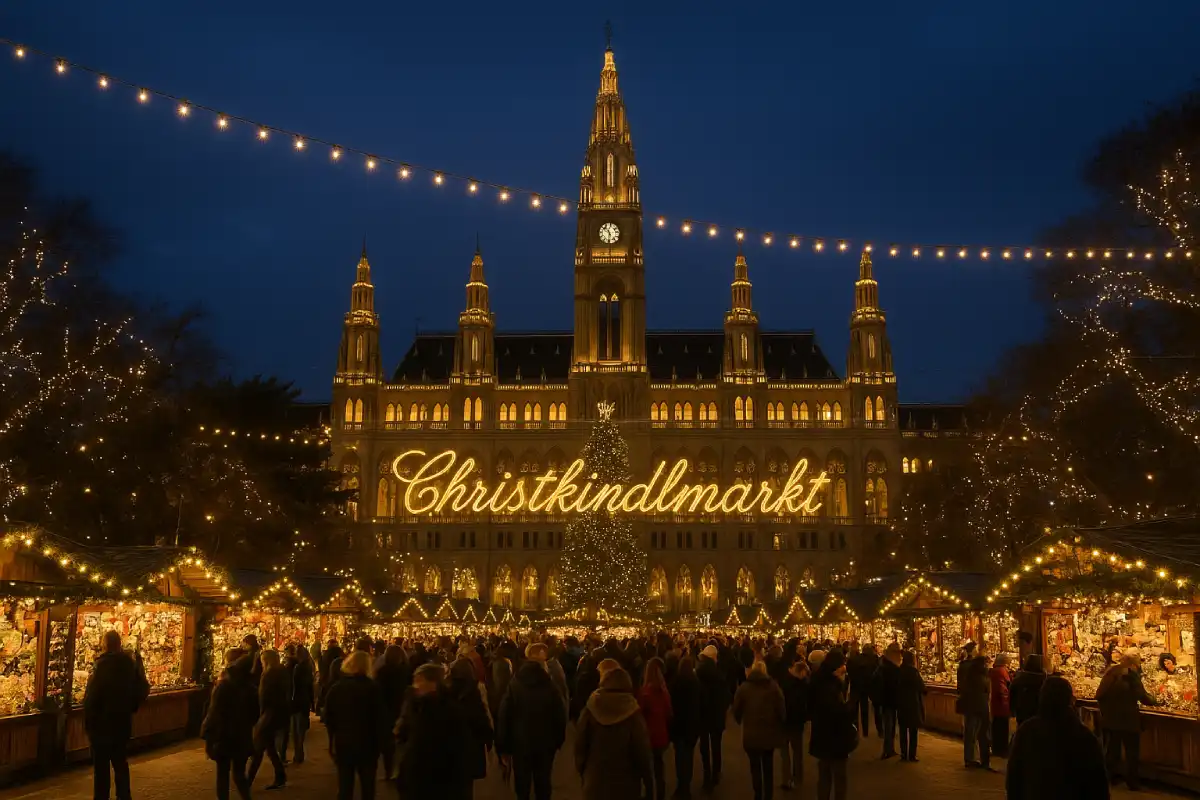
The **Wiener Christkindlmarkt** at Rathausplatz (City Hall Square) is iconic, offering a grand, almost palatial setting with beautiful illuminations and a massive ice-skating rink.
- **The Vibe:** Elegant, with a more sophisticated, orchestral feel. It is surrounded by several smaller, equally charming markets (like the one at Schönbrunn Palace).
- **Must-Try:** **Punsch** (stronger, fruit-based hot punch) and **Kaiserschmarrn** (shredded pancake dessert).
Traveler Tips for a Magical Market Trip 🗺️
Advice from seasoned Christmas market visitors is essential for navigating crowds, budgeting, and making the most of the festive atmosphere.
Expert Tip: Master the ‘Pfand’ System
“If you are primarily visiting Germany or Austria, familiarize yourself with the **Pfand system** (deposit). When you buy a drink like Glühwein, you pay an extra €2–€5 deposit for the mug. You get this back when you return the mug. This is an easy way to save money and encourages you to return the mug. Many travelers keep a mug as a souvenir, but knowing the system is essential for budgeting.” (Source: Traveler Blog / Local’s Guide)
Essential Logistics & Etiquette:
- **Beat the Crowds:** Evenings and weekends are the most atmospheric but also the most crowded. Visit in the **late morning or early afternoon on a weekday** for browsing, photos, and gift shopping. Return after dark to simply soak in the lights and enjoy a hot drink.
- **Cash is King:** While many larger craft stalls accept cards, the smaller food and drink vendors, essential for that quick sausage or Glühwein, often only accept **cash** (small bills and coins). Have plenty on hand.
- **Dress to Layer:** Since you’ll be constantly moving between the freezing outdoors and crowded, warm stalls, wear **layers**. Waterproof boots, thermal base layers, and a comfortable waterproof coat are highly recommended by travelers who spend long days walking.
- **”Reconnaissance Loop” Shopping:** Before buying, take one full lap around the market to survey the handicrafts. This helps you avoid purchasing mass-produced items and allows you to seek out truly unique, handmade crafts directly from the artisans.
Frequently Asked Questions About European Christmas Markets
When is the best time to visit to avoid peak crowds?
The peak periods are the first weekend of Advent, all Fridays/Saturdays, and the week before Christmas. To avoid the worst crowds, aim for a **Tuesday, Wednesday, or Thursday** visit, ideally in the **first two weeks of December** before school holidays begin. Visit right at the opening time (often 10 a.m. or 11 a.m.) for a quiet, relaxing experience.
What are the key food items I must try?
Focus on hot, regional specialties:
- **Glühwein** (German/Austrian mulled wine) or **Vin Chaud** (French).
- **Bratwurst** (grilled sausage) or **Currywurst**.
- **Kartoffelpuffer** (potato pancakes) or **Reibekuchen**.
- **Roasted Chestnuts** or **Roasted Almonds**.
- **Lebkuchen** (German gingerbread) or **Stollen** (fruit bread).
Do I need to check the exact opening dates?
Yes, absolutely. **Opening and closing dates vary significantly** by city and change every year based on the Advent calendar. Most open the last week of November and close on December 23rd or 24th, but some major city markets (like Vienna, Prague, or Manchester) remain open into January. Always check the official city tourism website before booking.
Are the smaller, more charming markets better than the famous ones?
Many experienced travelers agree that the **smaller markets often offer a better, more authentic experience**. Cities like Nuremberg and Vienna are essential for their grandeur, but smaller towns like **Colmar (France)**, **Esslingen (Germany)**, or local neighborhood markets often feature higher quality, handcrafted goods and fewer crowds, making the shopping more enjoyable.
Is it worth traveling to multiple countries just for the markets?
For a first-timer, a trip focusing on two or three neighboring cities (e.g., Munich/Salzburg, Prague/Vienna/Budapest, or Strasbourg/Colmar/Basel) is highly recommended. This allows you to compare different traditions and foods while minimizing travel time. Many people utilize **river cruises** to visit markets in Germany, Austria, and France seamlessly without having to unpack repeatedly.
Conclusion: Capture the Festive Magic 🎁
A trip to the European Christmas markets is a sensory feast a chance to experience living history, indulge in warming winter cuisine, and find truly unique, handcrafted gifts. By using insider tips from mastering the Glühwein deposit to visiting markets during quieter weekday hours you can move beyond the tourist crowds and truly capture the magical, centuries-old spirit of the European holiday season.