Barcelona on a Budget: Your Essential Guide to Affordable & Safe Travel in Catalonia’s Gem (July 2025)
Immerse yourself in Gaudi's masterpieces, vibrant street life, and Mediterranean flavors without overspending. This comprehensive guide, updated for **July 2025**, will help you explore Barcelona affordably and safely.
1. Cost of Accommodation in Barcelona: Budget Options
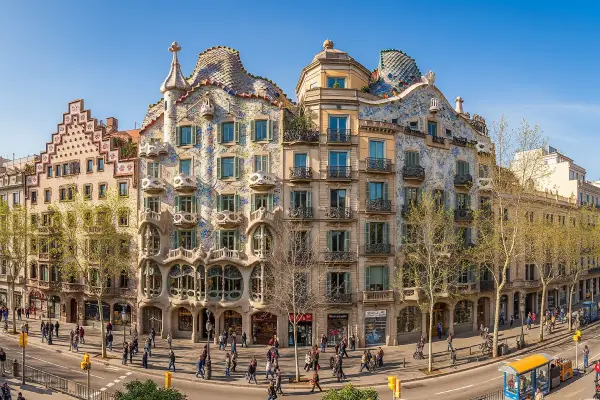
Barcelona offers a fantastic array of budget accommodation, from modern hostels to charming guesthouses. Prices can vary significantly based on location, amenities, and especially the season (July is peak!). Booking several months in advance is highly recommended.
Hostel & Budget Hotel Prices by Area (Average per night for a dorm bed/budget private, July 2025)
| Area | Description | Average Price (EUR/night) | Pros for Budget Travelers |
|---|---|---|---|
| **Gothic Quarter (Barri Gòtic)** | Historic center, lively, excellent for walking. | €35 – €60 (Dorm) €80 – €130 (Budget Private) |
Central, vibrant nightlife, many attractions walkable. Can be noisy. |
| **El Raval** | Bohemian, diverse, but can be gritty in some parts. | €30 – €50 (Dorm) €70 – €110 (Budget Private) |
Very affordable, multicultural food, close to Las Ramblas but often better value. |
| **El Born / Sant Pere** | Trendy, chic, cultural, but prices can be higher. | €40 – €70 (Dorm) €90 – €140 (Budget Private) |
Stylish, boutique shops, good food, close to Parc de la Ciutadella. |
| **Eixample (Left/Right)** | Elegant, grid-patterned, modernista architecture. | €30 – €55 (Dorm) €75 – €120 (Budget Private) |
Quieter, safer, good Metro access, some budget options further from center. |
| **Poble Sec / Sants-Montjuïc** | Residential, great tapas bars, close to Montjuïc hill. | €28 – €48 (Dorm) €65 – €100 (Budget Private) |
Authentic, excellent tapas, good Metro access, quieter, better value. |
Note: Prices are estimates and subject to significant fluctuation, especially during peak season (July) and major events.
Tips for Saving on Accommodation:
- **Book Early:** For July travel, secure your accommodation 3-6 months in advance for the best rates and availability.
- **Consider Hostels with Kitchens:** If you have access to a shared kitchen, you can prepare some meals, saving significantly on food costs.
- **Stay a Metro Stop or Two Away:** Accommodation slightly further from the absolute city center (e.g., in Poble Sec or further Eixample) often provides better value and quieter surroundings, while still being well-connected by public transport.
- **Look for “Pensions” or “Hostales”:** These are often family-run guesthouses that are more affordable than traditional hotels and can offer a charming, authentic experience.
2. Cost of Food in Barcelona: Eating on a Budget
Barcelona’s culinary scene is a delight, and you can savor delicious Catalan and Spanish flavors without overspending. The key is to eat like a local and avoid tourist traps.
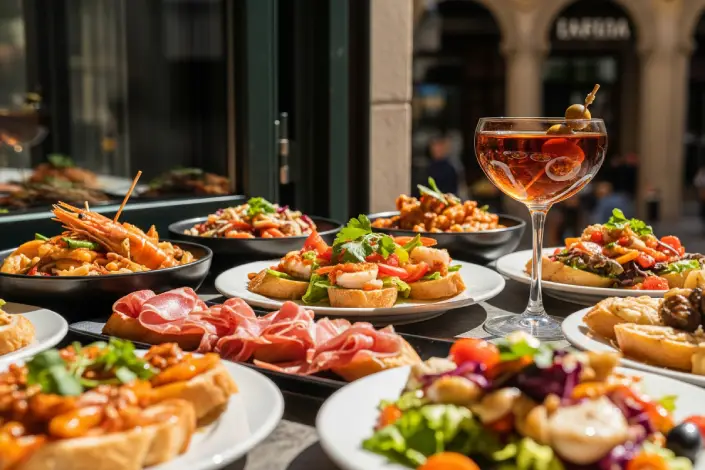
Enjoying authentic tapas and local specialties doesn’t have to be expensive.
Estimated Budget Food Costs (July 2025):
- **Breakfast:** €3 – €7 (Coffee + pastry/sandwich at a local bar: €3-5; larger breakfast: €5-7)
- **Lunch:** €10 – €18 (Menu del Día: €12-18; Bocadillo/sandwich: €4-7; Tapas at a casual bar: €8-15)
- **Dinner:** €15 – €30 (Casual tapas bar/pizzeria: €15-25; full restaurant meal: €20-30; supermarket meal: €5-10)
- **Daily Budget for Food:** €30 – €50 if you mix and match, utilize supermarkets, and prioritize “menú del día.”
Budget Eating Tips:
- **”Menú del Día”:** This is your budget savior for lunch! Many restaurants offer a fixed-price, multi-course meal (often 2-3 courses + drink + bread) during weekday lunch hours (typically 1 PM – 4 PM). It’s fantastic value.
- **Tapas Bars:** Venture beyond touristy La Rambla. Explore neighborhoods like Poble Sec (Carrer de Blai), Gràcia, or El Raval for authentic and affordable tapas. Some bars offer “pinchos” (tapas on bread, often €1-€2 each).
- **Bocadillos & Sandwiches:** Grab a hearty Spanish sandwich (bocadillo) for a cheap and satisfying meal. Bakeries and delis are great for this.
- **Supermarkets (Mercadona, Lidl, Carrefour, Caprabo):** Stock up on groceries for breakfast, picnic lunches, or simple dinners. Buy cheese, cured meats, bread, olives, and wine for significant savings.
- **La Boqueria Market (or local markets):** While La Boqueria can be touristy, it’s worth a visit for the vibrant atmosphere. For better prices and more local produce, try Sant Antoni Market (reopened and fantastic for food) or La Llibertat Market in Gràcia.
- **Avoid Eating Directly on La Rambla/Plaça Catalunya:** Prices here are inflated for tourists. Wander a few blocks into the side streets for better value.
- **Drink Tap Water:** Barcelona’s tap water is safe to drink. Carry a reusable bottle to refill and save on bottled water.
3. Cost of Public Transportation in Barcelona
Barcelona’s public transport system (TMB) is excellent, combining Metro, buses, trams, and FGC commuter trains. It’s an efficient way to get around, especially for longer distances or when your feet need a break.
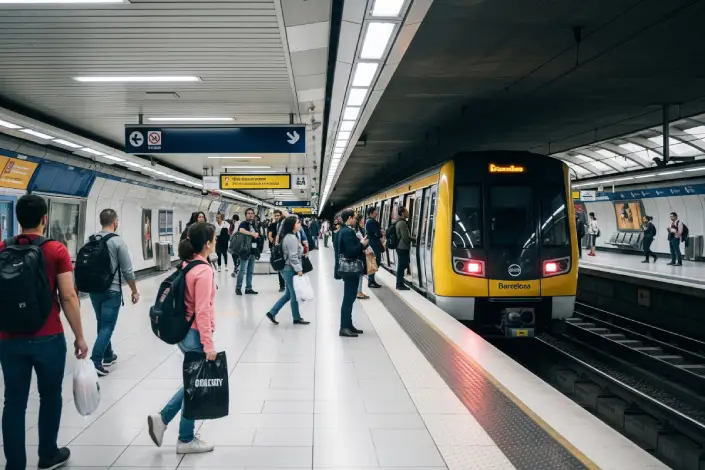
Barcelona’s efficient Metro system connects you to all major attractions.
Fares (As of July 2025, subject to minor changes):
- **Single Ticket:** €2.55. (Not recommended for more than one or two rides.)
- **T-Casual (Zone 1):** A personal travel card for 10 journeys, valid across Metro, bus, tram, FGC, and Rodalies (local trains) within Zone 1 (which covers almost all tourist sights). Around €12.15.
- **Best Value for most tourists:** Can be shared if traveling together. Each tap counts as one journey. Transfers within 75 minutes between different transport modes count as one journey (e.g., Metro to bus).
- **Hola Barcelona Travel Card:** Offers unlimited travel on public transport for a set number of days.
- **2 Days (48h):** Around €17.50
- **3 Days (72h):** Around €25.50
- **4 Days (96h):** Around €33.30
- **5 Days (120h):** Around €40.80
- **Barcelona Card:** Tourist pass combining transport and discounts/free entry to some attractions. **NOT recommended for budget travelers** as the cost rarely outweighs the savings unless you plan an extremely intensive sightseeing schedule with many paid attractions.
Tips for Transportation:
- **Get a T-Casual or Hola Barcelona Card:** Avoid single tickets. For most visitors, the T-Casual offers the best balance of cost and flexibility.
- **Walk!:** Barcelona is a very walkable city, especially its central districts. You’ll discover charming alleys, hidden plazas, and beautiful architecture by exploring on foot.
- **Google Maps / TMB App:** Use these apps for real-time public transport information, route planning, and estimated travel times.
- **Validate Your Ticket:** Always validate your ticket by tapping it when entering a Metro station or boarding a bus/tram. Inspectors are common, and fines are hefty.
- **Airport Connection:** The Metro (L9 Sud) connects the airport to the city, or the Aerobús (express bus) is a convenient, slightly more expensive option. Both are good value.
4. Safety in Barcelona: Dangers, Scams, and Areas to Be Cautious
Barcelona is a vibrant and generally safe city, but it is unfortunately notorious for **petty crime**, particularly **pickpocketing**, which is among the highest in Europe. Awareness and vigilance are absolutely critical for a worry-free trip.
Common Dangers & Scams:
- **Pickpockets:** This is by far the biggest risk. They operate in highly crowded areas, on public transport (especially Metro Lines L1, L3, L5), and at major tourist attractions. They are highly skilled and often work in teams using distraction tactics.
- **Common Scenarios:** “Accidental” bumps, someone dropping coins, asking for directions with a map, fake petition signers, “bird poop” scam (someone “cleans” a stain on you while an accomplice picks your pocket), children distracting you.
- **Prevention:** Wear a cross-body bag worn in front, use an anti-theft backpack, keep wallets in front pockets, avoid flashing cash/phones, be extra vigilant in crowds.
- **”Friendship Bracelet” & Rosemary Scams:** Individuals (often Romani women) might try to put a “free” bracelet on your wrist or a rosemary sprig in your hand, then demand money. Firmly say “No” and keep walking; do not let them touch you.
- **Street Gamblers:** “Shell game” or “three-card monte” games are common on La Rambla. They are rigged, and participants are often accomplices. Never stop or engage.
- **Fake Police Officers:** Very rare but reported. Individuals may approach claiming to be police, asking to see your passport or wallet. Insist on going to a police station. Real police will usually not ask for your wallet on the street.
- **Bag Snatching:** Less common than pickpocketing, but can occur, especially in outdoor cafes where bags are left on chairs, or by opportunistic thieves on motorbikes. Keep bags secured and out of reach.
Areas Where Caution is Advised (mainly due to high pickpocket activity):
- **La Rambla:** The most famous street and the absolute hotspot for pickpockets. Be extremely vigilant here, day and night.
- **Gothic Quarter (Barri Gòtic):** Especially in its narrow, crowded streets and squares.
- **Sagrada Família, Park Güell, Arc de Triomf:** Major attractions draw crowds, and therefore pickpockets.
- **Barcelona Metro:** Particularly on crowded lines and at major interchange stations (e.g., Catalunya, Universitat, Passeig de Gràcia).
- **Barcelona Beaches (Barceloneta):** Bags left unattended or even just on the sand are targets. Be very careful with your belongings if going for a swim.
- **El Raval (some parts at night):** While increasingly gentrified, some parts can feel a bit grittier or less safe at night. Stick to well-lit main streets.
General Safety Advice:
- **Secure Your Valuables Religiously:** This cannot be stressed enough in Barcelona. Don’t carry more cash than you need. Use hotel safes for passports and excess cash.
- **Be Aware, Not Paranoid:** Enjoy the city, but always keep a watchful eye on your belongings, especially when distracted (taking photos, checking maps).
- **Avoid Engaging with Street Scammers:** A firm “No, gracias” (no, thank you) and walking away is your best defense.
- **Emergency Numbers:** 112 (European emergency number – police, ambulance, fire).
- **Night Safety:** Stick to well-lit, busy areas. If using taxis, use official metered taxis from designated ranks or ride-hailing apps (Uber is limited in Barcelona, Free Now is more common).
- **Stay Hydrated:** July is hot! Drink plenty of water and seek shade.
5. Tips for a Positive Barcelona Experience
To truly embrace Barcelona’s unique spirit and make your trip unforgettable, keep these cultural and practical tips in mind:
- **Learn Basic Phrases:** While many people in tourist areas speak English, knowing a few Catalan or Spanish phrases (“Hola,” “Gràcies/Gracias,” “Per favor/Por favor,” “Adéu/Adiós”) is always appreciated.
- **Embrace the Siesta Culture:** While less strict in major cities, many smaller shops and some restaurants close in the mid-afternoon (roughly 2 PM – 5 PM). Plan accordingly.
- **Late Meal Times:** Dinner in Barcelona is typically eaten much later than in many other countries, often starting at 9 PM or even later. Lunch is the main meal of the day.
- **Walk Everywhere Possible:** Barcelona is a city designed for walking. Its diverse neighborhoods, from the historic Gothic Quarter to the charming Gràcia, are best explored on foot.
- **Enjoy Free Attractions:** Many beautiful parks (Parc de la Ciutadella, some parts of Parc de Montjuïc), the Magic Fountain of Montjuïc (check schedule), and the vibrant street life offer fantastic experiences without cost. Explore the outside of Gaudí’s buildings for free, even if you don’t go inside.
- **Book Popular Attractions in Advance:** For places like Sagrada Família, Park Güell, or Picasso Museum, booking online weeks or even months ahead is essential to guarantee entry and save time.
- **Visit Neighbourhood Markets:** Beyond La Boqueria, explore local markets like Mercat de Sant Antoni or Mercat de Gràcia for fresh produce, local delicacies, and a more authentic atmosphere.
- **Be Aware of Catalan vs. Spanish:** Barcelona is in Catalonia, and while Spanish is widely spoken, Catalan is the official language. Signs are often in both. Showing respect for both cultures is appreciated.
6. Barcelona Travel FAQs (July 2025)
Is Barcelona safe for solo female travelers in 2025?
Yes, Barcelona is generally safe for solo female travelers, but extreme vigilance against **pickpocketing** is crucial. Avoid walking alone in poorly lit areas late at night, especially in parts of El Raval. Stick to well-populated areas and use licensed taxis or ride-hailing apps at night.
What’s the best time to visit Barcelona on a budget?
The shoulder seasons are best for a balance of weather and budget: **April-May** and **late September-October**. July is peak season with high prices and large crowds. Winter (November-March) can be very budget-friendly with fewer tourists, though it’s cooler.
Is English widely spoken in Barcelona?
In major tourist areas, hotels, and larger shops, you’ll find many English speakers. However, outside these areas, and particularly with older generations, English proficiency can be limited. Knowing basic Spanish or Catalan phrases will greatly enhance your interactions.
How do I get from Barcelona-El Prat Airport (BCN) to central Barcelona on a budget?
The **Aerobús** (express bus, ~€6.75 one way) is a convenient and fast option to Plaça Catalunya. The **Metro (L9 Sud)** connects both terminals to the city (a single journey from the airport costs extra unless using a Hola Barcelona Travel Card). **Rodalies train (R2 Nord)** from Terminal 2 also goes to Passeig de Gràcia and Sants Estació.
What is the tipping etiquette in Barcelona?
Tipping is not as common or expected as in some other countries. In restaurants, a 5-10% tip is appreciated for good service, especially if no service charge is added. For drinks at a bar, just rounding up or leaving small change is sufficient. For taxis, rounding up the fare is common.
Do I need to pre-book tickets for Gaudí’s attractions?
Absolutely! For Sagrada Família, Park Güell, Casa Batlló, and Casa Milà, **pre-booking online well in advance (weeks to months, especially for July)** is essential. It guarantees your entry time and saves you from incredibly long queues, which are common.
Is it safe to go to Barcelona’s beaches?
The beaches are generally safe, but they are a high-risk area for **theft**. Never leave your belongings unattended, even for a moment. If you go for a swim, use a waterproof bag for valuables or only bring the absolute minimum. Opportunistic thieves are prevalent.
Your Barcelona Adventure Awaits!
Barcelona is a city that pulses with life, offering a dazzling blend of historic charm and modern vibrancy. With these practical tips and a keen eye on your budget and safety, you’re ready to soak in its artistic wonders, indulge in its flavors, and create unforgettable memories.
Start Planning Your Barcelona Trip