Accommodation Security
How to choose safe lodging, secure your room, and protect your belongings.
Your accommodation serves as your sanctuary while traveling – a place to rest, recharge, and store your belongings. However, it’s also a potential target for opportunistic crime if you’re not diligent. Whether you’re staying in a bustling hotel, a cozy Airbnb, or a lively hostel, ensuring your lodging is secure and your valuables are protected is paramount for a worry-free trip.
This guide offers practical and actionable tips on how to make informed choices about your accommodation, effectively secure your room, and safeguard your belongings throughout your stay. By implementing these measures, you can transform your lodging into a true haven, allowing you to relax and fully embrace your travel experiences.
Choosing Safe Lodging: Research is Your Best Friend
Security starts long before you arrive. Here’s how to pick a safe place:
1. Read Recent Reviews Carefully ⭐️
- Focus on Safety Mentions: Look for comments specifically addressing security, neighborhood safety, lighting, and staff responsiveness to concerns.
- Solo Traveler Insights: If traveling alone (especially as a solo female traveler), pay extra attention to reviews from others in your demographic.
- Don’t Just Look at Stars: A high star rating doesn’t always guarantee safety; details in reviews are crucial.
2. Location, Location, Location 📍
- Research the Neighborhood: Use Google Street View, read travel blogs, and check local news for information on the area’s reputation (crime rates, nightlife, overall vibe).
- Accessibility: Choose a place that’s well-connected to public transport but isn’t isolated or in an overly dark, unpopulated area.
- Proximity to Attractions: Being close to popular spots often means more foot traffic and generally safer surroundings.
3. Look for Key Security Features 🔐
- 24/7 Reception/Staff: Essential for hotels and some hostels. Someone is always available to monitor entries and respond to issues.
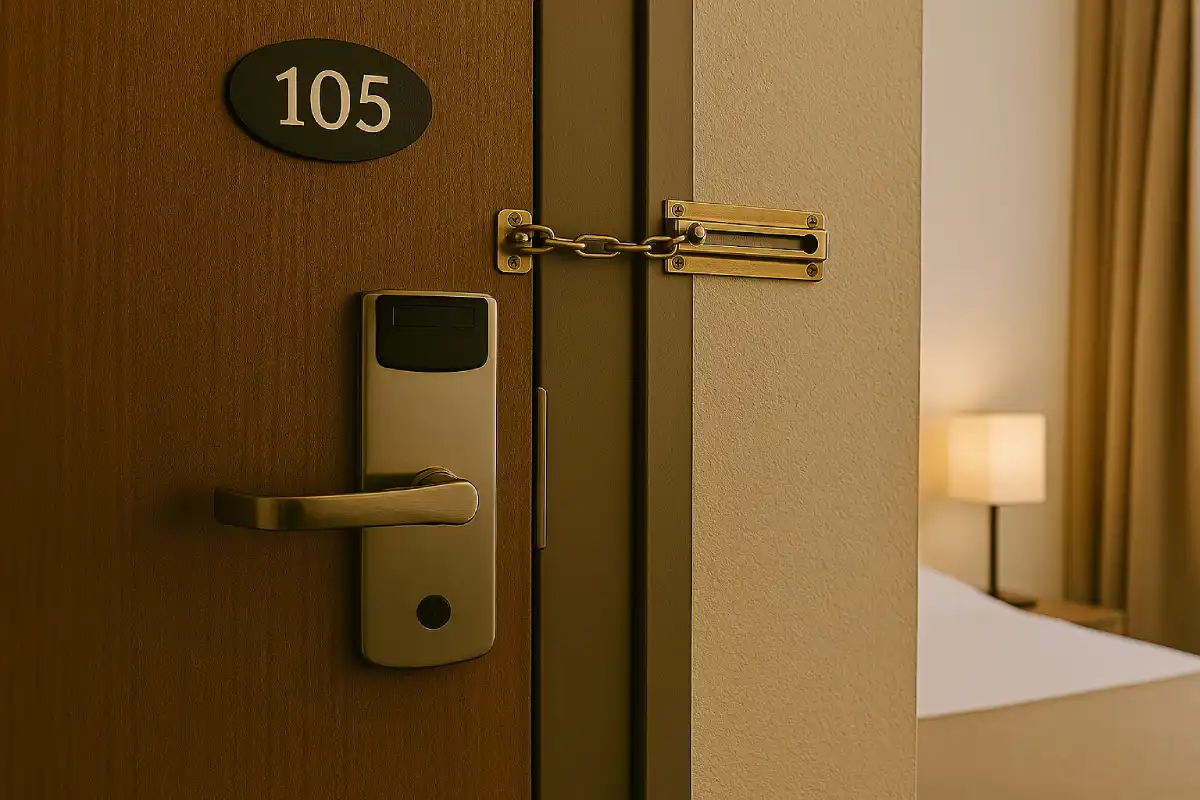
- Secure Entry: Key cards, digital locks, or controlled access to the main building. Avoid places with easily accessible entrances.
- In-Room Safe: A must-have for storing valuables.
- Good Lighting: Both inside the property and in common areas, stairwells, and external approaches.
- CCTV: While not a guarantee, visible security cameras can deter crime.
Experienced Traveler Insight: Sarah, Solo Female Traveler
“For me, accommodation research is 50% about the room and 50% about the neighborhood. I use Google Street View to ‘walk’ around the block at night. Are there people? Good lighting? Bars where things could get rowdy? For hostels, I specifically look for reviews from other solo women mentioning secure lockers and helpful staff. My safety is worth the extra research time.”
Securing Your Room & Protecting Your Belongings
Once you’ve chosen a safe place, implement these in-room security measures:
1. First Check Upon Arrival ✔️
- Inspect Locks: Check that all doors (main, balcony, connecting) and windows have working, secure locks. If anything is broken, request a room change immediately.
- Emergency Exits: Locate the nearest emergency exit and staircase. Note the route.
- Phone & Chargers: Check that your phone works in the room and identify where you’ll charge devices.
2. Always Secure Your Door 🚪
- Deadbolt & Chain: Use the deadbolt and chain (if available) when you are inside your room.
- Portable Door Lock/Stop: Invest in a small, portable door lock or rubber door stop for an extra layer of security, especially for solo travelers or in hostels.
- Don’t Prop Doors Open: Even for a moment.
3. Use the In-Room Safe 🛡️
- All Valuables: Store your passport, extra cash, credit cards you’re not using, expensive jewelry, and spare electronics (laptop, tablet) in the safe.
- Test the Safe: Before putting your most important items in, put something less valuable in, lock it, leave for an hour, and return to ensure it’s still secure.
- Change the Code: If it’s a digital safe, change the default code immediately to a unique one you’ll remember.
4. Protect Belongings Even Without a Safe 🎒
- Disperse Valuables: If no safe, hide valuables in various, unconventional spots (e.g., hidden pockets in luggage, wrapped in clothes at the bottom of a laundry bag, in a less obvious toiletry kit).
- Use a Cable Lock: Secure your luggage to a fixed object (bed frame, sturdy pipe) with a cable lock, especially in dorm rooms.
- Pack a Portable Safe: Consider a flexible, portable safe (like Pacsafe Travelsafe) for higher security, which you can often anchor to a fixed object.
5. Be Mindful of Who Enters Your Room 🧹
- Verify Staff: If someone knocks claiming to be staff, verify their identity. Call reception to confirm if you’re unsure. Don’t open the door if you’re suspicious.
- No Unannounced Entries: Reputable hotels will not send staff into your room unannounced unless for a confirmed service.
Experienced Traveler Insight: Maria, Long-Term Backpacking & Budget Travel
“I once stayed in a guesthouse in Vietnam where the safe looked dodgy. I ended up hiding my passport and main cash stash inside a clean, rolled-up sock at the bottom of a laundry bag. It sounds simple, but no thief is going to dig through dirty laundry looking for valuables. Also, my portable door stop is my absolute favorite solo travel item – gives me so much peace of mind at night.”
General Awareness Around Your Lodging
1. Be Discreet at Check-In 🤫
- Avoid verbally confirming you’re traveling alone or shouting your room number in the lobby.
- Don’t let bellboys or staff loudly announce your room number.
2. Watch Your Key/Key Card 🔑
- Keep your room key/card secure and separate from anything with your room number or address.
- Don’t leave it unattended or visible in public areas.
- If you lose it, report it to reception immediately.
3. Be Aware of Surroundings 🚶♀️
- Notice who is coming and going around your room or floor.
- Avoid walking alone in isolated hotel corridors or parking lots at night.
Frequently Asked Questions About Accommodation Security
Are hotel safes really secure?
Most hotel safes are designed to deter opportunistic theft by casual staff or other guests, rather than professional safe-crackers. They offer a good level of security for most travelers. Always use the safe for your passport, extra cash, and valuable electronics. However, for extremely high-value items, or if you feel uneasy about the safe’s integrity, consider alternatives like locking items in your luggage with a cable lock to a fixed object, or using a hotel’s main safe (if available and reliable).
What’s a portable door lock, and how does it work?
A portable door lock (or door jammer/door stop alarm) is a small device you can attach to your room door from the inside for added security. It prevents the door from being opened, even if someone has a key. Some also have an alarm feature. They are particularly popular with solo travelers or for use in older hotels/hostels with less robust locks. They are simple to use and provide an extra layer of peace of mind.
How do I choose a safe hostel dorm room?
Look for hostels that provide large lockers within the dorm room for your backpack. Prioritize hostels with 24/7 reception and good security reviews. Consider smaller dorms (e.g., 4-6 beds instead of 10+) for slightly more privacy and fewer people. Some hostels also offer female-only dorms, which many solo female travelers prefer for comfort and safety.
Should I unplug my devices when I leave the room?
While not strictly a security measure against theft, it’s a good practice for fire safety and to save energy. For valuable electronics, it’s best to secure them in the in-room safe or a locked bag rather than leaving them visibly plugged in.
Are Airbnb rentals less secure than hotels?
Airbnb and other short-term rentals can be very secure, but it depends more on the individual host and property. Hotels typically have standardized security protocols (24/7 staff, multiple locks). For rentals, rely heavily on host reviews (especially those mentioning safety, responsiveness, and clear check-in/key procedures), look for properties with secure key exchange, and ensure there are good locks on all doors and windows. Always communicate through the platform. Trust your gut about the host and neighborhood.
What if the hotel room door doesn’t have a deadbolt or chain?
If your room only has a basic handle lock, and you feel unsafe, immediately request a room change to one with better security features. If that’s not possible, this is where a portable door lock or door stop becomes invaluable. Position it firmly to add an extra layer of barrier to the door.
Conclusion: Your Room, Your Fortress
Your accommodation is your temporary home away from home, and its security is fundamental to a relaxing and enjoyable trip. By diligently researching your lodging, taking proactive steps to secure your room, and wisely protecting your belongings, you create a personal fortress that offers invaluable peace of mind. Travel smart, stay secure, and let your travels be defined by discovery and delight, not worry!