Winter Carnival Destinations: Global Festivals of Ice, Snow, and Light
As the long nights of winter set in, various cultures worldwide refuse to succumb to the cold, instead throwing spectacular, colorful parties known as winter carnivals. These festivals are a vibrant antidote to the winter blues, offering immense snow and ice architecture, thrilling sports, and unique local traditions.
The Grand Masters of Ice and Snow 🏰
These carnivals are globally renowned for their massive scale and intricate frozen art.
1. Harbin International Ice and Snow Festival (China)
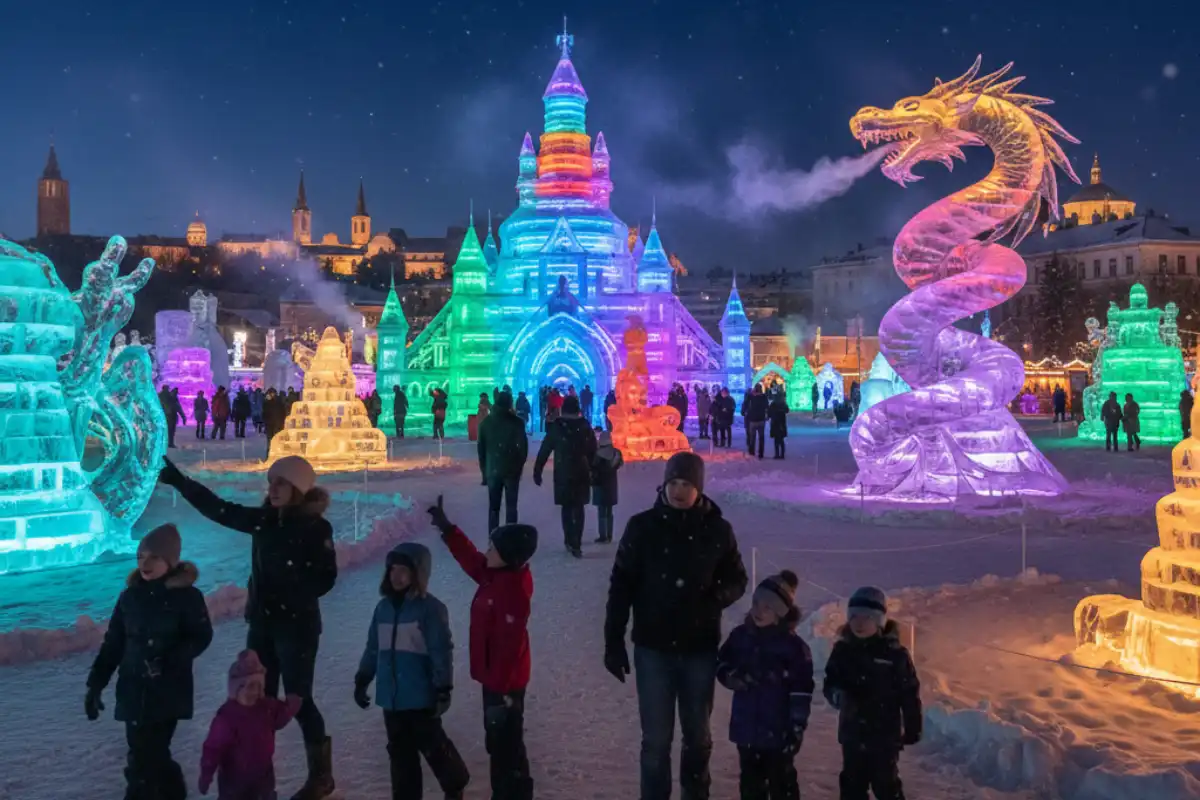
Harbin hosts the world’s largest ice and snow festival, featuring entire cities built from ice blocks carved from the nearby Songhua River. At night, the structures are illuminated in neon colors, creating a magical landscape.
- **The Highlight:** The **Ice and Snow World**, a vast park of illuminated full-sized ice castles and skyscrapers.
- **Experience Tip:** “The sheer scale of Harbin is overwhelming, but you must dress in extreme layers. It’s bitterly cold, often -25C. Plan to spend time outside, but also look for the indoor warming huts and make sure your camera battery stays warm in an inner pocket.” (Source: Asia Travel Forum)
2. Quebec Winter Carnival (Canada)
This is the largest winter carnival in the Western Hemisphere, running for over two weeks in late January and early February. The unofficial mascot, **Bonhomme Carnaval**, is central to the festivities.
- **Key Activities:** Ice canoe races across the partially frozen St. Lawrence River, night parades, massive ice palaces, and snow bath challenges.
- **Local Tradition:** Tourists often purchase the famous **Caribou** drink, a local mulled wine mixed with spirits, served in a cane to keep hands warm.
Accessible and Culturally Rich Carnivals ⛸️
These North American and European destinations offer easily accessible winter fun combined with local flavor.
1. Winterlude, Ottawa (Canada)
Winterlude is centered around the **Rideau Canal Skateway**, the world’s largest naturally frozen skating rink (7.8 km long). The festival spans three weekends in February.
- **The Highlight:** Skating on the canal itself is a must-do experience. The nearby Confederation Park hosts the international ice sculpture competition.
- **Skater’s Advice:** “If you want to skate the canal, go early on a weekday morning. The ice quality is best, and the crowds are minimal. Later in the day, the surface gets rougher, and navigating the sheer number of people becomes a challenge.” (Source: Local Ottawa Travel Guide)
2. Carnival of Venice, Italy (Winter Masquerade)
While not a “snow” carnival, Venice’s Carnival in the weeks leading up to Lent is an unmissable winter spectacle. It offers mystery, history, and warmth.
- **The Vibe:** Elegance, elaborate masks, and historical costuming. The cold, misty weather enhances the dramatic, secretive atmosphere.
- **Focus:** Attending private masked balls and watching the public events like the Flight of the Angel over St. Mark’s Square.
Planning Your Carnival Escape 🧤
- **Accommodation:** Book far in advance. Hostels and hotels often sell out months ahead, especially in Quebec City and Harbin.
- **Layering:** The mantra for these trips is **extreme layering**. Thermal base layers, fleece mid-layers, and waterproof, windproof outerwear are essential, particularly for night viewing.
- **Food:** Seek out local carnival treats, such as beaver tails (fried dough) in Canada or hearty, warming stews in European festivals.
Frequently Asked Questions About Winter Carnivals
What is the best time of year to catch a winter carnival?
Most major winter carnivals, including Harbin, Quebec, and Winterlude, take place during **January and February**, which are the coldest months, ensuring optimal ice and snow conditions.
Do I need special equipment for these festivals?
While gear is often available for rent, the most critical “equipment” is your clothing. Thermal gloves, insulated hats, waterproof boots with good traction, and high-quality face protection are necessary for comfort, especially in the extreme cold of Harbin or Quebec.
Are winter carnivals family-friendly?
Yes, overwhelmingly so. Most carnivals feature dedicated family zones, snow slides, giant mazes, and gentle activities suitable for all ages. Night events, however, can be cold, so plan accordingly for younger children.
Is the Harbin festival open all winter?
The Harbin festival typically runs from early January until late February or early March, depending on the weather. The opening ceremony is usually around January 5th, but the ice structures are often visible starting in late December.
How does a city heat the giant ice sculptures for visitors?
The sculptures are not heated; they remain frozen. The light comes from internal LED lighting systems built into the ice blocks. Heating the structures would cause them to melt, which is why the ambient temperature must remain well below freezing.
Conclusion: Celebrating the Majesty of Winter 🌟
Winter carnivals are a powerful expression of human resilience and creativity against the cold. They turn harsh landscapes into playgrounds of frozen fantasy, offering visitors unique opportunities for celebration, adventure, and cultural immersion. Planning a trip to one of these destinations guarantees a lively, unforgettable escape from the mundane reality of the winter season.