Sydney on a Budget: Your Essential Guide to Affordable & Safe Travel in the Harbour City
Experience the iconic Sydney Harbour, stunning beaches, and vibrant culture without breaking the bank. This comprehensive guide, updated for **July 2025**, will help you explore Sydney affordably and safely.
Discover Sydney’s Charm, Smartly and Safely
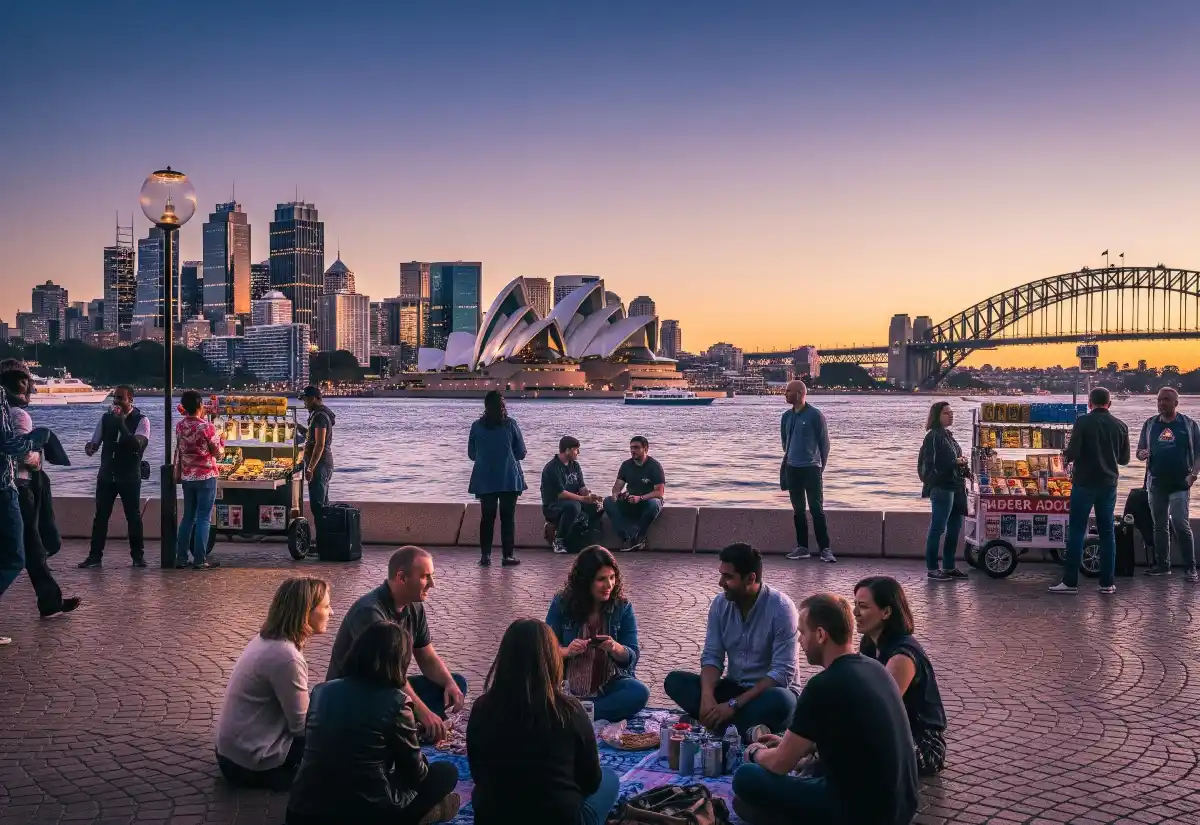
Sydney, a dynamic global city, is famous for its stunning harbour, iconic landmarks like the Opera House and Harbour Bridge, and laid-back beach culture. Often perceived as an expensive destination, it’s entirely possible to enjoy Sydney on a budget with smart planning. As of July 2025, while Australia can be pricier than some other travel destinations, there are plenty of ways to save. This guide will provide practical tips on finding budget-friendly accommodation, savoring authentic cheap eats, navigating the efficient public transportation, and understanding crucial safety advice, ensuring your Sydney journey is both economical and truly unforgettable.
1. Cost of Accommodation in Sydney: Budget Options
Sydney offers a wide range of accommodation, from luxury hotels to budget-friendly hostels. Prices fluctuate significantly depending on the area, the season (July is winter, but still popular!), and how far in advance you book.
**Price Note:** All prices are estimated in **Australian Dollars (AUD)** as of July 2025. For reference, 1 EUR is approximately 1.65 AUD (as of current exchange rates, subject to change). Booking several months in advance is crucial for the best rates, especially for peak travel periods.
Hostel & Budget Hotel Prices by Area (Average per night for a dorm bed/budget private, July 2025)
| Area | Description | Average Price (AUD/night) | Pros for Budget Travelers |
|---|---|---|---|
| **Sydney CBD (Central Business District)** | Central, close to major attractions, busy. | AUD 40 – AUD 70 (Dorm) AUD 150 – AUD 250 (Budget Private) |
Central, walkable to key sights (Opera House, Circular Quay), excellent transport. Can be pricier. |
| **Kings Cross / Darlinghurst** | Lively nightlife, diverse, close to CBD. | AUD 35 – AUD 65 (Dorm) AUD 120 – AUD 200 (Budget Private) |
Good value, vibrant area, easy CBD access by foot/train. |
| **Surry Hills / Glebe** | Trendy, foodie hub, local vibe, good transport. | AUD 30 – AUD 60 (Dorm) AUD 110 – AUD 180 (Budget Private) |
Authentic local experience, great cafes & restaurants, good bus/light rail links. |
| **Bondi Beach / Coogee** | Beach lifestyle, vibrant, requires commute to CBD. | AUD 45 – AUD 80 (Dorm) AUD 160 – AUD 280 (Budget Private) |
Iconic beaches, surf culture, beautiful coastal walks. Generally higher prices. |
| **Newtown / Glebe (Inner West)** | Bohemian, alternative, diverse food scene, easy train access. | AUD 30 – AUD 55 (Dorm) AUD 100 – AUD 170 (Budget Private) |
Best value, vibrant arts & culture, many cheap eats, direct train to CBD. |
Note: Prices are estimates and can fluctuate significantly, especially in peak seasons or for last-minute bookings. Winter (July) can sometimes offer slightly better deals than summer.
Tips for Saving on Accommodation:
- **Book Well in Advance:** Sydney is a major destination. Secure your stay as early as possible for the best rates, especially for hostels.
- **Hostels with Private Rooms:** Many highly-rated hostels offer private rooms that can be more affordable than budget hotels, often with better amenities and a social atmosphere.
- **Stay Slightly Outside the CBD:** Areas like Newtown, Glebe, or Kings Cross/Darlinghurst often offer better value while still being well-connected by public transport.
- **Look for Deals:** Keep an eye out for off-peak specials or long-stay discounts, even during winter.
- **Check Reviews:** Always read recent reviews for cleanliness, safety, and atmosphere, especially for hostels.
2. Cost of Food in Sydney: Eating on a Budget
Sydney has a fantastic food scene, but it can be expensive. However, with a few tricks, you can eat well without overspending. There’s a strong multicultural influence, leading to diverse and often affordable options.
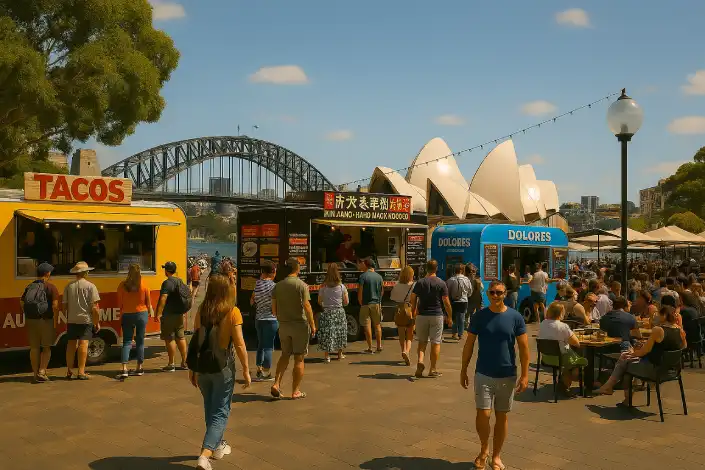
Sydney’s diverse food scene means delicious and affordable options are plentiful if you know where to look.
Estimated Budget Food Costs (July 2025):
- **Breakfast:** AUD 8 – AUD 18 (Coffee + pastry: AUD 8-12; simple café breakfast: AUD 12-18)
- **Lunch:** AUD 12 – AUD 25 (Food court/takeaway: AUD 12-18; casual cafe/pub lunch: AUD 18-25)
- **Dinner:** AUD 20 – AUD 40 (Casual restaurant/pub meal: AUD 20-30; mid-range restaurant: AUD 30-40)
- **Coffee (Flat White/Latte):** AUD 4.50 – AUD 6
- **Local Beer (Pint):** AUD 8 – AUD 12 (Pub: AUD 8-10; bar: AUD 10-12+)
- **Daily Budget for Food:** AUD 50 – AUD 80 if you mix and match, utilize supermarkets, and prioritize cheap eats.
Budget Eating Tips:
- **”Happy Hour” / “Lunch Specials”:** Many pubs and restaurants offer discounted food and drinks during specific hours, especially for lunch or early dinner.
- **Food Courts & Markets:** Sydney’s CBD has numerous food courts with diverse and affordable options (e.g., World Square, Pitt Street Mall food courts). Markets like Paddy’s Markets or Glebe Markets offer cheap eats and fresh produce.
- **Asian Eateries:** Explore areas like Chinatown, Haymarket, or Cabramatta for incredibly authentic and affordable Asian cuisine. Many offer large portions for good prices.
- **BYO (Bring Your Own) Restaurants:** Look for restaurants with a BYO license. You can bring your own alcohol, saving significantly on drink costs. Just check for corkage fees.
- **Supermarkets (Coles, Woolworths, Aldi):** Buy groceries for breakfast, picnic lunches, or simple dinners. Essential for saving money. Aldi is generally the cheapest.
- **”Pub Grubs”:** Many pubs offer classic, hearty meals at reasonable prices. Look for daily specials or “schnitty night” deals.
- **Tap Water:** Tap water is safe to drink. Always ask for tap water at restaurants to save on bottled water.
3. Cost of Public Transportation in Sydney
Sydney’s public transport system is excellent and includes trains, buses, ferries, and light rail. It’s integrated and uses the **Opal card** system (or contactless payment).
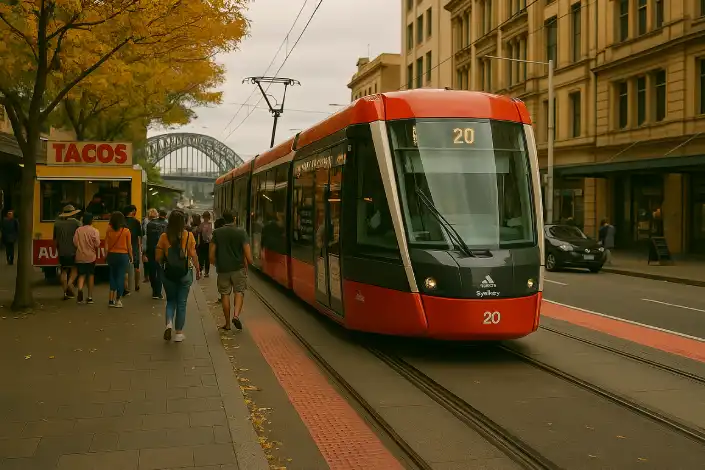
Sydney’s efficient train system connects the city and surrounding areas.
Fares (As of July 2025, subject to minor changes):
- **Opal Card / Contactless Payment:** This is the easiest way to pay. You can tap on/off with any contactless credit/debit card or a mobile wallet.
- Fares vary by distance and mode of transport.
- **Peak Fares (weekdays 6:30-10:00 AM & 3:00-7:00 PM):** Generally slightly higher.
- **Off-Peak Fares:** Lower fares apply outside peak times.
- **Estimated Single Trip Fares (using Opal/Contactless, July 2025):**
- **Short bus/light rail trip (0-3km):** AUD 3.20 – AUD 4.00
- **Train from Central to Circular Quay:** AUD 3.70 – AUD 5.00 (peak)
- **Ferry (e.g., Circular Quay to Manly):** AUD 8.60 – AUD 11.00
- **Daily Cap:** There’s a daily cap on fares (around AUD 18-20 for adults), meaning you won’t pay more than this amount for all your travel in a day.
- **Weekly Cap:** Also a weekly cap (around AUD 50-60).
- **Sunday Cap:** A special **Sunday Cap** of around AUD 8.90 applies, making Sundays the cheapest day for unlimited travel. This is excellent for exploring further afield (e.g., Blue Mountains).
Tips for Transportation:
- **Use Contactless Payment:** The easiest method. Just tap your credit/debit card (Visa, Mastercard, Amex) or phone/watch on the reader. No need to buy an Opal card unless you prefer one.
- **Plan Your Journeys with Apps:** Use Google Maps or the official Transport for NSW app for real-time information, routes, and fare estimates.
- **Utilize Sunday Cap:** Plan your longest excursions (e.g., Bondi Beach to Blue Mountains) for a Sunday to take advantage of the very low daily cap.
- **Walk When Possible:** Sydney’s CBD and surrounding areas like Circular Quay, The Rocks, and Darling Harbour are very walkable.
- **Ferries are a Sightseeing Must:** While pricier than buses/trains, the ferries offer incredible views of the Harbour, Opera House, and Harbour Bridge. Consider the Circular Quay to Manly ferry for a scenic trip.
- **Airport Connection:** The Airport Link train is the fastest way to get from Sydney Airport (SYD) to the CBD, but it incurs a hefty “station access fee” (around AUD 16-18 per adult on top of the fare). A cheaper option is to take a local bus (e.g., 400 or 420) from the airport to a train station outside the airport zone (e.g., Mascot, then take a train), or consider a shared shuttle service if arriving with luggage.
4. Safety in Sydney: Dangers, Scams, and Areas to Be Cautious
Sydney is a very safe major city, but like any urban area, it’s wise to be aware of your surroundings and take common-sense precautions.
Common Dangers & Scams:
- **Petty Crime (Pickpocketing/Bag Snatching):** Relatively low risk compared to other global cities, but it can occur in crowded tourist areas (Circular Quay, Darling Harbour, major train stations), on public transport, or at busy markets. Keep belongings secure and don’t leave bags unattended.
- **Drink Spiking:** Be cautious with drinks in bars and clubs, especially late at night. Never leave your drink unattended.
- **”Free” Gifts/Scams:** Be wary of people approaching you with “free” items (e.g., rosemary, friendship bracelets) or trying to engage you in elaborate stories (e.g., “lost tourist needing money”). Politely decline and walk away.
- **Overpriced Taxis:** While Sydney taxis are generally reputable, ensure the meter is used. For ride-sharing, use official apps like Uber or Ola.
- **ATM Skimming:** Use ATMs located inside banks or reputable establishments. Be aware of anyone trying to “help” you at an ATM.
- **Wildlife (less urban but good to know):** While unlikely in the CBD, if you venture into national parks or bushland, be aware of snakes and spiders, especially during warmer months. Stick to marked trails.
- **Sunburn/Heatstroke:** This is Australia, even in winter (July)! The UV index can still be high. Always use high-SPF sunscreen, wear a hat, sunglasses, and seek shade. Stay hydrated.
- **Rip Currents (at beaches):** If you swim at unpatrolled beaches, be aware of rip currents. Always swim between the red and yellow flags on patrolled beaches.
Areas Where Caution is Advised (mainly due to crowds or late-night activity):
- **Central Train Station & Transit Hubs:** Like all major transport hubs, be extra vigilant with your belongings.
- **Nightlife Precincts (e.g., parts of Kings Cross, Oxford Street late at night):** While generally safe, be aware of intoxicated individuals and potential altercations. Travel in groups if possible.
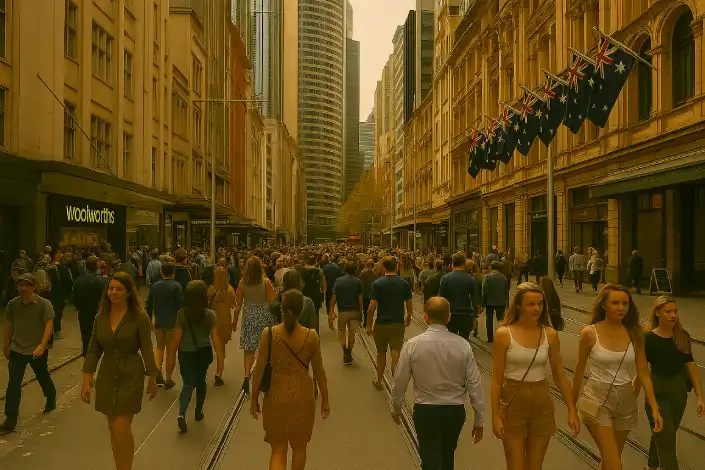
- **Crowded Tourist Areas:** Circular Quay, The Rocks, Darling Harbour, and major shopping precincts can be targets for petty theft.
General Safety Advice:
- **Secure Your Belongings:** Use a cross-body bag worn in front, or an anti-theft backpack. Don’t flash large amounts of cash or expensive electronics.
- **Be Aware of Surroundings:** Avoid walking with headphones in or being constantly glued to your phone in crowded areas.
- **Copies of Documents:** Keep digital and physical copies of your passport, visa, and important numbers separate from the originals.
- **Emergency Numbers:** 000 (Police, Ambulance, Fire).
- **Trust Your Gut:** If a situation feels off, remove yourself from it.
- **Night Safety:** Stick to well-lit, busy streets. If taking a taxi, use official ones or ride-hailing apps.
- **Stay Hydrated & Sun Safe:** Even in winter, the Australian sun is strong.
5. Tips for a Positive Sydney Experience
Beyond budgeting and safety, these insights will help you truly connect with the vibrant Harbour City and make your trip unforgettable.
- **Embrace the Outdoors:** Sydney is an outdoor city. Walk the Bondi to Coogee coastal path, explore the Royal Botanic Garden, or enjoy a picnic with harbour views. Many beautiful spots are free!
- **Utilize Free Attractions:** Stroll through The Rocks, walk across the Harbour Bridge (pedestrian path is free!), explore the Royal Botanic Garden, visit the Art Gallery of NSW (general admission is free), and enjoy the atmosphere of Circular Quay.
- **Take a Free Walking Tour:** Many companies offer free (tip-based) walking tours that provide a great introduction to the city’s history and culture.
- **Explore Neighborhoods:** Venture beyond the CBD to discover unique vibes in areas like Newtown (bohemian), Surry Hills (cafes & boutiques), or Manly (beach town).
- **Get an Opal Card (or use contactless):** This makes public transport seamless and often cheaper due to fare caps.
- **Check for Free Events:** Sydney often has free festivals, markets, and cultural events. Check local listings (e.g., City of Sydney website, Broadsheet Sydney) for what’s on during your visit.
- **Visit in Winter (July):** While it’s cooler, Sydney winters are generally mild and sunny. Crowds are smaller, and prices might be slightly lower than in peak summer. It’s also whale-watching season!
- **Be Sun Smart:** Always wear sunscreen, a hat, and sunglasses, even on cloudy days. The UV index can be very high.
- **Tap Water is Safe:** Sydney’s tap water is high quality and safe to drink. Carry a reusable water bottle.
- **Enjoy the Views:** Sydney’s beauty lies in its harbour. Find free vantage points like Mrs Macquarie’s Chair, Observatory Hill, or a walk across the Harbour Bridge for stunning photo opportunities.
6. Sydney Travel FAQs (July 2025)
Is Sydney safe for solo female travelers in 2025?
Yes, Sydney is considered very safe for solo female travelers. Standard precautions apply: be aware of your surroundings, especially at night or in crowded areas, and use reputable transport options.
What’s the best time to visit Sydney on a budget?
The shoulder seasons (March-May and September-November) offer pleasant weather and fewer crowds than summer. Winter (June-August) can be great for budget travelers as prices for flights and accommodation are often lower, and the weather is still mild with plenty of sunshine.
Can I use Euros in Sydney?
No, Australia uses the **Australian Dollar (AUD)**. While you might see some tourist shops with EUR prices, you’ll need AUD for all transactions. It’s best to use a travel-friendly debit/credit card or withdraw AUD from ATMs.
What’s the best way to get from Sydney Airport (SYD) to central Sydney on a budget?
The Airport Link train is fast but expensive due to station access fees. For a more budget-friendly option, consider taking a public bus (e.g., Route 400 or 420) from the airport to a non-airport train station (like Mascot), and then continue by train. Shared ride shuttles are also an option if you have luggage.
Is English widely spoken in Sydney?
Yes, English is the official language and is universally spoken. Sydney is a very multicultural city, so you’ll hear many other languages too.
Should I tip in Sydney?
Tipping is not customary or expected in Australia, as staff are paid a good minimum wage. You can round up your bill or leave a small tip (e.g., 5-10%) for exceptional service at a high-end restaurant, but it’s entirely optional.
Are there free attractions in Sydney?
Absolutely! Many of Sydney’s best experiences are free: walking across the Harbour Bridge, exploring The Rocks, strolling through the Royal Botanic Garden, visiting the Art Gallery of NSW (general admission), enjoying the beaches, and taking the Bondi to Coogee coastal walk.
Your Sydney Adventure Awaits!
Sydney offers an exhilarating blend of natural beauty, urban excitement, and cultural experiences. With these practical tips, you’re ready to explore its iconic landmarks, relax on its famous beaches, and create unforgettable memories, all while keeping your budget in check.
Start Planning Your Sydney Trip