Snowboarding vs skiing: Which is easier to learn?
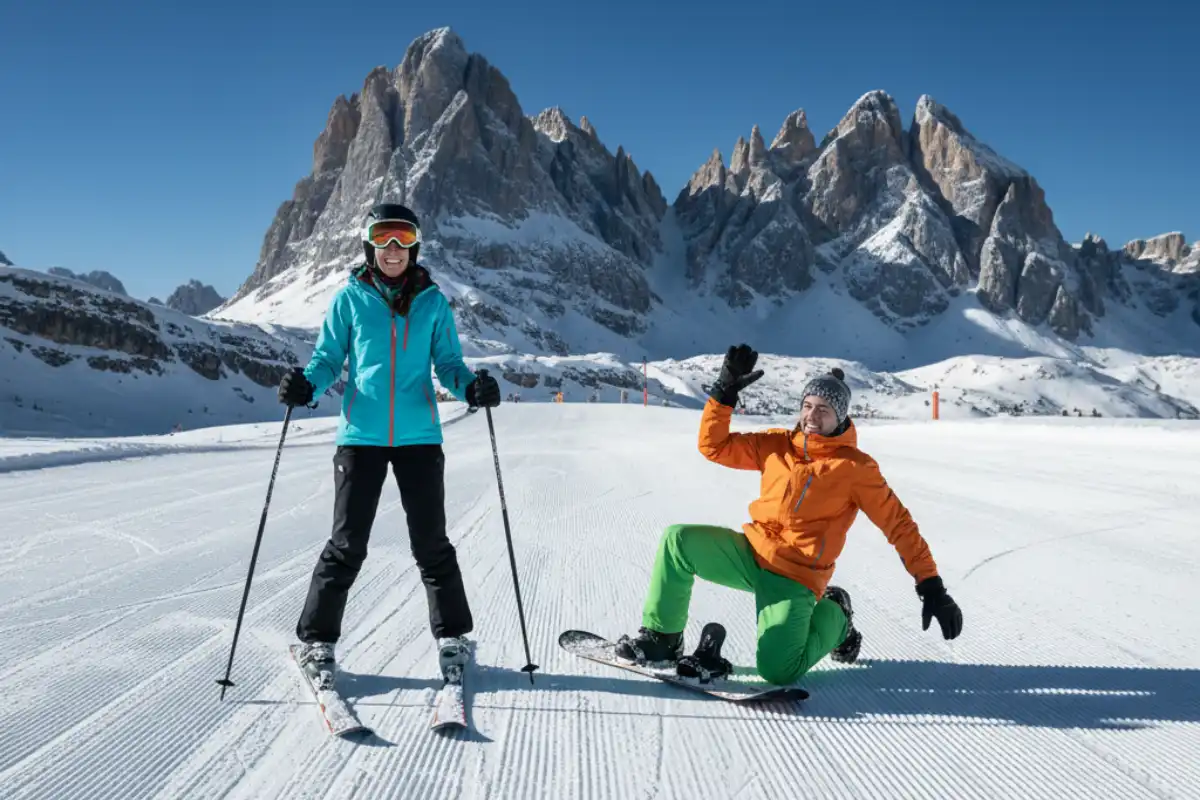
The debate between skiing and snowboarding is endless, particularly for first-timers. Both sports offer exhilarating experiences on the mountain, but their **learning curves** are distinctly different. Skiing is generally easier to master the basics of, allowing beginners to get moving quickly. Snowboarding, conversely, has a steeper initial learning barrier but offers a faster path to advanced proficiency.
The Initial Learning Curve (Day 1 to 3) 📉
This phase is where most beginners struggle and often quit. The difference in immediate skill acquisition is pronounced.
Skiing: The Quick Start
Skiing allows beginners to leverage natural body movements. Since your legs are independent, you can easily balance and control speed almost immediately.
- **The Core Skill:** The **snowplough (or pizza)** technique, which involves pointing the tips of the skis inward, allows a beginner to control speed and stop quickly. This skill is relatively easy to learn within the first hour.
- **The Challenge:** Skis require coordination of **four limbs** (two skis, two poles). Beginners often find the constant use of poles and the parallel movement awkward at first.
- **Traveler Insight:** “I got the hang of stopping and making very basic turns in about 90 minutes on skis. It felt intuitive because my legs were free to move naturally. The hardest part was getting on and off the chairlifts without tripping over my own skis.” (Source: Beginner Ski Blog)
Snowboarding: The Steep Barrier
Snowboarding requires mastering a single core skill: **side-slipping** and traversing while having both feet strapped to one board. This feels unnatural to most people.
- **The Core Skill:** Learning to turn and stop requires balancing on a single edge (heel or toe side) and shifting your entire body weight, which results in **many falls**.
- **The Challenge:** Getting on and off chairlifts is awkward, and beginners spend a lot of time on their backside, getting up. The initial days involve a lot of frustration and sore knees/butt.
The Progression Curve (Intermediate Level) 📈
Once past the initial hurdle, the tides turn, and snowboarding often sees faster progression.
Snowboarding: Faster Advancement
Once a snowboarder masters the edge control and linking turns (usually by day 3 or 4), the path to becoming proficient on blue and red runs accelerates. The single board offers a more unified, fluid movement.
- **The Payoff:** Snowboarders find the transition from basic turns to confident, carved turns easier. The equipment is simpler (fewer poles and components to manage), leading to a cleaner, more rhythmic style.
- **Instructor Quote:** “We tell our beginner snowboarders to be patient. You will fall a lot for the first three days, but once the ‘lightbulb moment’ hits when they link those first few turns they often progress to intermediate terrain faster than skiers. Skiers spend a long time getting rid of the snowplough.” (Source: Certified Snowsport Instructor)
Skiing: Plateauing at Intermediate
Skiers hit a progression wall when they need to transition from the basic snowplough to **parallel turns**. This requires more finesse, speed, and confidence, often necessitating further lessons.
- **The Plateau:** Many recreational skiers spend years perfecting the transition from beginner-level braking techniques to the more advanced, efficient parallel skiing style.
Key Differences and Practical Aspects 🛠️
- **Boots:** Ski boots are stiff and hard plastic, offering maximum ankle support but are painful to walk in. Snowboard boots are softer, more comfortable, and much easier to walk around in off the slopes.
- **Injuries:** Skiing beginners often suffer **knee and lower leg injuries**. Snowboarding beginners typically sustain **wrist and shoulder injuries** from falling (wearing wrist guards is highly recommended) and **sore tailbones** from sitting to strap in.
- **Chairlifts:** Getting on and off a chairlift is much easier on skis (you leave both skis on). Snowboarders must detach one foot, making the process notoriously tricky for beginners.
Deciding Factor: Pre-existing Skills
If you have experience with **rollerblades, ice skates, or anything that requires independent leg movement**, you will likely find **skiing** easier to start. If you have experience with **skateboarding, surfing, or wakeboarding** (side-on stance), you may find **snowboarding** more intuitive in the long run, despite the initial falls.
Frequently Asked Questions About Learning
Which sport causes more physical exhaustion for beginners?
**Snowboarding** often causes more immediate physical exhaustion due to the constant effort required to stand up after falling and maneuvering the board using core strength. Skiing is generally less exhausting initially because you can rely on the natural standing posture.
Is it advisable to try both skiing and snowboarding in the same trip?
No. For your first trip, **focus entirely on one sport**. Switching between the two resets your muscle memory and makes it harder to overcome the initial learning curve in either discipline. Commit to one for at least four full days of practice.
Are private lessons worth the extra cost for a first-timer?
Yes. While group lessons are cheaper, **private lessons** allow the instructor to tailor the learning specifically to your body and pace, often accelerating your progress. One private lesson can be equivalent to several group sessions for a beginner.
Which sport is generally cheaper to rent equipment for?
Generally, **snowboard rentals** are slightly cheaper than ski rentals because skis require two skis, two poles, and complex bindings. Snowboarding only requires one board and two simple bindings.
Do I need to be in great shape to start either sport?
You need a reasonable baseline of **core and leg strength**. Both sports are demanding, but being in decent cardio shape will help you endure the exhaustion of learning and recover faster. Strong core muscles are particularly beneficial for stabilizing on a snowboard.
Conclusion: Ski for Quick Comfort, Board for Quick Mastery ✨
If your primary goal is to **feel comfortable, stop safely, and cruise gentle slopes within your first day or two**, **skiing** is the easier choice. If you are patient, resilient to falling, and aim to achieve a high level of proficiency and flow on blue and red runs by the end of your first week, **snowboarding** will ultimately reward your persistence with a faster path to mastery.