Icelandic Spring: Waterfalls and Green Valleys
As of April 2026, Iceland is witnessing one of its most dramatic seasonal shifts in recent years. Known as the "Shoulder Season of Giants," spring in Iceland is a time of raw power and delicate renewal. The massive glaciers begin their slow summer thaw, sending torrents of meltwater down the basalt cliffs, creating waterfalls that roar with a volume unseen during the frozen winter months. For the modern explorer, 2026 marks a move toward "slow-adventure" tourism in the Icelandic interior. Travelers on Iceland Review and the VisitingIceland community highlight that April and May offer the perfect "blue hour" photography conditions, as the days stretch longer but the sun stays low on the horizon. This is the time to see the South Coast's valleys transform from a dormant brown to a luminous, mossy emerald almost overnight.
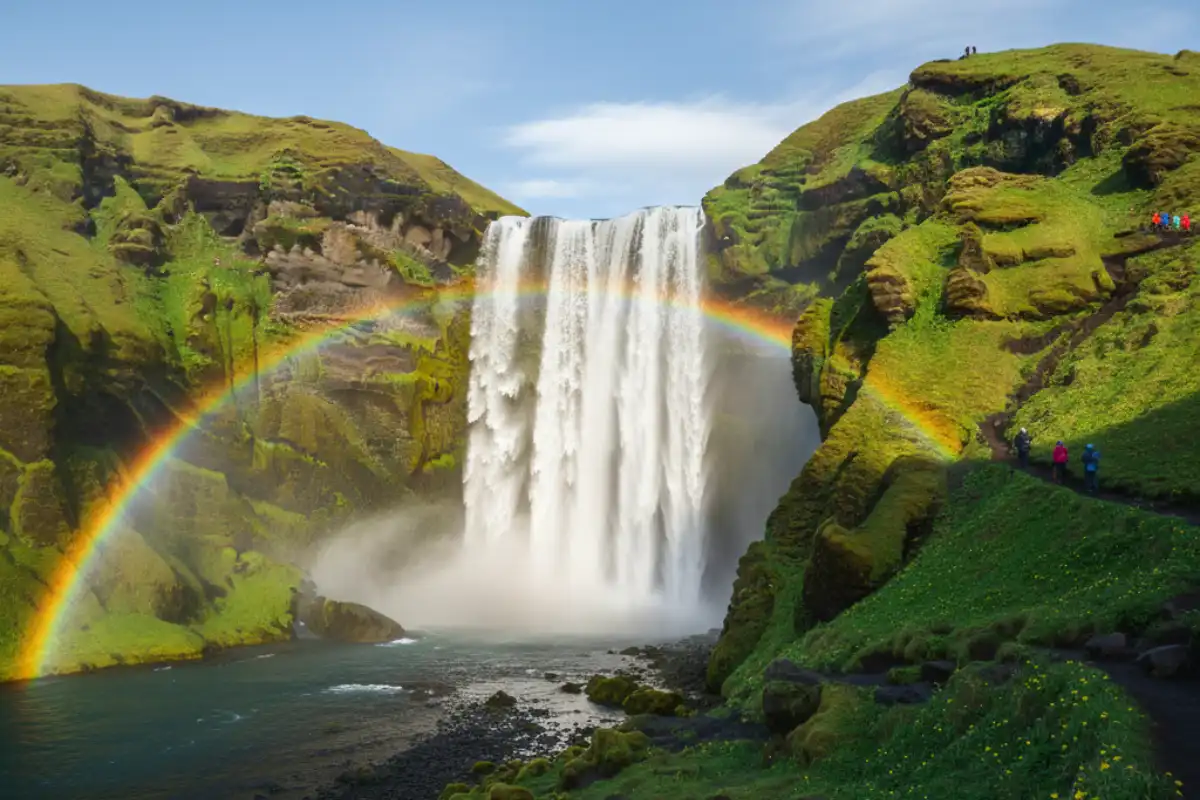
Waterfalls in Prime: The Great Thaw
In spring, Iceland’s waterfalls are at their most muscular. The snowmelt from the highlands fuels legendary sites like **Skógafoss** and **Seljalandsfoss**, turning them into misty cathedrals of water.
- **Gullfoss (The Golden Falls):** In April, the ice blocks often seen in winter have cleared, allowing the full force of the Hvítá river to plunge into the canyon with thunderous intensity.
- **Seljalandsfoss:** The path behind the waterfall usually reopens in late spring as the ice melt makes the ground traversable, offering that iconic perspective through the curtain of water.
- **Hidden Gems:** Spring is the best time to visit **Gljufrabui**, the “hidden” waterfall inside a cave, as the increased water flow makes the interior mist feel like a subterranean rain forest.
Lush Beginnings: The Greening of the Valleys
While the highlands remain snow-dusted, the low-lying valleys like **Thórsmörk** and the fields around **Vik** begin to show their vibrant green mosses. This is the season of the “Arctic Bloom,” where hardy flora like Purple Saxifrage starts to dot the volcanic soil.
Pro-Tip: The Puffin Arrival
According to birdwatching logs from 2025 and early 2026, the first Atlantic Puffins usually return to the cliffs of **Dyrhólaey** and the **Westman Islands** in mid-to-late April. “Bring binoculars and stay quiet,” suggests a veteran guide on Icelandic Wildlife Watch. “Spring puffins are busy reclaiming their burrows, providing a spectacular look at their nesting rituals before the summer crowds arrive.”
Road Tripping the Ring Road
April 2026 driving conditions are significantly improved compared to mid-winter, but the “spring slush” is a reality. The Ring Road is generally clear, but F-roads (mountain tracks) remain closed. Travelers are opting for hybrid 4×4 vehicles, which offer the stability needed for gravel roads while supporting Iceland’s strict 2026 carbon-neutral tourism initiatives.
Frequently Asked Questions: Iceland in Spring
Can you see the Northern Lights in Iceland in April?
Yes, but the window is closing. By mid-April, the nights become very short. However, if the solar activity is high, you can still catch the Aurora Borealis against a twilight sky until about the 20th of April.
What should I pack for an Icelandic spring?
The “Three Ws” are essential: Wool, Waterproofs, and Windproofing. Spring temperatures fluctuate between 0°C and 10°C (32°F – 50°F). A high-quality waterproof shell is vital for standing near the heavy mist of springtime waterfalls.
Are the crowds smaller in the spring?
Significantly. April is considered a shoulder season. You will find that popular spots like the Blue Lagoon or Reynisfjara Black Sand Beach have a fraction of the summer traffic, making it ideal for those seeking solitude.
Is it safe to drive a small car in April?
While the main roads are paved, a 4WD is still highly recommended for spring. Weather can change from sun to a localized snowstorm in minutes, and the extra traction is a safety essential on wet or slushy roads.
When do the lupines start to bloom?
Actually, you have to wait a bit longer for the famous purple lupine fields. They typically start blooming in late May and peak in June. April is all about the emerald moss and the awakening of the native Arctic flora.
Conclusion: Witnessing the Island’s Rebirth
Iceland in the spring of 2026 is a destination for those who appreciate the transition as much as the destination. It is a time of high-contrast beauty—where white snow-capped peaks overlook valleys of neon-green moss and iron-grey volcanic sands. By visiting now, you catch the island in its most honest form: powerful, unrefined, and bursting with new life. As the water crashes down the cliffs and the puffins take to the skies, you’ll realize that the Icelandic spring is not just a season, but a symphony of the elements.
Would you like me to help you map out a 5-day South Coast itinerary specifically designed for spring photography and waterfall trekking?