Ice fishing: Gear and destinations
Ice fishing transforms the serene summer lakes into a vibrant winter community. It’s an activity that requires patience, specialized gear, and above all, meticulous attention to safety. Done correctly, it offers a peaceful, rewarding experience far removed from the clamor of everyday life. This guide covers the essential equipment required to stay warm and safe, along with premier destinations famous for their abundant winter fisheries.
Essential Gear for Safety and Comfort 🧤
The right equipment is non-negotiable for a safe and enjoyable day on the ice.
1. Safety First: The Crucial Ice Check
Before any other gear, prioritize safety tools.
- **Ice Picks/Claws:** These are life-saving devices worn around the neck. If you fall through, the picks give you traction to pull yourself back onto the ice.
- **Spud Bar or Auger:** Use one of these tools to test the ice thickness every few steps when walking onto unknown ice. **Minimum safe thickness for foot travel is 4 inches (10 cm).**
- **Flotation Suit:** Modern ice fishing suits are insulated and designed to be buoyant, greatly increasing survival time if submerged.
2. Shelter and Warmth
You cannot stay warm just by layering if you are stationary for hours. A shelter is essential.
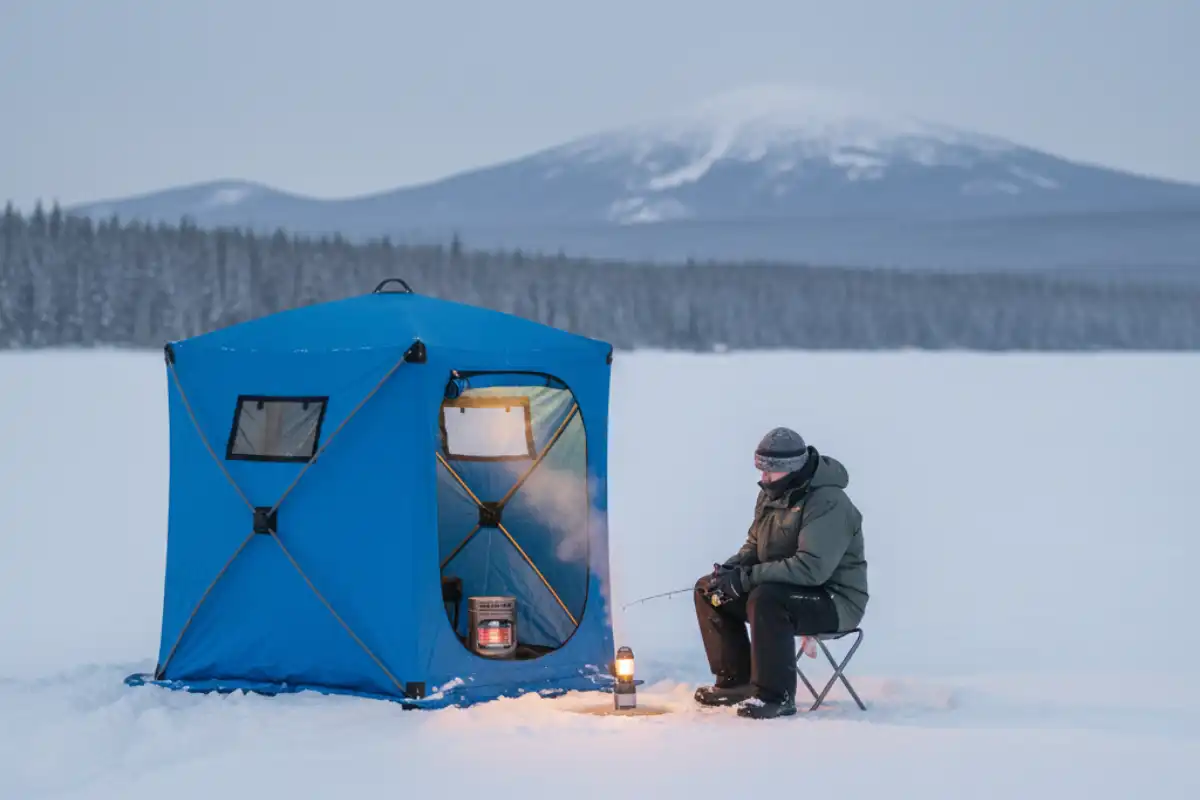
- **Ice Shanties (Shelters):** Options range from simple pop-up shelters (highly portable) to permanent, skid-mounted shacks (for long stays). Insulated hubs are favored by serious anglers for retaining heat.
- **Heaters:** Portable propane heaters are necessary for warming the shanty. **Always ensure adequate ventilation** to prevent carbon monoxide buildup.
Specialized Tackle and Electronics 🐟
Ice fishing requires rods, reels, and tools distinct from open-water fishing.
1. Augers: Cutting the Hole
The auger is arguably the most important piece of gear.
- **Manual Augers:** Cheapest and lightest, but exhausting for cutting multiple holes or through thick ice.
- **Propane/Gas Augers:** Powerful, but heavy, loud, and require fuel.
- **Electric Augers:** The popular choice today. They are clean, relatively quiet, and powered by rechargeable lithium batteries.
2. Rods and Reels
Ice fishing rods are very short (24-36 inches) to allow vertical jigging in the confined space of a shanty. They feature sensitive tips to detect the subtle bite of cold-water fish.
3. Electronics (Flashers and Sonar)
Electronics are mandatory for serious ice fishing. **Flashers** or **ice fishing sonar** are used to see the bottom depth, the position of your lure, and any fish swimming beneath the hole.
- **Angler’s Review:** “The flasher isn’t a luxury, it’s a necessity. It tells you instantly if fish are present and how they react to your bait. I learned that what looks like no action on the line often shows up as fish cruising on the sonar. It dramatically increased my catch rate.” (Source: Walleye Fishing Forum)
Top Ice Fishing Destinations 📍
1. Lake of the Woods, Minnesota (USA)
Known as the “Walleye Capital of the World,” this massive body of water offers some of the best large-scale ice fishing infrastructure, with entire towns of permanent rental shacks often accessible by plowed ice roads.
2. Lake Simcoe, Ontario (Canada)
A classic North American destination famous for jumbo perch, whitefish, and lake trout. It provides a huge, accessible frozen surface with numerous guide services.
3. Finland and Sweden (Lapland)
While often less about trophy fishing, ice fishing here is a deep cultural experience, often involving drilling holes with a simple manual auger and using small ice jigs to catch arctic char and grayling. It’s an exercise in peaceful solitude.
Ice Safety Rule: Never Trust the Sight of Ice
“Ice can look solid even when it is dangerously thin or honeycombed (melting from below). Always check for **currents** near river mouths or outflows, as they thin the ice instantly. Look for local ice condition reports, fish near established shacks, and never assume the ice is safe because of overnight cold.” (Source: DNR Safety Guide)
Frequently Asked Questions About Ice Fishing
What is the minimum recommended ice thickness?
The generally accepted minimum for walking/fishing is **4 inches (10 cm)** of clear, hard ice. For a snowmobile or ATV, you need **5 to 7 inches**. For a small car or light truck, **8 to 12 inches** is required, and only on officially designated ice roads.
What kind of bait is best for ice fishing?
Live bait often works best, especially **minnows** (fatheads or shiners) or **wax worms/grubs** threaded onto small jigs. Many popular ice fishing lures are brightly colored or glow-in-the-dark to attract fish in the low-light conditions under the ice.
How do I keep my hands warm while handling fish and gear?
Wear thin, thermal **glove liners** under waterproof, insulated mitts. Mitts are warmer than gloves. Keep a small towel handy to dry your hands immediately after touching water or fish. Some anglers use portable hand warmers inside their mitts.
Do I need a fishing license for ice fishing?
Yes. Ice fishing is subject to the same **fishing regulations** as open-water fishing. You must obtain a valid fishing license from the local state, province, or country authority, and adhere to all size and bag limits.
What should I do if my auger gets stuck in the ice?
Do not force it. If using an electric or gas auger, gently reverse the motor if possible. If using a manual auger, slowly and firmly pull straight up, twisting minimally. Trying to twist violently can damage the blades or exhaust your energy if you are alone.
Conclusion: The Reward of Patience in the Cold 🏆
Ice fishing is a captivating winter pursuit that demands respect for the cold and adherence to safety protocols. By investing in proper gear especially safety claws, insulation, and a reliable auger and choosing a well-established destination, you can successfully trade the summer boat for a comfortable shanty and enjoy the unique tranquility and rewarding catch that only frozen waters provide.