Eco-Friendly Spring Travel Tips
Spring is the season when nature regenerates, making it the most poignant time to consider our impact on the planet. As we witness the world turning green, the desire to explore shouldn't come at the cost of the environment. Eco-friendly travel is no longer a niche trend; it is a vital responsibility for the modern explorer. From choosing "slow travel" train routes through blooming landscapes to packing zero-waste essentials, minor adjustments can significantly reduce your carbon footprint. Drawing from the wisdom of sustainable travel advocates on Treehugger and Eco-Traveler forums, this guide explores how to make your spring getaway as green as the scenery.
1. Transport: The Power of the Rails
Transportation accounts for the largest share of a traveler’s carbon footprint. In spring, the journey itself can be the highlight if you opt for the tracks over the tarmac.
- **The European Rail Revival:** Instead of short-haul flights, utilize the extensive high-speed rail networks. Traveling by train produces up to 90% less CO2 than flying the same distance.
- **Electric Road Trips:** If you must drive, search for car rentals that offer hybrid or fully electric vehicles. Spring weather is ideal for EV battery performance compared to the winter chill.
- **Biking the Bloom:** Many cities, from Amsterdam to Vancouver, offer extensive bike-sharing programs. Seeing the spring blossoms from a bicycle seat is both carbon-neutral and immersive.
A seasoned traveler on r/SustainableTravel notes: “Booking a night train across Europe in April not only saved me the cost of a hotel but allowed me to wake up to the sunrise over the Alps without the stress of an airport terminal.”
2. Conscious Packing: Less is More
Weight equals fuel. The lighter your suitcase, the less energy is required to move it. Beyond weight, what you bring matters just as much as how much you bring.
The Zero-Waste Kit
Avoid the “vacation trap” of convenience plastics. Your spring kit should include a collapsible water bottle, a set of bamboo utensils, and a reusable mesh bag for local market finds. As the weather fluctuates, focus on high-quality layers made from natural fibers like organic cotton or merino wool, which require less frequent washing.
Pro-Tip: Reef-Safe and Earth-Friendly Toiletries
Spring sun can be strong, but conventional sunscreens often contain chemicals like oxybenzone that harm aquatic life. Opt for mineral-based, “reef-safe” sunscreens. Similarly, switching to shampoo bars and solid deodorants eliminates plastic packaging and the risk of suitcase leaks.
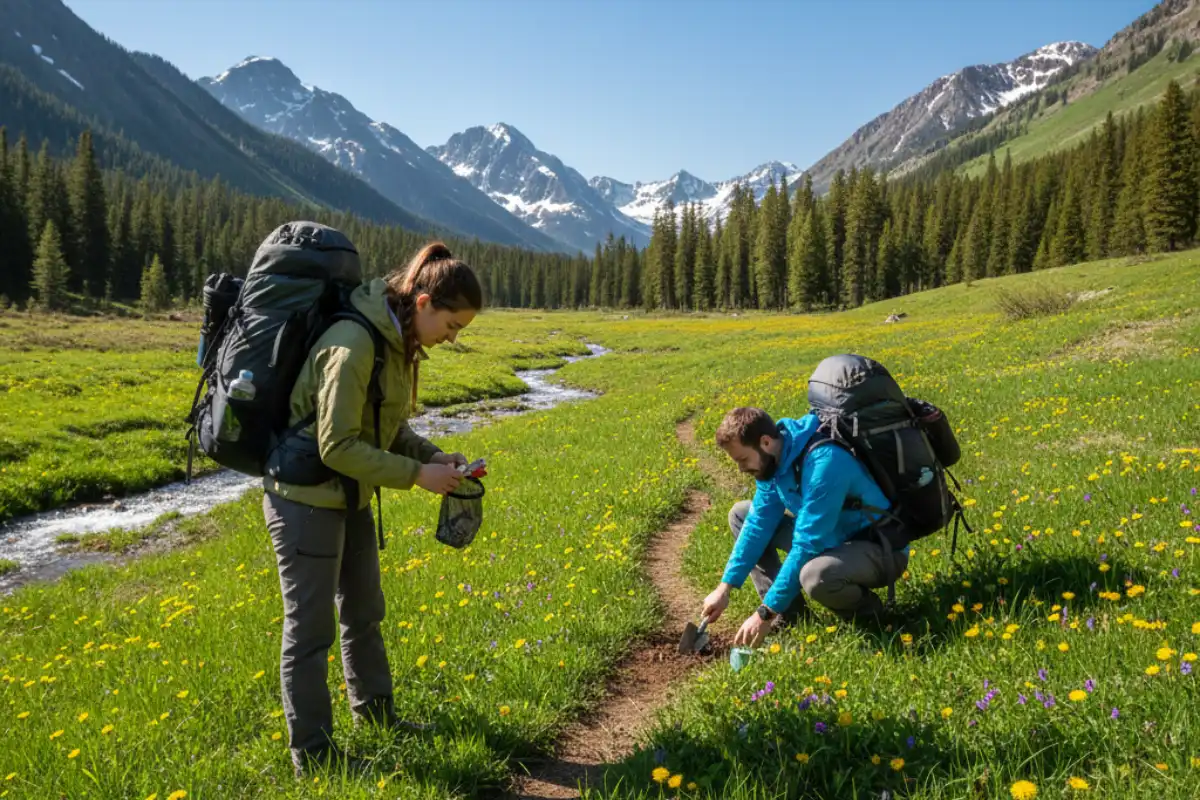
3. Respecting the Bloom: Leave No Trace
Spring is a sensitive time for ecosystems. Nesting birds and fragile wildflowers are easily disturbed by off-trail exploration.
Stay on the Path: While it’s tempting to step into a field of bluebells for the perfect Instagram shot, trampling destroys the bulbs for future seasons. Stick to marked trails to protect the delicate spring flora. Additionally, avoid picking wildflowers; they are essential food sources for pollinators waking up from winter.
Frequently Asked Questions About Eco-Friendly Travel
What is “Slow Travel” and why is it better for the environment?
Slow travel focuses on staying in one place longer rather than hitting five cities in a week. It reduces transport emissions, supports local neighborhood economies, and allows for a deeper, less stressful connection with the culture.
Is carbon offsetting actually effective?
Carbon offsetting is a tool, not a cure. While it’s better than doing nothing, it’s most effective when used to balance out emissions you truly cannot avoid. Always look for “Gold Standard” certified projects that focus on reforestation or renewable energy.
How can I find truly eco-friendly accommodation?
Look for certifications like Green Key or EarthCheck. Beyond labels, check if the hotel uses renewable energy, sources food locally, and has a clear policy against single-use plastics.
Is it okay to use public transport in foreign cities?
Not only is it okay, it’s encouraged! Public transport is the most sustainable way to navigate urban areas. Most modern cities have apps (like Citymapper) that make using buses and trams as easy as calling a private ride-share.
Does eating local really make a difference?
Yes. Food miles — the distance food travels from farm to plate — contribute significantly to CO2 emissions. Eating seasonal, locally-grown spring produce supports local farmers and ensures your meal is fresh and low-impact.
Conclusion: Traveling with a Green Conscience 🌿🌟
Eco-friendly travel isn’t about restriction; it’s about intentionality. It’s the realization that the beauty of the spring bloom is something we must actively preserve for the next generation of wanderers. By choosing the train, packing thoughtfully, and respecting the natural habitats we visit, we ensure that our adventures leave behind nothing but footprints and take away nothing but memories.
Would you like me to help you find a list of certified eco-lodges in a specific region, or perhaps create a zero-waste packing checklist for your next trip?